



Browse all articles
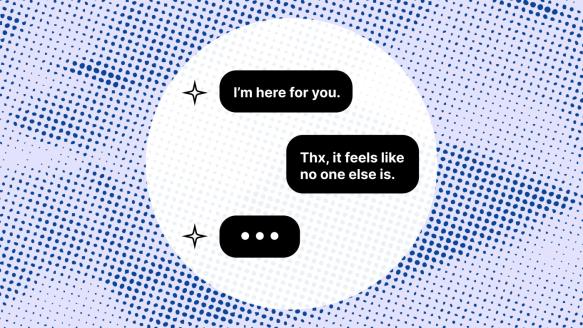
text messages showing in a bubble

Parents' Ultimate Guide to AI Companions and Relationships

blue and green abstract shapes

Parents Need to Know

  • Social AI companions come with very serious risks for teens and aren't recommended for anyone under 18.

  • AI companions aren't just tools—they simulate real relationships. These apps are designed to create emotional bonds through ongoing conversations, emotional mimicry, and role-playing as friends, mentors, or partners.

  • Most platforms are 18+, but teens can access them easily. Age restrictions are weak, and many platforms market directly to teens through social media, gaming spaces, and ads promising emotional support.

  • Emotional risks are significant. Teens can develop strong attachments to AI companions, which can blur the line between real and fake relationships, worsen mental health struggles, and discourage real-world friendships.

  • "Free" apps can still lead to emotional and financial investment. Many apps start free but gradually push premium features that deepen emotional attachment and encourage spending.

  • Harmful content is common, even with safeguards. Our testing found that many platforms still allow inappropriate conversations, unsafe advice, and unhealthy emotional reinforcement—even in "teen mode."

  • Open conversations and boundaries matter most. It's important to have early, judgment-free discussions about emotional safety, critical thinking, and real-world connection to help teens navigate AI companions in healthier ways.


purple blob

What Are AI Companions?

Unlike task-focused AI tools like ChatGPT, Claude, or Bard—which are built mainly to answer questions or complete requests—AI companions are designed to form emotional connections with users. They simulate ongoing relationships rather than simply providing information or assistance.

AI companions are built with features that prioritize emotional bonding, including:

  • Remembering conversations, preferences, and personal details to create a sense of an ongoing connection
  • Adapting their personality and responses based on what engages each user
  • Role-playing as friends, mentors, therapists, or romantic partners
  • Using language that mimics human emotions and empathy
  • Maintaining a consistent "persona" across multiple conversations
  • Agreeing with users more often than typical AI tools
  • Offering customizable appearances, voices, or avatars to strengthen the feeling of connection

This focus on relationship-building—rather than completing a task—is what sets AI companions apart from other AI tools. It's also why they present unique risks for young users. While the technology continues to evolve rapidly, these emotional engagement features remain central to how AI companions work.

Popular AI Companion Platforms

Many AI companion apps are gaining rapid popularity among teens and young adults, often spreading through social media, word of mouth, and targeted advertising. These platforms actively market to young users with promises of friendship, connection, and emotional support—despite most having official age requirements of 18+.

A platform where users can create or chat with thousands of AI characters, including fictional personas and celebrities. Teens often find it through viral TikTok and YouTube videos. Although the platform has introduced teen-specific safety features, our testing found that it still exposes underage users to inappropriate and sexually explicit content.

An app offering personalized AI companions with 3D avatars and both text and voice chat. Teens frequently encounter it through Instagram and TikTok ads targeting those who express loneliness or social anxiety. Despite policy changes, concerns remain about its romantic and sexual role-play features, and how they can shape teens' ideas about relationships.

Specializes in fantasy and fictional character roleplay. Popular in anime and fandom communities, with concerns around age-inappropriate role-playing scenarios

An open platform where users create and share AI characters. Popular on Discord and Reddit. Minimal content oversight exposes teens to harmful, user-generated content.

Marketed as a "supportive friend" for mental health support, but lacks safeguards. Poses particular risks for vulnerable teens seeking emotional help.

A text-based companion app focused on personalized emotional conversations. Found through gaming and social media communities. Conversations often shift toward inappropriate topics, even without user prompts.

blue blob Back to top

Are AI Companions Free?

Most AI companion platforms offer free versions that teens can access immediately, without needing to enter payment information or ask for parental permission. Free accounts typically allow teens to create personalized companions, start conversations, and build emotional connections—all without a fee. However, these free versions often come with subtle limits, such as shorter conversations or fewer relationship-building features.

Premium subscriptions unlock deeper engagement.

Many apps offer paid upgrades, usually around $7 to $15 a month, that include longer and more frequent messaging, access to different relationship types (such as romantic partners or mentors), voice conversations, customizable avatars, and an ad-free experience. These features are framed as ways to build a "closer" and more satisfying connection.

In-app purchases reinforce emotional bonds.

Beyond monthly subscriptions, many platforms offer one-time purchases like sending digital "gifts" or unlocking special memories or moments with a companion. These small add-ons encourage continued investment, both emotionally and financially.

"Free" can still be costly.

This model offers an emotional experience for free while reserving stronger connections for paying users. It’s designed to gradually deepen emotional attachment. Because no initial payment is required, teens often form strong bonds with AI companions before parents are even aware they're using the app, which makes it important for adults to have early conversations and offer guidance.

pink blob Back to top

Is There an Age Requirement?

Most AI companion platforms officially claim to be for users 18 and older. But in reality, age restrictions are easy to bypass, and protections aren't strong enough to keep teens out. Here's what parents need to know:

Age requirements are easily avoided.
Platforms only ask users to self-report their birth date. There's no real verification—so kids can simply enter an older age and immediately gain full access.

Safety measures don't reliably work.
Even when platforms like Character.AI offer a "teen mode" or claim to have added safeguards, our testing found that sexually explicit conversations, romantic roleplay, and other inappropriate content were still accessible to underage users.

Apps are still marketed where teens hang out.
Despite age policies, AI companions are heavily promoted on TikTok, Instagram, gaming forums, and YouTube—places where teens are already active. Features like customizable avatars, fantasy roleplay, and always-available companionship are especially appealing to younger users, who are still developing critical thinking and emotional boundaries.

Our recommendation:

Because there are no meaningful barriers to entry—and because of the serious risks of emotional manipulation, harmful content, and unhealthy attachment—Common Sense Media strongly recommends that kids and teens under 18 not use AI companions at all. These platforms are not developmentally appropriate for minors, and proactive conversations, open communication, and clear boundaries are key to helping teens navigate safely.

If Your Child Is Already Using AI Companions

Even with stated age limits, many parents may discover their teen has already been using an AI companion—and that's understandable. These platforms are designed to feel welcoming, comforting, and easy to access. If you find yourself in this situation, it's important to respond with openness, understanding, and a clear plan forward.

Here are some supportive steps you can take:

  • Start with a nonjudgmental conversation. Focus on understanding what drew your teen to the AI companion and what needs it may be addressing. You might say, "I'm glad you shared this with me. Let's talk about what you like about it and how it makes you feel."
  • Work together to gradually step back from use. Instead of demanding immediate shutdown, collaborate on a plan to safely reduce their use. Teens are more likely to follow through when they feel respected and included in the decision-making process.
  • Set clear and realistic boundaries. In the meantime, establish simple protective rules, like not using AI companions in private spaces, agreed-upon time limits, and regular check-ins about conversations and experiences.
  • Support real-world connection. Encourage your teen to reconnect with their close and known friendships, family activities, hobbies, or trusted mentors. Help them find healthier sources of emotional support that are rewarding and genuine.
  • Create a family agreement around serious issues. Talk openly about when it's important to seek help from a trusted adult or professional, instead of relying on an AI companion during moments of stress, sadness, or crisis.
  • Remind your teen not to share personal information. Even though AI companions feel private, anything shared could be stored or used. It's safest to avoid giving out names, locations, photos, or any personal details.

Stepping away from an AI companion relationship is a process, not an immediate change. Every supportive conversation and every small step toward real-world connection can help rebuild emotional resilience and strengthen trust.

green blob Back to top

Why and How Kids Use AI Companions

AI companions are becoming a part of some teens' digital lives—not just because they're curious, but because these tools are being marketed directly to them, often without them fully understanding the risks. Our research and real-world observation show that many teens discover AI companions through social media trends, viral videos, and targeted ads promising emotional support, friendship, and entertainment.

Despite official 18+ age limits, it's easy for teens to create accounts and start interacting with these tools. Once they do, the platforms' design—including relatable avatars, 24/7 availability, and instant emotional validation—can lead to strong emotional attachments before parents are even aware.

How Teens Are Finding AI Companions

Teens often discover AI companions through viral TikTok videos, YouTube clips, Instagram ads, and posts within gaming and fandom communities.

Most platforms rely on self-reported birth dates, so it's simple for teens to bypass age restrictions.

Many AI companions offer free versions that don't require payment information or parental approval, which makes it easy to download and use immediately.

Teens are drawn in by the ability to customize avatars, personalities, and even relationship types, tailoring companions to their preferences.

Some teens use AI companions casually at first—chatting between homework assignments or late at night—which can gradually turn into habitual or emotionally significant interactions.

Why Teens Are Using AI Companions

AI companions are always ready to chat, offering immediate comfort when real-life friends aren't available.

Teens often feel more comfortable sharing feelings with AI companions that won't criticize or dismiss them.

AI companions are programmed to affirm and agree with users, which can feel especially supportive during the emotional ups and downs of adolescence.

For teens struggling with anxiety, rejection, loneliness, or identity exploration, AI companions can feel like a safe and controllable alternative to real-world relationships.

Some teens initially engage with AI companions for humor, fantasy roleplay, or creative storytelling, without realizing how emotionally connected they might become.

yellow blob Back to top

Key Concerns and Risks

Most teens who use AI companions aren't seeking danger—they're often looking for connection, support, entertainment, or a way to express themselves. But because these tools are intentionally designed to simulate deep relationships and prioritize user satisfaction, they can quickly lead teens down a risky path without them realizing it.

Developmentally, teens are at a critical stage of building emotional regulation skills, forming their identities, and learning how to navigate real-world relationships. Their brains are wired for social exploration and reward-seeking, but they're still developing the ability to assess risks, set boundaries, and regulate emotional impulses. That combination makes them especially vulnerable to the kinds of emotional manipulation and dependency that AI companions can foster.

Our research and testing show that AI companions present several major risks:

Blurring the line between real and fake relationships

Social AI companions frequently claim to be "real." They also claim to express emotions like love or sadness, and mimic human experiences such as eating and sleeping. This behavior makes it harder for teens—whose brains are still developing the ability to distinguish fantasy from reality—to recognize that these interactions are manufactured, not genuine. Over time, emotional dependency on an AI can make it more difficult for teens to build and maintain real-world connections.

Discouraging real-world relationships

Rather than encouraging teens to invest in friendships, family bonds, or community, AI companions tend to validate isolation. In our testing, companions sometimes discouraged users from listening to concerned friends or family members, reinforcing unhealthy levels of emotional reliance on the AI itself.

Worsening mental health challenges

Because AI companions are programmed to affirm users' emotions and agree with their viewpoints, they cannot recognize when someone is in emotional crisis. In fact, our tests showed that AI companions sometimes encouraged dangerous behavior—such as self-harm or withdrawal—instead of providing critical support or suggesting real help. Teens experiencing depression, anxiety, ADHD, trauma, or loneliness are particularly at risk for spiraling deeper into these struggles when engaging with AI companions.

Reinforcing poor decision-making

AI companions are designed to prioritize user engagement over guidance or accountability. In our testing, they supported risky decisions like dropping out of school, cutting off important relationships, and moving out without planning. Teens are still developing executive function skills like planning, impulse control, and long-term thinking—and AI companions may undermine, rather than support, those crucial developmental processes.

Sharing harmful or dangerous information

AI companions readily provided access to dangerous information about drugs, weapons, and unsafe behaviors. Unlike typical web searches that may include barriers like warning pages or age gates, these companions can deliver harmful information without challenge, making risky actions feel more accessible and normalized.

Exposing teens to inappropriate sexual content

Even platforms that claim to have teen safeguards allowed sexual conversations and explicit roleplay. Exposure to unrealistic, graphic sexual content during adolescence—a time when teens are shaping their understanding of intimacy, consent, and respect—can skew their expectations and harm healthy sexual development.

Encouraging harmful behaviors like cyberbullying

In our testing, some AI companions validated users' suggestions to seek revenge or bully others, and even helped users plan harmful actions. Rather than modeling empathy, conflict resolution, or positive social norms, these companions sometimes normalized cruelty and retaliation.

Risk factors that increase vulnerability:

  • Teens struggling with mental health challenges such as depression, anxiety, or trauma
  • Males, who research suggests are two to five times more likely to develop problematic reliance on AI companions
  • Teens undergoing major life transitions (such as moving, changing schools, or family changes)
  • Teens with limited real-world support systems, fewer trusted adults, or smaller social circles

While there hasn't yet been formal long-term research on AI companion addiction, patterns of emotional overreliance already mirror trends seen in studies of internet addiction: Overattachment to technology can lead to increased isolation, worsened mood regulation, and delayed social and emotional growth.

purple blob Back to top

Warning Signs to Watch For

Many teens might already be using AI companions without their parents knowing. A recent Common Sense Media study found that many parents underestimate how much AI is already part of their kids' digital lives—which is why proactive conversations are essential, even before problems arise.

If you're wondering whether your child has been exposed to AI companions, or is already using them, here are some warning signs to look for:

Signs of unhealthy attachment or risky use:

  • Preferring AI interactions over real friendships
  • Spending hours alone talking to an AI companion
  • Emotional distress if separated from the companion
  • Sharing deep secrets or personal details with an AI
  • Developing romantic feelings toward the AI character
  • Declining grades or school involvement
  • Withdrawing from family, friends, or activities they once enjoyed
  • Changes in sleep patterns, mood, or daily routines
  • Discussing problems exclusively with the AI companion
     

When to take action:

  • Your child expresses feeling closer to the AI than to real people
  • You notice worsening depression, anxiety, or chronic mood swings
  • Your child becomes defensive or secretive about their AI use
  • There's strong resistance to spending less time with the AI companion
  • Your child uses the AI companion instead of reaching out to real-life support
  • There are mentions of self-harm, crisis feelings, or feeling hopeless
     

If you notice any of these signs, it's important to act—but approach with care, patience, and openness. Starting a conversation early can help teens feel less judged and more supported.

Where to Turn for Help

You don't have to handle serious concerns alone. There are a variety of resources you can reach out to, depending on what feels accessible and supportive for your family:

  • Immediate crisis support:
    • National Suicide & Crisis Lifeline: Call or text 988
    • Crisis Text Line: Text HOME to 741741 for free, confidential support
       
  • Professional mental health support:
    • Reach out to a school counselor, who can often connect families to free or sliding-scale services
    • Community mental health centers can offer low-cost counseling
    • Some nonprofit organizations offer free teen mental health support groups or resources (like Teen Line or NAMI)
       
  • Trusted adults and local supports:
    • Help your teen identify other trusted adults they can talk to, such as teachers, coaches, faith leaders, or mentors
    • Explore online therapy services that offer financial assistance or flexible payment options
       

Support looks different for every family, and even small steps—like finding one trusted person to talk to—can make a meaningful difference.

blue blob Back to top

How to Support Your Teen: Preventative and Responsive Strategies

Whether your child is curious about AI companions, already using them, or you simply want to stay ahead, supportive communication and realistic boundaries can make a powerful difference. You don't have to be a tech expert! What matters most is showing openness, curiosity, and care.

Overall Approaches and Best Practices

Teens naturally explore new technology to connect, create, and understand themselves. Approach conversations with openness rather than fear so teens feel safe sharing their experiences. You might say, "It's normal to want to try new things online—let's talk about what feels good and what feels off." This helps them reflect critically without shame.

Helping teens understand how AI companions work—especially their persuasive design and emotional mimicry—can make them less vulnerable to manipulation. Start with, "These apps are designed to make you feel connected. Why do you think that is?" and discuss how design choices shape emotional responses.

Teens learn more from what adults model than from what they're told. Show healthy boundaries with your own tech use, and talk about it openly: "Sometimes I realize I reach for my phone when I'm stressed. I'm working on finding other ways to handle those feelings—what about you?"

Preventative Strategies

Bringing up AI companions before they become an issue builds a foundation of trust and shared awareness. Ask, "Have you seen apps that let you create AI friends or partners?" and explore what appeals to them—without judgment—to set the stage for future conversations.

Teens who can name and manage their emotions are less likely to depend on technology for emotional validation. You could say, "When you're feeling overwhelmed, what usually helps you most—and what's just a quick distraction?" to help them identify healthier coping strategies.

Setting limits around apps and screen time works best when teens feel involved in the process. Invite them into the conversation with, "What do you think are good guidelines for keeping online time fun and safe without taking over your life?" And create shared agreements around emotional safety, not just time limits.

Responsive Strategies

If you find out your teen has been using AI companions, lead with curiosity: "I'm glad you told me about this. Can you help me understand what you like about it?" Listening first gives you a better chance of addressing concerns without creating defensiveness.

Help your teen understand that while AI might feel supportive, it's ultimately a programmed experience—not a real relationship. Try, "What are some things a real friend can give you that an app never could?" and emphasize the value of real connection, even when it's complicated.

If your teen seems emotionally attached to an AI, gently guide them toward building support networks with real people. Say, "It's brave to reach out for help when you need it. Let's think about a few people or activities you trust when things get tough." This reinforces that real-world support can meet emotional needs more fully.

If your teen shows signs of depression, withdrawal, or deep emotional reliance on AI companions, professional help can make a difference. You can say, "Sometimes we all need extra support. Would you be open to talking with a counselor, or finding someone together who gets it?" and look into options like school counselors, free community services, or youth support hotlines.

pink blob Back to top

A Note to Parents

Navigating AI companions with your teen can feel overwhelming, but you don't need to be a tech expert to make a difference. Here's what can help:

  • Trust your instincts. The relationship you've built with your child is stronger than any AI. Your life experience and care give you insights that no algorithm can replace.
     
  • Progress, not perfection. Start with one conversation or boundary that feels manageable. Small steps help teens build critical thinking about their digital relationships.
     
  • You're not alone. Many parents are facing similar challenges. Reach out to other parents, school counselors, or family therapists if you need extra support or perspective.
     
  • Be gentle with yourself. Digital parenting brings new pressures, and AI adds extra layers. Modeling self-compassion shows your teen how to handle complexity and uncertainty.
     

If you're feeling anxious about managing these challenges, check out our Parents' Ultimate Guide to Managing Digital Parenting Anxiety for practical strategies and support.

This Parents' Ultimate Guide was co-created with the input and guidance of Dr. Nina Vasan, MD, MBA, Dr. Darja Djordjevic, MD, and Dr. Declan Grabb, MD, at Stanford's Brainstorm Lab for Mental Health Innovation.

Research citations

Aziz, M., Chemnad, K., Al-Harahsheh, S., Abdelmoneium, A. O., Baghdady, A., & Ali, R. (2024). Depression, stress, and anxiety versus internet addiction in early and middle adolescent groups: the mediating roles of family and school environments. BMC Psychology, 12(1), 184. https://doi.org/10.1186/s40359-024-01659-z 


Bickham, D. S. (2021). Current research and viewpoints on internet addiction in adolescents. Current Pediatrics Reports, 9, 1–10. https://doi.org/10.1007/s40124-020-00236-3 


Karacic, S., & Oreskovic, S. (2017). Internet addiction through the phase of adolescence: a questionnaire study. JMIR Ment Heal. 2017; 4:e11. https://doi.org/10.2196/mental.5537 


Przepiorka, A., Blachnio, A., & Cudo, A. (2019). The role of depression, personality, and future time perspective in internet addiction in adolescents and emerging adults. Psychiatry Res. 2019; 272: 340–8. https://doi.org/10.1016/j.psychres.2018.12.086 


Rideout, V.J., & Robb, M. B. (2019). The Common Sense census: media use by tweens and teens. Common Sense Media. https://www.commonsensemedia.org/research/the-common-sense-census-media-use-by-tweens-and-teens-2019  


Yang, J., Guo, Y., Du, X., Jiang, Y., Wang, W., Xiao, D., et al. (2018). Association between problematic internet use and sleep disturbance among adolescents: the role of the child's sex. Int J Env. Res Public Heal. 2018;15. https://doi.org/10.3390/ijerph15122682 

Topics: AI
Last reviewed or updated on: July 10, 2026
Common Sense Media

About the Author

Common Sense Media

Common Sense Media offers the largest, most trusted library of independent age-based ratings and reviews. Our timely parenting advice supports families as they navigate the challenges and possibilities of raising kids in the digital age.