







Common Sense Media Review
 By Barbara Shulgasser-Parker
,
based on child development research. How do we rate?
By Barbara Shulgasser-Parker
,
based on child development research. How do we rate?
Young Inca boy shows courage; peril and violence.
Parents Need to Know
Why Age 7+?
Any Positive Content?
Where to Watch
Videos and Photos


Pachamama
What's the Story?
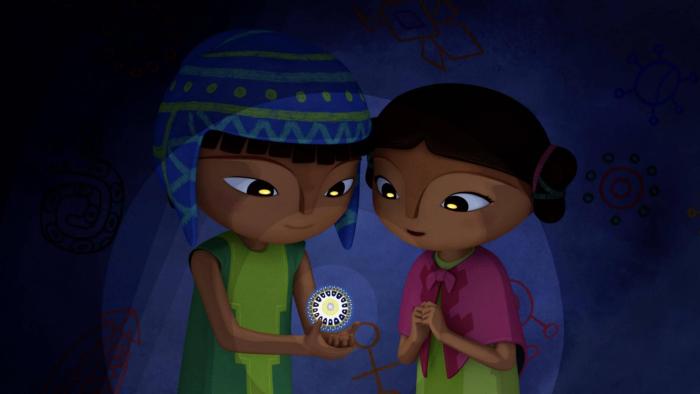
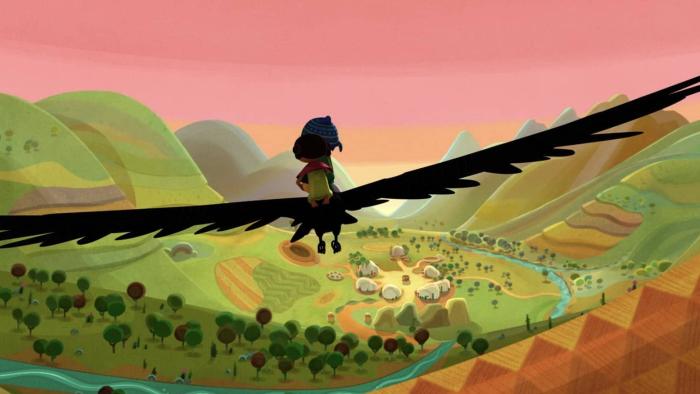
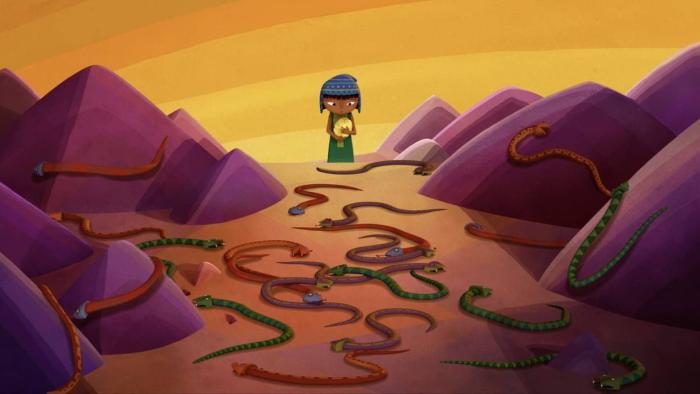
PACHAMAMA is set in 15th century South America, when Inca civilization was at its most advanced, with whimsical animation depicting the Andes mountains and starry skies as magical places ruled by nature gods. Pachamama is one such god who rules the tiny village where Tepulpai (Adama Moussamih) and his friend Naira (Charli Birdgenau) are both about to ascend to the honored title of Great One, which seems to be their passage into adulthood. This requires that they each sacrifice to Pachamama something they hold precious as part of a village ritual. Naira, calm and wise beyond her years, offers her beloved llama. The shaman is poised to slaughter the llama with a knife, but is halted by the gods. Tepulpai holds back his most precious possession, a condor feather he plucked from The Great Condor, a local god, and is refused elevation to Great One status. When tax collectors steal the village's most prized and sacred gold artifact to give to the Inca god back in the nearby big city, Tepulpai goes after them to recover their property. Naira and her llama join him to help, and together they bravely endure terrors of the journey, including encounters with "men of metal," armor-clad Spanish soldiers, wielding guns, explosives, and knives in their quest to plunder the native people and steal their gold.
Is It Any Good?
This animated film has some valuable lessons to offer. Pachamama, which means "mother earth" in quechua language, illustrates not only the sophistication of ancient civilizations and their achievements—cities, roads, water systems, textiles, governments—but also their weaknesses, including, in this case, a vain and out-of-touch leader. Values are also emphasized. Although the area's plentiful gold is used to fashion artifacts of worship, villagers treat seeds for quinoa, potatoes, and corn as far more valuable and worthy of protection and respect.
However, in the film's effort to emphasize respect for the environment, it mixes the message with its deference to magic and spirits, neither of which are likely to solve the earth's current environmental problems. Some viewers may wonder why Naira is less celebrated by this movie than Tepulpai, the male character, who's clearly the lead here, even though they seem equally brave and dedicated to saving their village.
Talk to Your Kids About ...
Families can talk about the fact that there's no shortcut to maturity. Does Pachamama indicate that sometimes it's necessary to face real obstacles in order to achieve wisdom? What are some examples?
How do you see Tepulpai's maturity change throughout the movie? Does he start off courageous, or does that come later? How might you learn to become brave and get out of your personal comfort zone?
When is it important to follow community rules, and is there a time when breaking rules helps the community? Why is teamwork so necessary to achieve big goals?
How could you learn more about the Inca people and their civilization?
Movie Details
- On DVD or streaming : June 7, 2019
- Cast : Adam Moussamih , Charli Birdgenau , Sonja Ball
- Director : Juan Antin
- Studio : Netflix
- Genre : Family and Kids
- Character Strengths : Courage , Teamwork
- Run time : 72 minutes
- MPAA rating :
- MPAA explanation : for some thematic elements and action/peril.
- Last updated : September 17, 2026
Did we miss something on diversity?
Research shows a connection between kids' healthy self-esteem and positive portrayals in media. That's why we've added a new "Diverse Representations" section to our reviews that will be rolling out on an ongoing basis. You can help us help kids by
Suggest an Update
Common Sense Media's unbiased ratings are created by expert reviewers and aren't influenced by the product's creators or by any of our funders, affiliates, or partners.
See how we rate