







Common Sense Media Review
 By V W
,
based on child development research. How do we rate?
By V W
,
based on child development research. How do we rate?
Fun, effective way to work on letter/number reversals.
Parents Need to Know
Why Age 6+?
Any Positive Content?
Where to Download
Videos and Photos


LetterReflex Overcoming Letter Reversals & Backwards Writing in Early Childhood Development & Dyslexic Children


What's It About?
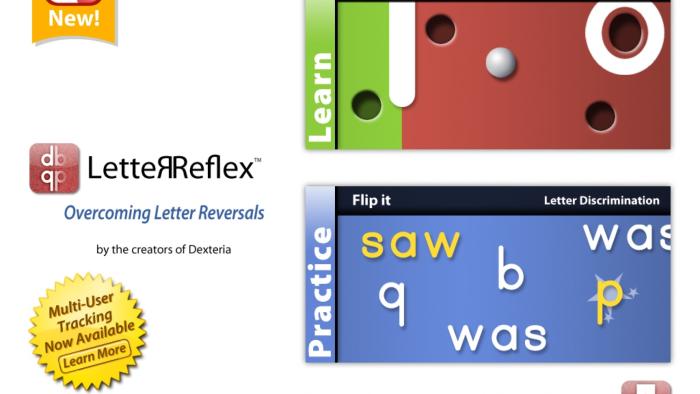
LETTERREFLEX uses games and hands-on activities to help kids differentiate the commonly confused letters P, Q, B, and D and the numbers 3, 6, and 9. In "Tilt It," kids practice flipping and swiping letters, which takes time to understand but with practice makes more sense than handwriting. "Letter Discrimination" has more of an arcade feel as kids swipe up, down, and sideways to roll a ball, which makes the correct letter or number. The challenge increases as kids play.
Is It Any Good?
LetterReflex is appealing because it uses games to help kids learn, rather than having them write a line of letters over and over. When kids tire of one game, they can play the other, and both will become more challenging as they progress. The simple approach and multiple movements required to play (tilting and swiping) will have kids engage with reversed letters and numbers in new ways, which may help them when they go back to pencil and paper.
Talk to Your Kids About ...
Families can talk about directions -- left and right -- as they go about their daily routines.
Have kids practice writing letters in shaving cream or sand: Writing in different textures often helps kids recreate the letters when they return to pencil and paper.
Tell your kids to give two thumbs up, and then hold the knuckles of both hands together. The left hand makes the shape of a B, and the right makes the shape of a D. This is a kinesthetic way to remember the letters' directions.
App Details
- Devices : iPhone , iPod Touch , iPad
- Subjects : Language & Reading : letter or word recognition
- Skills : Self-Direction : personal growth , Health & Fitness : fine motor skills
- Pricing structure : Paid
- Release date : October 15, 2014
- Genre : Education
- Topics : Numbers and Letters
- Publisher : BinaryLabs, Inc.
- Version : 1.1.3
- Minimum software requirements : iOS 6.0 or later
- Last updated : October 1, 2025
Did we miss something on diversity?
Research shows a connection between kids' healthy self-esteem and positive portrayals in media. That's why we've added a new "Diverse Representations" section to our reviews that will be rolling out on an ongoing basis. You can help us help kids by
Suggest an Update
Common Sense Media's unbiased ratings are created by expert reviewers and aren't influenced by the product's creators or by any of our funders, affiliates, or partners.
See how we rate