







Common Sense Media Review
 By Amanda Bindel
,
based on child development research. How do we rate?
By Amanda Bindel
,
based on child development research. How do we rate?
Most complex, challenging, and deep of series so far.
Parents Need to Know
Why Age 13+?
Any Positive Content?
Where to Download
Videos and Photos


Lifeline: Whiteout

Parent and Kid Reviews
What's It About?
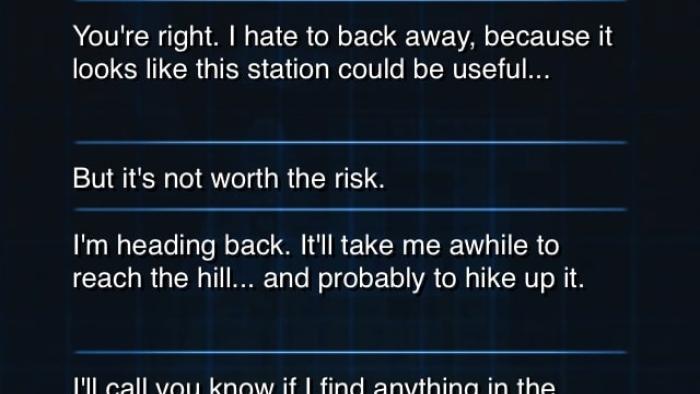
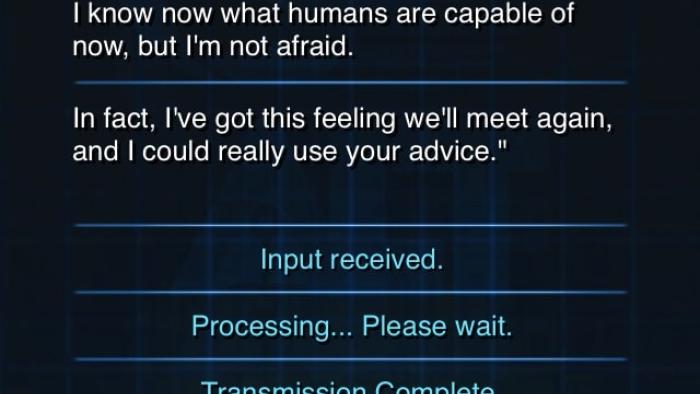
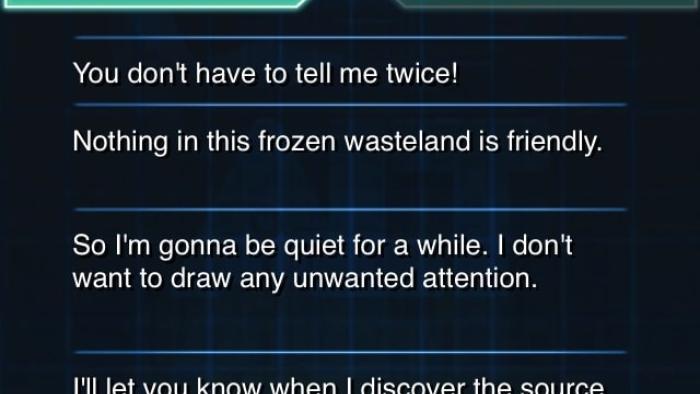
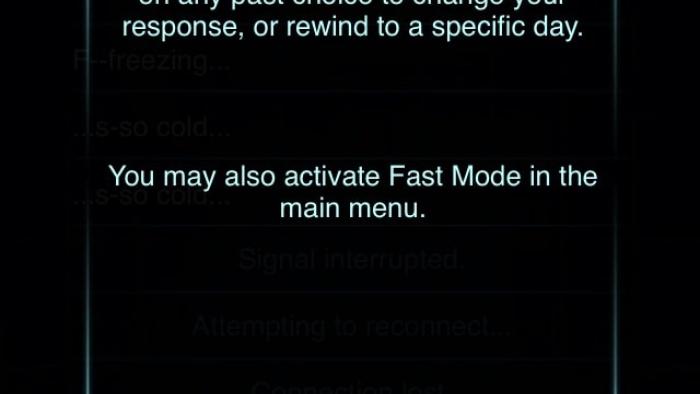
The adventure begins when players accept a communication request from V. Adams, who has found himself stranded without memory in a snowy wasteland. Help Adams along his quest to figure out who he is and why he's there by offering advice and encouragement. The choices determine his fate -- including death. But the game allows endless repeats, and players can rethink their choices and try again to create different stories and outcomes for Adams. All interaction is text-based, and there are long pauses between communications, unless the main character has died and the player has opted to use fast mode.
Is It Any Good?
Riveting adventure puts players in the director's seat, determining his fate in the third version that proves to be the most challenging and thought-provoking of the series so far. The story starts slowly, with choices that can make getting to the climax -- or surviving long enough to get there -- take several attempts. Once there, though, the story is deep and complicated, and players won't want to stop until they find a satisfying resolution. Fortunately, the fast-play option makes that possible and takes away the sting of deathly defeat. Unlike the first two games in the series, which included some choices that could be solved by paying attention to clues, using logic, or looking things up online, this installment seems to have more random choices that feel more like the flip of a coin. Though this is a downside, it also has a more sympathetic protagonist than the last release and sets the stage for a sequel using the same character, which allows for a deeper relationship with V. Adams. It also introduces another likable character -- a dog -- which raises the stakes and addresses some deeper questions that force the player to figure out where they stand. So, while the format isn't fresh anymore, the characters, story, and issues at stake make this third adventure compelling.
Talk to Your Kids About ...
Families can talk about violence in the media. Does it make a difference when the violence is described in words vs. portrayed visually? Does it make it more intense when the object of the game is to help the protagonist?
Discuss Sibelius' intentions, and ask teens whether they agree with his objective. Why, or why not?
Use the larger issues of the game to start a discussion about where kids stand on the central conflict. How did they choose? What reasons did they use?
App Details
- Devices : iPhone , iPod Touch , iPad , Android , Kindle Fire
- Pricing structure : Paid
- Release date : May 25, 2016
- Genre : Adventure Games
- Topics : Adventures
- Publisher : 3 Minute Games, LLC
- Version : 1.0.2
- Minimum software requirements : iOS 8.0 or later; Android 4.0.3 and up
- Last updated : October 1, 2025
Did we miss something on diversity?
Research shows a connection between kids' healthy self-esteem and positive portrayals in media. That's why we've added a new "Diverse Representations" section to our reviews that will be rolling out on an ongoing basis. You can help us help kids by
Suggest an Update
Common Sense Media's unbiased ratings are created by expert reviewers and aren't influenced by the product's creators or by any of our funders, affiliates, or partners.
See how we rate