



Talking with Teens About AI Deepfakes and Explicit Content
Conversation starters for parents on AI, consent, and consequences—and steps to take if your child is targeted.

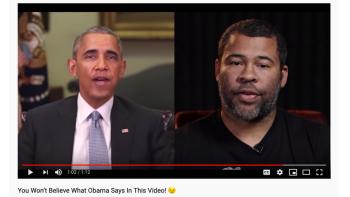
You've probably heard about AI being used to create fake nude photos and videos of real people. This is called a "deepfake," and it's not just something happening in the news—it's showing up in kids' everyday lives.
Some kids come across this content by accident, scrolling through their social media feeds or in group chats. Others try making it themselves, maybe just messing around and not realizing how serious it is. And some kids become the target. Someone takes their photo and uses an app to turn it into a fake nude. Then they share it around school or online, without the person ever knowing or agreeing to it.
Here's the hard truth: This is something a lot of kids are already dealing with, whether we talk about it or not. Because the image is "fake," some kids think it's no big deal. After all, nobody got hurt, right? But the person in that photo is real, and so is the embarrassment, fear, or shame they might feel if it gets passed around.
Deepfakes have real consequences too. Making a sexual image of anyone under 18, even with AI and even as a joke, can be considered child sexual abuse material, which is a serious crime. Kids should know that if this ever happens to them or a friend, they're not stuck dealing with it alone. They can talk to a trusted adult, tell someone at their school, report it to the app or website, or reach out to organizations that specifically help with this.
A lot of kids feel like adults just won't "get it" since we didn't grow up with this technology, so they may stay quiet instead of asking for help. That's exactly why it's important for adults to bring it up first. Use it as a chance to talk about the basics—respecting other people's boundaries, asking before sharing anything about someone, and understanding that consent matters just as much online as it does in person. You don't need to have all the answers. You just need to let your kid know you're a safe person to come to. Here are a few conversation starters to help get things going.
1. 💡 Deepfakes aren't an abstract problem for teens. They're personal.
Almost half of teens (44%) say they've already seen AI-made sexual images, according to recent research from Common Sense Media. And 1 in 4 of those teens say the images showed themselves or someone they know.
🗨️ You can say: Hey, I read something wild about AI being used to make fake nude photos of real people. Apparently a lot of kids your age have already run into it.
❓ Then you can ask: Have you ever seen anything like that? Has anything like that ever happened to you or someone you know? Did it change how you feel about posting pictures of yourself online?
2. 💡 Some kids may not understand how deepfakes can hurt people.
About 25% of teens think AI-made nude photos are less harmful than real pornography because they believe "no one gets hurt."
🗨️ You can say: I get why people think a fake photo is no big deal. It's not even real, right? But the person it's made to look like is real, and so is how humiliated or scared they'd feel if it got passed around. That part isn't fake at all.
❓ Then you can ask: What do you think—does an AI nude feel different to you than an actual photo? How do you think you'd feel if it happened to you or a friend? Do apps that make someone look older or appear in a different outfit make fake AI photos feel too easy or normal?
3. 💡 Some kids may not understand the real-life consequences of deepfakes.
Out of teens who have seen AI-made sexual content, 82% say it should be illegal to make without permission. But it's so easy to create and share that many do it anyway.
🗨️ You can say: I want to talk about something serious for a second, OK? If someone uses AI to make a fake nude photo of a person under 18, that can count as child pornography, which is a felony under the law. It doesn't matter if it's a joke. It doesn't matter if it looks fake. I'm not saying this to scare you. I just want you to know it before it's ever a problem.
❓ Then you can ask: Did you already know that? Has someone making or passing around something like that ever happened with your friends?
4. 💡 Most teens haven't talked to a trusted adult about this.
Only 20% of teens have talked with a trusted adult about AI-made sexual content. About a third want to talk about it but don't know how to start.
🗨️ You can say: I just want you to know—if you ever saw something upsetting like this, whether someone sent it to you or even if it was about you, you can always come tell me. You won't be in trouble for bringing it to me, no matter what.
❓ Then you can ask: If something like that ever happened to you, would you know what to do first? Who would you want to tell?
5. 💡Teens aren't just deepfake victims. Some are deepfake creators too.
About 1 in 5 teens (18%) has made AI sexual content, or knows someone who has. About 1 in 4 (25%) has shared this kind of content or knows someone who has. Most of the time, they're making it about people they know—63% of those teens made content showing themselves or someone they know. Boys are almost three times as likely as girls to have made it (11% vs. 4%).
🗨️ You can say: There are so many new AI apps now, I honestly can't keep up. Can you show me a couple that you or your friends use?
❓ Then you can ask: Which ones do you think could be misused to make something like a fake photo of someone?
Like talks about sex and pornography in general, aim for a series of short, ongoing chats, rather than one big talk. Stay open, avoid judgment, and expect that the conversation may be brief. Your teen might not say much (at first or at all), but it's still a conversation worth having.
What to do if your child is a victim of deepfake content
Know what to do if someone uses AI to make a fake sexual photo or video of your child, or shares real explicit images of them without their consent. Start by sharing the A.C.T. strategy with your child, so they know how to get help.
Ask for help from a trusted adult. If that person doesn't take it seriously, find someone who will.
Collect evidence by taking screenshots of usernames, account names, and where it appeared, but do not save, forward, or redistribute the actual explicit image. Consider whether a trusted adult should handle evidence collection, especially when nude images are involved.
Take care of yourself. Connect with supportive family and friends, and take time to do things that help you stay positive. You are not alone, and this is not your fault.
These organizations can help if your child is a victim of deepfake nudes. They offer support and step-by-step guidance.
- Thorn
- Stop NCII
- National Center for Missing & Exploited Children
- Cyber Civil Rights Initiative — helpline: (844-878-2274)
You can also report platforms that don't remove intimate photos, videos shared without consent, or suspected child sexual abuse material to Take It Down.

Recommended reads on this topic