




Teens told us they're not just seeing AI nudes — they're making them
Our new survey finds that sexual deepfakes often involve friends, exes, and classmates—and parents are barely talking about them.
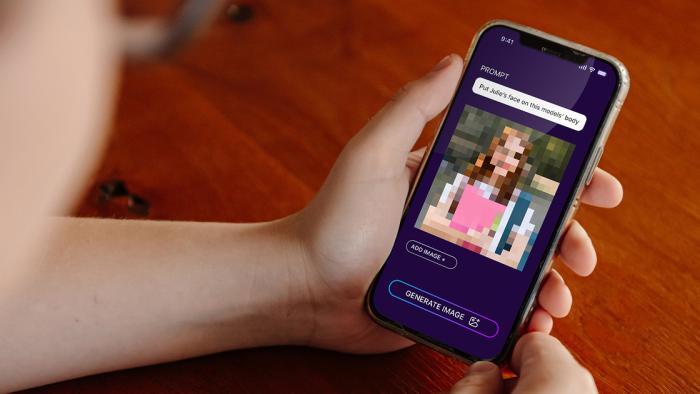
You might think of AI deepfakes as a celebrity problem. When doctored videos of a politician or fake nudes of famous women spread online, the danger can feel distant from ordinary families.
But now the face in a fake nude may belong to your teenager's classmate.
In a new survey, 44% of teens told Common Sense Media's Youth AI Safety Institute they had seen sexual content they believed was generated by AI. And among those teens, nearly one in four said it depicted someone they knew personally—or even themselves.
Teens aren't just seeing this stuff. Nearly one in five told us they had made AI sexual content or knew someone who had. Among that group, nearly two-thirds said the images involved people inside their own social world: a friend, an ex, or a classmate down the hall.
AI sexual content is showing up in the crushes, breakups, and group chats that define teen life. (Read the whole report here.)
"Parents should care not just because some teens are being exposed. They should care because deepfakes are changing how teens think about intimacy and consent," says my colleague Dr. Supreet Mann, who led the research.
AI has made a severe form of sexual harassment easy enough for almost any kid with a phone to carry out. Families need to talk about it before an incident occurs—but they also need the tech industry to step up.
This is happening among kids who know each other
Our nationally representative survey asked 1,314 teens age 13 to 17 about deepfakes, fake nudes, "undressing" apps, and other sexualized AI imagery. Because teens may be reluctant to admit behavior that could alarm adults, Mann believes the findings may understate how often it's happening. Teens in subsequent focus groups said the numbers matched what they saw among their peers—or seemed low.
What the kids described isn't confined to dark corners of the internet. AI sexual content surfaces in the feeds and group chats where teens spend their days, often without seeking it out and often passed along by someone they know.
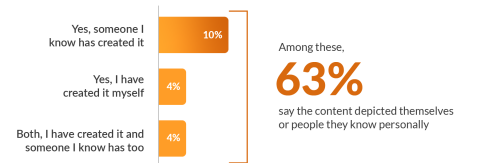
Question: Have you ever made AI sexual content — or know someone who has?
Eight percent of all teens—roughly one in 12—said they had made AI sexual content themselves. Boys were nearly three times as likely as girls to do so: 11% versus 4%.
Why the gender imbalance? Debby Herbenick, a professor at Indiana University who studies adolescent sexual behavior and advised on the study, says the pattern is a familiar one. The findings "align with data on sexual harassment in schools and sexual assault among adolescents," she told me.
AI didn't invent the impulse to objectify or humiliate a peer. It gave that impulse a much more powerful tool.
All of this is happening as young people form their earliest ideas about attraction and consent. The motivations behind making this content aren't always simple. Herbenick says teen sexting research has long found a mixture of flirtation and curiosity, as well as bullying and harassment. Whatever the original intent, an image can turn into public humiliation with a screenshot, a breakup, or a tap on the share button.
Part of the appeal may be how easy AI tools are to use. "With no hurdles or anything you have to jump over, you can just do it right there," one 17-year-old focus group participant told us.
How deepfakes are changing teen life
The effects extend beyond teenagers whose faces appear in an image. Knowing someone could use their face this way is already changing how teens behave.
Two-thirds of teens told us they're concerned about being depicted in AI-generated sexual content without their consent, and girls are more worried than boys. "Everyone should have at least a small degree of worry," one 17-year-old girl told us, "because it's so easy to make, so accessible."
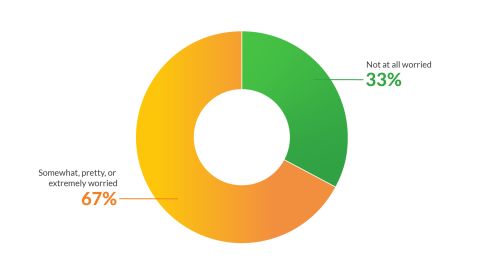
Question: How worried are teens about being deepfaked?
That fear is quietly reshaping how they show up online. Many worried teens have made their accounts private or cut back on posting photos of themselves; nearly one in 10 has deleted an account outright. "We don't want anyone to have to live in fear online. But if a space is not safe, then it is self-protective to take some steps to feel more comfortable," said Herbenick.
For teens who become online targets, the harm can follow them offline. Herbenick says sexual deepfakes made without permission can cause or worsen depression, anxiety, and feelings of shame or helplessness. Unlike a sexual rumor, an image can look like evidence—even though nothing it depicts ever happened.
The damage is already playing out in schools. The Wall Street Journal recently told the story of an Iowa student who was among roughly 50 classmates targeted by boys using an "undressing" website. After the fake images circulated, she found the boys' glances in the hallways so disturbing that she eventually began attending school online. "It haunts me thinking about it," she told the Journal.
Her experience captures the imbalance teens are now living with: An image that takes seconds to create can take years to escape.
How to help teens navigate the deepfake era
Most teens who had encountered AI sexual content understood that making a sexual deepfake of someone without permission crossed a line: 82% said it should be illegal.
But nearly one-quarter of those who had encountered AI sexual content said fake nudes are less harmful than real pornography because "no one gets hurt."
That is the misconception parents most need to address. Fake doesn't mean harmless. The humiliation, fear, and loss of control are real. Herbenick says adults need to explain both the human harm and the potential legal consequences of making or sharing these images.
Yet only 20% of teens said they had discussed AI sexual content with a trusted adult. More than one-third said they wanted to talk to an adult about it but didn't know how to start.
Dr. Kellen Glinder, a California pediatrician and member of Common Sense Media's advisory council, recommends that parents "come in through the side door, not the front door." Starting with loaded words such as pornography or even bullying, he says, may make a kid shut down.
Instead of asking, "Have you ever made a fake nude?" try something less accusatory, such as, "What have you heard about kids using AI to make fake pictures of people?"
If a teen says, "But it wasn't real," Glinder advises resisting the urge to immediately deliver a lecture. Instead, follow the consequences outward: What happens after someone saves it? How would you feel if it were your face? (See here for more conversation starters.)
Above all, make it safe for your child to come to you. Fear of blame—or losing a phone—is one reason teens stay quiet. Children need to know a parent will help them through a crisis, Herbenick said, even if they broke a rule or did something wrong.
Parents should make clear that creating or sharing sexual deepfakes of minors can be illegal and carry serious criminal consequences.
If your child is targeted, use the app's or website's reporting process. Under the Take It Down Act, covered platforms must remove qualifying images within 48 hours of a valid request.
For schools, Common Sense Media has a free K–8 Digital Literacy & Well-Being Curriculum, which includes an eighth grade lesson that covers Deepfakes & Consent specifically.
But this is bigger than what families and schools can solve alone.
Mann says there are fixes within reach. App stores could stop offering the tools built to generate this content. On July 16, San Francisco City Attorney David Chiu sent Apple and Google cease-and-desist letters demanding that they remove 13 face-swapping apps capable of producing sexual deepfakes.
The platforms where the images spread could also do more to detect and remove them proactively, instead of waiting for a teenager to report a fake nude made with their face.
Right now, the cleanup falls to the person with the least power to manage it: the kid in the image.

Geoffrey Fowler is the Head of Public Engagement for the Youth AI Safety Institute at Common Sense Media. He is a former columnist at The Washington Post, where he advocated for the users of technology. Previously, he worked as a columnist, reporter, and foreign correspondent at The Wall Street Journal, where he covered Big Tech, China, the Olympics, and more. Geoffrey won the Gerald Loeb Award, the most prestigious honor in business journalism, for commentary in 2020, and was a finalist for commentary in 2024. He graduated from Harvard College with a degree in Social Anthropology and Afro-American Studies and has an MPhil from the University of Cambridge. He lives in San Francisco with his family, who have to put up with his never-ending gadget experiments.
Recommended reads on this topic