Violence, swearing in thrilling New Orleans fantasy sequel.
Parents Need to Know
Why Age 15+?
Any Positive Content?
Parents Need to Know
Parents need to know that Blood Justice is the young adult fantasy sequel to Blood Debts written by Terry J. Benton-Walker. After the first novel's events, Clem and Cris Trudeau have reasserted their legitimacy and power in the magic community of New Orleans, though a series of tragic events might result in the end of their dynasty. Several violent scenes include various people killed in gruesome descriptions and a grotesque transformation sequence of a character involving creatures crawling under their flesh. Other violence ranges from mild confrontations between family and rivals to serial murders committed by magic, a character shooting a gun, to other violent clashes. Sex and romance is tamer in this installment with scenes of flirting and characters recalling sexual experiences and a reference to cheating. A scene in a pleasure house describes scantily-clad, provocatively dressed people. Frequent swearing like "f--k," "ass," "hell," "s--t," "bitch," and more. Several scenes of substance use include main and supporting characters using prescription medication, ibuprofen, and opiates, drinking beer, smoking a weed vape, and selling drugs in a Black neighborhood. Scenes of indignation with characters reflecting the racism and decisions that are happening around them.
Violence & Scariness
a lot
A character brought back to life through necromancy magic has black eyes and cannot talk due to being half-revived. Scenes of characters being killed by magic or physical confrontation. A couple of scenes involving brutal fights and confrontations. A grim description of one character creating an undead army. A character describes a person with his clothes dripping with blood from his suit, screaming, falling over, and a gash in his head. There is a scene with a character chained up. A character undergoes a gruesome transformation sequence involving a creature crawling underneath their skin. A character uses a gun to shoot someone. The word "grooming" was used to describe magical manipulation (not used in a sexual context). A character drags two corpses. A character describe two explicit disturbing dreams—one is of his father naked, drenched in blood, and eating his own foot and the other is of his father strangling a younger version of himself. There is a scene where a character enters their home and finds their relative in a mentally deranged state. Mention of a video being used as blackmail involving a character cheating at a pleasure house. Poison is added to a character's alcoholic drink.
Did you know you can flag iffy content?
Adjust limits for Violence & Scariness in your kid's entertainment guide.
Frequent flirting between characters across various chapters. The protagonists walk into a brothel filled with scantily clad people. A protagonist recalls his first sexual experience with his partner in graphic detail. A character finds a male masturbation toy in a desk drawer while investigating another character's apartment. A family member has an on and off relationship with another character and recalls their sexual interactions. Non-sexual nudity in a violent scene (see Violence & Scariness for details). A character's father was mentioned to have continuously cheated on his wife. The painting of the protagonist and his partner nude from the first book returns.
Did you know you can flag iffy content?
Adjust limits for Sex, Romance & Nudity in your kid's entertainment guide.
Lots of swearing including "f--k," "motherf----r," "ass," "hell," "s--t," "goddamn," "damn," "piss," and variants of all of these, plus less frequently "d--k(s)," "balls," "troglodyte," "bastard," "bitch," "Jesus," "God! (as an exclamation)." Other rarer language includes "ACAB" (All Cops Are Bastards), "homeless woman," "black bitches," and "thugs."
Did you know you can flag iffy content?
Adjust limits for Language in your kid's entertainment guide.
A character drinks himself into depression after a funeral. A character smokes a weed vape in certain chapters of the book. Mentions of characters drinking bourbon. A character tells the protagonist that his mother is in rehab. Drinking at Vice Hall. Mentions of a "magical shadow cartel." A character smokes half a joint and sells Vicodin, ketamine, and Percocet. Two characters drink beer and one mentions getting weed from a dealer. "Gambling" mentioned when talking about gambling machines at Vice Hall. Cigars used as part of a prayer for a character. A character takes ibuprofen. The character mentions her brother being okay without his anxiety medication.
Did you know you can flag iffy content?
Adjust limits for Drinking, Drugs & Smoking in your kid's entertainment guide.
Many mentions of products, purchases, and references throughout the book for scene-setting purposes. Including Xbox, Instagram, the Dragon Ball franchise, Goodwill, Abercrombie and Finch, Hilton Garden Inn, Popeyes, Kraft, The Concrete Jungle, TikTok, Twitter, The 48 Laws of Power, Fleshlight, Bath & Body Works, Nite-Lite, Pandora, Apple/Facetime, NeoSporin, James Bond, Care Bears, the Terminator film franchise, Marvel, Jeep, Netflix, Bluetooth, Jordans, Gilmore Girls, Wal-Mart's Great Value products, Cruella De Vil—reference to Disney's 101 Dalmatians franchise, and ibuprofen.
Diverse Representations
a lot
Similar to the first book, the characters are predominantly African American, Afro-Latinx, and Puerto Rican. Some characters are LGBTQ+, and one is Black and Chinese. LGBTQ+ author Terry J. Benton-Walker uses his research of voodoo spiritual connections to the Black and Afro-Latino community as inspiration for the characters and the magic types they use.
Did we miss something on diversity?
.
Positive Role Models
some
Certain events from the previous book and the sequel position twins Clem and Cris as imperfect people. They do deceitful things like lying to their family and their friends' family members, but hey also show perseverance, such as going to great lengths to right a wrong. Cristina Trudeau is a more powerful heiress thanks to her rediscovery of her powers. When evidence of serial murders points toward her family, she remains steadfast in her conviction to discover who is truly responsible for the murders. Clement Trudeau continues to express himself and be supportive of his sister. He hopes the risks he takes revives his newfound partner.
Positive Messages
a little
In the book, family caretaker Odesssa tells Cris, "Life will forever be a challenge, but whenever it feels too hard, too rough, too unkind, remember, you're never alone". The message can help the reader understand that feeling lonely during hard times is normal, and perseverance is the key to living life to the fullest.
Educational Value
very little
Expands on the first book's events, setting (New Orleans), and African diaspora-inspired lore.
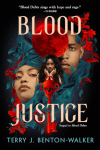
In BLOOD JUSTICE, the Trudeau family are the new leaders among the magical community of New Orleans. Cristina Trudeau has a renewed vengeance toward those who wronged her and the family. This newfound vengeful justice may cost the Trudeau heiress her magic and her soul. Clement Trudeau, like his twin sister, has darkness and rage simmering to the point of desperation as a tragic event from the previous book collides with the scary events in this one. A series of grisly deaths done by magic are being looked into by a seasoned detective with an apparent agenda against magic people, so the Trudeau family's reign may come to an unceremonious end unless Cris and Clem can manage to defend their position in the magic community.
Is It Any Good?
Our review:
Parents say :Not yet rated
Kids say :Not yet rated
Readers will be thrilled to return to this dark and alluring version of New Orleans, as Clement and Cristina's inner turmoil reaches a boiling point. As captivating as the first installment, Terry J. Benton-Walker's narrative power expands on the events and lore of Book 1. He deftly unravels how systems of racial prejudice continue to traumatize and exploit people of color, as well as capturing their resistance, fighting back, and community-building in spite of these systems. Whereas the first book is about reclaiming a legacy from intergenerational trauma, Blood Justice is about how much that trauma and deep-rooted anger fuels the need for vengeance and how much vengeance can actually cost. This sequel is a fast-paced read that's as exciting as it is profound.
Talk to Your Kids About ...
Blood Justice is about how our inner darkness and systemic racism result in desperation and outrage. How are the characters affected by the pain, resentment, and agitation? What are some lessons from the book about how to handle the impacts of oppression?
A common theme in both books is the difficulties that racially marginalized communities face. How do characters persevere through the harsh realities they face? Are there days when negative forces in your life feel overwhelming? What helps you to overcome them?
Clement and Cristina feel they have to lie about their circumstances several times in the book, but it results in deepening their inner turmoil. What do you think the author is trying to say about truth through their experiences?
Available on
:
Paperback, Audiobook (unabridged), Hardback, Apple Books, Kindle
Last updated
:
September 18, 2025
Did we miss something on diversity?
Research shows a connection between kids' healthy self-esteem and positive portrayals in media. That's why we've added a new "Diverse Representations" section to our reviews that will be rolling out on an ongoing basis. You can help us help kids by
Common Sense Media's unbiased ratings are created by expert reviewers and aren't influenced by the product's creators or by any of our funders, affiliates, or partners.





 By Julian Jones
,
based on child development research. How do we rate?
By Julian Jones
,
based on child development research. How do we rate?