







Common Sense Media Review
 By Regan McMahon
,
based on child development research. How do we rate?
By Regan McMahon
,
based on child development research. How do we rate?
Powerful graphic-novel memoir offers hope, call to action.
Parents Need to Know
Why Age 12+?
Any Positive Content?
Where to Read
What's the Story?
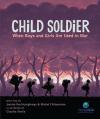
Michel is a happy 5-year-old in a loving family in the Republic of Congo in 1993 when he and his best friend, Kevin, are kidnapped with other boys by a rebel militia when they're playing soccer on the field after school. They're thrown into trucks and taken to the soldiers' camp in the hills, where Michel is forced to become a CHILD SOLDIER. The children are initiated into the rebel army by being cut with a knife and having a mixture of gunpowder and cocaine ground into the wound. Then Michel is blindfolded, a gun is put into his hand, and someone behind him grabs his fingers, puts one on the trigger, and forces it to shoot. A soldier takes off the blindfold and Michel sees he's killed Kevin (the panel shows only the flip-flops of the fallen boy). After Michel escapes and returns home, he continues to suffer as his father becomes an activist against corrupt politicians and ruthless rebels. His father is kidnapped and tortured (neither is shown) and sent to a refugee camp in Uganda. The family joins him there, and after his father's death, Michel, his mother, and one sister migrate to Canada when he's 16. Later another sister joins them, but his sister who remained in Congo is never seen again.
Is It Any Good?
This heartrending, powerfully illustrated graphic novel memoir is a testament to courage, survival, family bonds, and hope amid unimaginably tough circumstances for a child to face. By keeping the focus on Michel and his father's love that pulls him through, readers will be able to relate to Michel as an ordinary kid caught up in extraordinary circumstances and grasp the complex geopolitical realities of this historical moment. They'll also gain an awareness that the horror of child soldiers remains an issue in many countries of the world today.
Illustrator Claudia Davila's varied panels of stylized cartoon-like figures often zoom in close to emphasize the emotions of the characters -- the evil ones as well as the kind and clueless. One panel near the end shows a diverse group of contemporary kids on a city bus in North America (where Michel's lived for 10 years now) with their thought balloons filled with trivial complaints, such as " ... hate my new phone" and " ... pizza was ice cold by the time ... ." And Michel says, "When I first arrived, I thought people here didn't care about the troubles in other countries. But now I know that young people here just don't understand what is happening right now, to kids just like them." This book goes along way toward helping kids understand.
Talk to Your Kids About ...
Families can talk about child soldiers. Where in the world are children forced into military service today?
How is the graphic-novel formal helpful for conveying scenes of heartless brutality? What does the artist zero in on to convey emotions and danger?
Why do the the adult soldiers make the child soldiers consume cocaine?
Book Details
- Authors :
- Illustrator : Claudia Davila
- Genre : Autobiography
- Topics : Family Stories ( Siblings ) , Friendship
- Book type : Non-Fiction
- Publisher : Kids Can Press
- Publication date : October 28, 2015
- Publisher's recommended age(s) : 10 - 14
- Number of pages : 48
- Available on : Nook, Hardback, Kindle
- Last updated : January 6, 2026
Did we miss something on diversity?
Research shows a connection between kids' healthy self-esteem and positive portrayals in media. That's why we've added a new "Diverse Representations" section to our reviews that will be rolling out on an ongoing basis. You can help us help kids by
Suggest an Update
Common Sense Media's unbiased ratings are created by expert reviewers and aren't influenced by the product's creators or by any of our funders, affiliates, or partners.
See how we rate