







Common Sense Media Review
 By Joly Herman
,
based on child development research. How do we rate?
By Joly Herman
,
based on child development research. How do we rate?
Uneven fantasy about 1893 expo has peril, drinking.
Parents Need to Know
Why Age 10+?
Any Positive Content?
Where to Read
What's the Story?
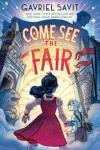
In COME AND SEE THE FAIR, it's the 1890s, and an orphan named Eva is asked by her guardian, Mrs. Blodgett, to use her skills of perception to speak to the dead. The seances she conducts are phony, but Eva is convincing enough -- and consistent enough -- to earn money for herself and Mrs. Blodgett. But one night, something that Eva didn't fabricate appears out of thin air, shocking the audience she's trying to captivate. She feels compelled to follow several mystical clues to Chicago, where the World's Columbian Exposition is underway. On her way, she meets a boy named Henry who also feels a magical connection to the fair. Will they find the source of the magical call? And if they do, will they ever be the same?
Is It Any Good?
Using an ornate narrative tone, Gavriel Satvin's attempt to conjure a magical world within an historical setting falls short on human warmth. Come See the Fair succeeds in bringing the churning sights and sounds of the 1893 World's Columbian Exhibition in Chicago to life, but kids might not be willing (or able) to wade through the prose to access the magic. There are also believability issues related to the fact that the main characters enter the magical world for weeks at a time without any adults wondering where they might be. Still, it's clear that Satvin has applied passion and purpose in recreating the splendor of the historical setting. Fans of magic might dig deeper to get to the bottom of the mysterious Pavilion of Magic that seduces the main characters, but fans of richly developed characters in magical stories will likely be disappointed.
Talk to Your Kids About ...
Families can talk about the all the ways characters communicate in Come See the Fair. Do you believe that people can communicate with the dead like Eva tries to do in this book?
What does the main character gain from her perseverance in this book? Would you call her story a happy one?
Adult characters drink heavily and make poor decisions for kids in their care. How can books written for kids and teens address substance use/abuse in meaningful ways?
Book Details
- Author :
- Illustrator : Mildred Hankinson
- Genre : Fantasy
- Topics : Fantasy ( Magic ) , Friendship , History
- Book type : Fiction
- Publisher : Alfred A. Knopf
- Publication date : April 11, 2023
- Publisher's recommended age(s) : 10 - 12
- Number of pages : 336
- Available on : Audiobook (unabridged), Hardback, Apple Books, Kindle
- Last updated : September 18, 2025
Did we miss something on diversity?
Research shows a connection between kids' healthy self-esteem and positive portrayals in media. That's why we've added a new "Diverse Representations" section to our reviews that will be rolling out on an ongoing basis. You can help us help kids by
Suggest an Update
Common Sense Media's unbiased ratings are created by expert reviewers and aren't influenced by the product's creators or by any of our funders, affiliates, or partners.
See how we rate