







Common Sense Media Review
 By Regan McMahon
,
based on child development research. How do we rate?
By Regan McMahon
,
based on child development research. How do we rate?
Charming tale of how Pooh went from idea to beloved classic.
Parents Need to Know
Why Age 4+?
Any Positive Content?
Where to Read
Parent and Kid Reviews
What's the Story?
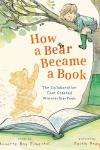
HOW A BEAR BECAME A BOOK starts with a little boy holding his teddy bear and asking the reader, "Would you like a story?" (Those already in the know will realize he's Christopher Robin from the Pooh books, although he's never named.) He goes on to explain that stories need a character. "Any ideas? Because characters in stories begin with ideas." Next an illustrated bear who looks like Winnie-the-Pooh arrives and says, "Hallo," a word that Pooh uses in the classic A.A. Milne books. "How will I ever become a book?" he wonders. And the boy opens a door in a nearby tree and says, "That's quite a story! Let me show you..." All this takes place before the title page. From there we learn how A.A. Milne got his idea and then showed his story to his editor, and then how the editor chose an illustrator and the first Pooh book got published, became an instant hit, and other books followed. Familiar (unnamed) Pooh characters, including Piglet, Eeyore, Tigger, Kanga, and Roo, etc., dance across the pages along with the words. The boy narrates the book in conversation with Pooh. His text is in conventional black-and-white type. Pooh's dialogue, which reflects his personality and tastes (especially for honey), appears in a brown, kid-like typeface.
Is It Any Good?
This marvelous picture book biography of A.A. Milne tells a story of collaborative artistic creation as it captures the voice and vibe of his most beloved character. How a Bear Became a Book mimics the classic Pooh books' playful typographical design and deftly samples Pooh's way of speaking ("Oh, bother"; "Tubbiness is just the thing"), while conveying the sweetness and wonder of Pooh's adventures. At the same time, author Annette Bay Pimentel, with the lightest touch, lays out for young readers what it takes to write, illustrate, and publish a story that will end up on bookstore shelves. Faith Pray's lively illustrations honor the source material while drawing in contemporary readers. The thoughtful design of this book means even very young readers will stay engaged, though school age kids and Winnie-the-Pooh fans of all ages will get the most out of this outstanding biography.
Talk to Your Kids About ...
Families can talk about how the creative team described in How a Bear Became a Book worked together. Have you ever worked with others to tell a story with pictures? How important was teamwork in making it happen?
Have you seen Winnie-the-Pooh stories on television or in movies? Have you ever read the original books? Does this book make you curious to check out other Winnie-the-Pooh media? Why?
What do you like about Winnie-the-Pooh? Why do you think he's been popular with kids for 100 years?
Book Details
- Author :
- Illustrator : Faith Pray
- Genre : Picture Book
- Topics : Animals ( Wild Animals ) , Arts
- Character Strengths : Communication , Curiosity , Perseverance , Teamwork
- Book type : Non-Fiction
- Publisher : Henry Holt & Company, Inc.
- Publication date : March 31, 2026
- Publisher's recommended age(s) : 4 - 8
- Number of pages : 48
- Available on : Nook, Audiobook (unabridged), Hardback, Apple Books, Kindle
- Award : Common Sense Selection
- Last updated : May 6, 2026
Did we miss something on diversity?
Research shows a connection between kids' healthy self-esteem and positive portrayals in media. That's why we've added a new "Diverse Representations" section to our reviews that will be rolling out on an ongoing basis. You can help us help kids by
Suggest an Update
Common Sense Media's unbiased ratings are created by expert reviewers and aren't influenced by the product's creators or by any of our funders, affiliates, or partners.
See how we rate