





Common Sense Media Review
 By JK Sooja
,
based on child development research. How do we rate?
By JK Sooja
,
based on child development research. How do we rate?
Racism, queer, Asian representations in great sequel.
Parents Need to Know
Why Age 10+?
Any Positive Content?
Where to Read
What's the Story?
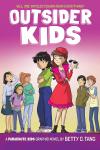
In OUTSIDER KIDS: A PARACHUTE KIDS GRAPHIC NOVEL, Ann and her siblings are still trying to make a life for themselves in America. But without their parents, they have to rely on themselves to make things work. When a family relative comes to stay, she causes massive disruption to Ann's life by being cruel and selfish. How will Ann make things work with this difficult person, even if she is family?
Is It Any Good?
This sequel is a well-scripted and great addition to the series. A positive representation of Asian American immigrant experience, Outsider Kids shows the challenges and joys of a 1980s family trying to adjust to American schools, names, and culture. Like its predecessor, this graphic novel shows experiences, common to Asian American immigrants, with racism, prejudice, and unfair treatment. Ann particularly faces a ruthless and brutal school environment where kids are quick to make fun of her accent and lack of "good English." But there is positive representation in friends and allies who step up in support, even if it takes various characters having to learn a lesson or two in compassion and empathy.
Smartly, this sequel introduces a different kind of antagonist in the character of Josephine. As an incredibly dislikable character, her construction still allows for some deeper understanding into what might drive a person to act that way (rather than it all just be who she is). Also, Josephine's character introduces a sophisticated kind of dynamic within Asian American immigrant communities, wherein competition inside the group ends up being just as unproductive as external opposition to Asian American equality. The internal family conflicts explored and prompted by Josephine's arrival help to show some less commonly represented experiences.
Talk to Your Kids About ...
Families can talk about racism and verbal violence in family graphic novel stories. Did any of the ways Ann is treated in Outsider Kids surprise you? Which moments felt the most harmful? Why?
How does Ann show compassion and humility? For example, after feeling like she made a mistake, Ann tries to make things better. How else does Ann show integrity? How do other characters, like Jason, particularly show integrity and courage?
How would you handle a character like Josephine? Would you have done anything differently?
Do you think there's a way to better understand Josephine? Or is she just unredeemable? In other words, why might she act the way she does?
Do you think the ending is a happy one? Why or why not?
Book Details
- Author :
- Illustrators : Betty C. Tang , George WIlliams
- Genre : Graphic Novel
- Topics : School ( Middle School )
- Character Strengths : Compassion , Courage , Empathy , Humility
- Book type : Fiction
- Publisher : Graphix
- Publication date : April 15, 2025
- Publisher's recommended age(s) : 9 - 12
- Number of pages : 288
- Available on : Paperback, Audiobook (unabridged), Hardback, Apple Books, Kindle
- Awards : ALA Best and Notable Books , Common Sense Selection
- Last updated : September 18, 2025
Did we miss something on diversity?
Research shows a connection between kids' healthy self-esteem and positive portrayals in media. That's why we've added a new "Diverse Representations" section to our reviews that will be rolling out on an ongoing basis. You can help us help kids by
Suggest an Update
Common Sense Media's unbiased ratings are created by expert reviewers and aren't influenced by the product's creators or by any of our funders, affiliates, or partners.
See how we rate