





Common Sense Media Review
 By JK Sooja
,
based on child development research. How do we rate?
By JK Sooja
,
based on child development research. How do we rate?
Kids learn how to make comics in warm, inclusive story.
Parents Need to Know
Why Age 8+?
Any Positive Content?
Where to Read
What's the Story?
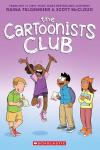
In THE CARTOONISTS CLUB, Makayla is creative and artistic and an amazing story writer. Looking for other kids who like the same things, Makayla starts a cartoonists club after school. To her surprise, a few kids show up, and before she knows it, they have a proper club with a proper teacher teaching them how to make comic books!
Is It Any Good?
This warmly welcoming, inclusive graphic novel is a joy to read for so many reasons. Makayla, Art, Lynda, and Howard are a diverse kid crew far beyond visual cues. Each character in The Cartoonists Club is fully thought out, personalized, and particular, different in style, voice, and attitude. From sci-fi, fantasy, comics-loving Black girl main character Makayla to shy Lynda working through her grief in artistic expression, to artsy Art who uses "they"/"them" pronouns and loves trying new creative things, it's refreshing to see these kids bond and create over a shared love of comics across many lines of difference. This story is a great example of (and argument for) inclusion of differences in kids' books. The kids have many incredibly supportive adults and teachers who go to great lengths to support their artistic endeavors, possibly even to an improbable degree, but the messages are clear: Keep trying, keep thinking of interesting ideas, and continue to learn about your craft. Watch, read, and listen to others who do what you want to do. Keep developing your creative process. And remember, everyone is welcome at this creative table.
On top of all that, there's real-world advice and lessons about how to go about making comics. Different sections outline what the six universal face expressions are (sadness, joy, fear, anger, surprise, disgust), the different kinds of comics (comic books, graphic novels, anime/manga, zines, cartoons, newspaper serials, memoirs), story genres, and the jobs and roles involved in making comics. Readers will feel the "magic" of how comics work (through the reader, who imagines what goes on in between the panels, filling in gaps), and how comics are produced by the writers, illustrators, artists, and editors, but also by the reader, in the act of reading itself. There's even a nice, brief glossary of terms in the back of the book and questions about comics answered by the authors, interview style. This masterclass in comics, friendship, and creative expression has wide appeal, but will especially inspire budding graphic novelists.
Talk to Your Kids About ...
Families can talk about how comics and graphic novels are made. What parts of The Cartoonists Club are most helpful in showing what goes into making comic books?
How do Makayla, Art, Lynda, and Howard show positive traits of teamwork and empathy? When Lynda finally shows her comic story, how do her friends respond? How does the club show good communication skills?
Ms. Fatima explains different story genres, like action, humor, romance, fantasy, and memoir. What story genre is your favorite? Why?
Do you like any comic books or graphic novels? Which are your favorite and why?
Does this graphic novel make you excited for a sequel? What do you hope to find Makayla, Art, Lynda, and Howard up to in future books?
Book Details
- Authors :
- Illustrators : Ray Baehr , Beniam C. Hollman , Jesse Post
- Genre : Graphic Novel
- Topics : Friendship , School ( Middle School )
- Book type : Fiction
- Publisher : Graphix
- Publication date : April 1, 2025
- Publisher's recommended age(s) : 8 - 12
- Number of pages : 288
- Available on : Paperback, Hardback, Apple Books, Kindle
- Award : Common Sense Selection
- Last updated : September 18, 2025
Did we miss something on diversity?
Research shows a connection between kids' healthy self-esteem and positive portrayals in media. That's why we've added a new "Diverse Representations" section to our reviews that will be rolling out on an ongoing basis. You can help us help kids by
Suggest an Update
Common Sense Media's unbiased ratings are created by expert reviewers and aren't influenced by the product's creators or by any of our funders, affiliates, or partners.
See how we rate