







Common Sense Media Review
 By Carrie R. Wheadon
,
based on child development research. How do we rate?
By Carrie R. Wheadon
,
based on child development research. How do we rate?
Poignant, dark tale of a healer whose godfather is Death.
Parents Need to Know
Why Age 14+?
Any Positive Content?
Where to Read
What's the Story?
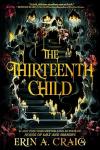
In THE THIRTEENTH CHILD, Hazel, the thirteenth child in a poor family, is promised to the Dreaded End (the god of death) upon her birth. But after Hazel is born, her godly godfather doesn't come to claim her. Hazel's mother brings up the god's abandonment often, and throws in the extra cruelty of skipping all mention of Hazel's birthdays and making her sleep in the barn. But on Hazel's 12th birthday, the Dreaded End finally arrives, offering a decadent cake and showers of gold coins to her belligerent, greedy mother, but no sincere apologies. Before Hazel can fear where she's headed, her godfather whisks her to the Between. A cottage awaits her, filled with books to help Hazel become a healer blessed by a god. Hazel thinks she's to live with the Dreaded End, but shortly after she's settled, he's gone again. So Hazel begins to read alone day after day, wishing more than anything that her godfather would come for her again.
Is It Any Good?
This sweeping fantasy is full of macabre surprises—beheadings, plagues, vengeful ghosts—and sweet ones too, like the tender relationship between a young healer and her godfather, the god of death. There's often tension between Hazel and the Dreaded End. He claims her from her neglectful family 12 years late, dictates her future, and doesn't understand her need for companionship. He also doesn't understand why she can't kill on command without so much remorse, even if it's the natural order of things. But he also cares for Hazel deeply and through the years finds a way to express it and learn from her compassion.
This relationship is the complex emotional center of The Thirteenth Child. Compared to it, the love story feels less important and less intriguing. Perhaps it's because Prince Leopold does very predictable things: acts up as a spoiled royal, then changes his ways for a disapproving Hazel. Still, it's easy to root for Hazel and Leo finding love. There's little joy in a job trying to cure a nasty plague, and a whole lot of pressure when godly forces stir things up. The gods have a hand in the finale's excitement as well, along with an unstable, threatening king. But like the rest of the tale, the dark, twisty suspense makes way for poignancy by the not-so-dreaded end.
Talk to Your Kids About ...
Families can talk about Hazel's compassion in The Thirteenth Child. How does it get in the way of doing the job the gods have given her? What happens when she goes against the gods?
What does Hazel think of her god-given extra-long life? Would you feel the same? What does it show that the Dreaded End doesn't understand about humans?
This story includes some gory parts, including beheadings and details of plague symptoms. Would this dark fantasy still be a dark fantasy without the gore?
Book Details
- Author :
- Genre : Fantasy
- Topics : Fantasy ( Magic ) , Family Stories ( Siblings ) , Animals , STEM
- Character Strengths : Compassion , Courage , Curiosity , Empathy , Integrity , Perseverance
- Book type : Fiction
- Publisher : Delacorte Press
- Publication date : September 24, 2024
- Publisher's recommended age(s) : 12 - 17
- Number of pages : 512
- Available on : Audiobook (unabridged), Hardback, Apple Books, Kindle
- Last updated : September 18, 2025
Did we miss something on diversity?
Research shows a connection between kids' healthy self-esteem and positive portrayals in media. That's why we've added a new "Diverse Representations" section to our reviews that will be rolling out on an ongoing basis. You can help us help kids by
Suggest an Update
Common Sense Media's unbiased ratings are created by expert reviewers and aren't influenced by the product's creators or by any of our funders, affiliates, or partners.
See how we rate