







Common Sense Media Review
 By Regan McMahon
,
based on child development research. How do we rate?
By Regan McMahon
,
based on child development research. How do we rate?
Gentle look at how animals and humans show love to littles.
Parents Need to Know
Why Age 3+?
Any Positive Content?
Where to Read
Parent and Kid Reviews
What's the Story?
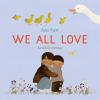
WE ALL LOVE starts with a grown bear helping a baby bear who's stuck in a tree. Next there's a fish helping a little duckling lost in the sea to join its family members onshore. After that, a grown turtle helps a baby turtle stuck on its back to get upright. "Upside down, up and over you go." Then big kids help little kids at play. "We love too! kisâkihiwânaw kîstanaw." Animals and humans continue to show their love and protection of others in various ways until night falls, the stars come out, and and three kids snuggle in bed. Back matter lists the names of the book's featured animals in both English and Cree, translates some Cree phrases, and explains some aspects of the Cree language, noting that "Cree and English each describe the world in unique ways."
Is It Any Good?
This quiet celebration of interconnectedness in the natural world is poetic and profound. In We All Love, author-illustrator Julie Flett invites readers to see how animals take care of one another and make the connection that "we do too." It's a calm, subtle meditation of how things work in the natural world that's simple enough for very young kids to get ("Little friend, would you like a warm nest?"), but may be a bit abstract for readers in some places. Warm, inviting, textured illustrations add to the sweet, cozy vibe.
Talk to Your Kids About ...
Families can talk about how the animals help one another out in We All Love. Which picture of helpfulness in the book do you like best?
Animals in the book notice when others are in trouble or cold or hungry. Why is it important to think of others' feelings?
What do you think love is? Is it just enjoying and appreciating someone, or does it involve caring for and protecting them? Can you love an animal as much as a person?
Book Details
- Author :
- Illustrator : Julie Flett
- Genre : Picture Book
- Topics : Animals ( Dogs , Fish , Ocean Creatures , Wild Animals )
- Character Strengths : Compassion , Curiosity , Perseverance , Teamwork
- Book type : Fiction
- Publisher : Greystone Kids
- Publication date : February 10, 2026
- Publisher's recommended age(s) : 0 - 7
- Number of pages : 48
- Available on : Hardback, Apple Books, Kindle
- Last updated : February 24, 2026
Did we miss something on diversity?
Research shows a connection between kids' healthy self-esteem and positive portrayals in media. That's why we've added a new "Diverse Representations" section to our reviews that will be rolling out on an ongoing basis. You can help us help kids by
Suggest an Update
Common Sense Media's unbiased ratings are created by expert reviewers and aren't influenced by the product's creators or by any of our funders, affiliates, or partners.
See how we rate