







Common Sense Media Review
 By Sage Moreaux
,
based on child development research. How do we rate?
By Sage Moreaux
,
based on child development research. How do we rate?
Dreams do come true in magical, fat-positive graphic novel.
Parents Need to Know
Why Age 12+?
Any Positive Content?
Where to Read
What's the Story?
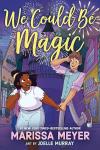
In WE COULD BE MAGIC Tabitha is overjoyed when she's offered a summer job at Sommerland, the theme park that salvaged her belief in love after her parents' divorce. She arrives at the park, ready for the magic of Sommerland to kick in, only to find that not everything about working for a theme park is as magical as she believed. Between jaded co-workers, difficult crowds, hot days, and a not-so-glamorous job at the taco stand, Tabi finds her enthusiasm waning. Her hope is restored when she meets James, a park employee who believes in the magic just as much as she does. But when Tabi fails an audition to play the role of one of Sommerland's royalty, she wonders if she's been fooling herself all along. She might have the right attitude, but as the other employees like to remind her, she doesn't fit the role of the tall, slender princess she's always wanted to play. But Tabi knows that sometimes it takes more than wishing for dreams to come true.
Is It Any Good?
Charming, colorful, and full of positive role models, this graphic novel is a sweet story with a powerful message at its core. While on the surface We Could Be Magic is a light romance with the expected happily ever after, at its heart, the story goes much deeper. Themes of shame, heartbreak, the dashing of dreams, and the power of unfeigned joy shape this story into a touching tale of perseverance that stays with you long after you put it down. In the epilogue, Marissa Meyer folds into an epic fairy tale ending the importance of—and the success that comes from—representation of marginalized bodies in media.
Joelle Murray's art is bright and fun, adding just the right amount of sparkle, and the characters' emotions leap from the page thanks to the detailed drawings. Fans of graphic novels, character theme parks, and romance will all find something to love in this not-to-be-missed read.
Talk to Your Kids About ...
Families can talk about Tabi's positive attitude and perseverance in We Could Be Magic. Do you think her dreams would've come true if she hadn't worked so hard?
Are the stereotypes presented in this graphic novel consistent with the way royal characters are depicted in mainstream fairy tales?
Do you think the book art represents realistic families and characters? How so?
Book Details
- Author :
- Illustrator : Joelle Murray
- Genre : Graphic Novel
- Topics : Fantasy ( Magic ) , Friendship
- Character Strengths : Communication , Courage , Gratitude , Humility , Integrity , Perseverance , Teamwork
- Book type : Fiction
- Publisher : Feiwel & Friends
- Publication date : June 3, 2025
- Publisher's recommended age(s) : 12 - 18
- Number of pages : 256
- Available on : Paperback, Hardback, Apple Books, Kindle
- Award : Common Sense Selection
- Last updated : June 29, 2026
Did we miss something on diversity?
Research shows a connection between kids' healthy self-esteem and positive portrayals in media. That's why we've added a new "Diverse Representations" section to our reviews that will be rolling out on an ongoing basis. You can help us help kids by
Suggest an Update
Common Sense Media's unbiased ratings are created by expert reviewers and aren't influenced by the product's creators or by any of our funders, affiliates, or partners.
See how we rate