





Common Sense Media Review
 By Dwayne Jenkins
,
based on child development research. How do we rate?
By Dwayne Jenkins
,
based on child development research. How do we rate?
Fun exploration, base-building limited by learning curve.
Parents Need to Know
Why Age 8+?
Any Positive Content?
Where to Play
Videos and Photos


Astroneer
What's It About?
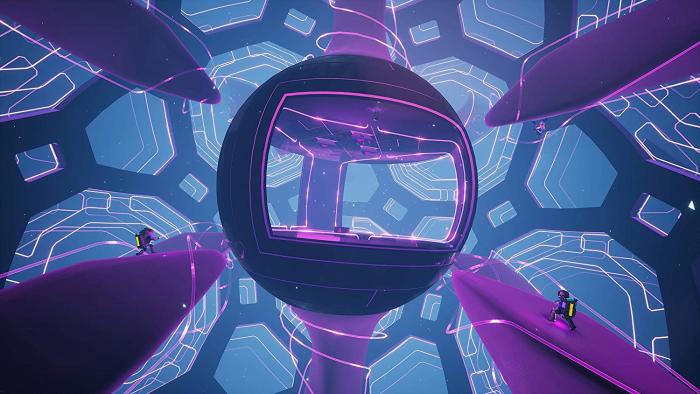
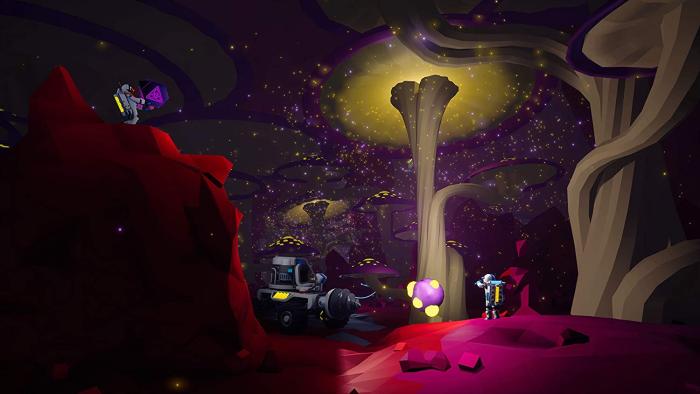
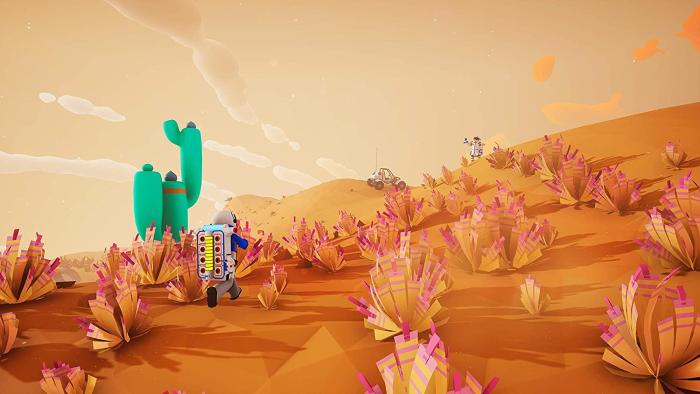
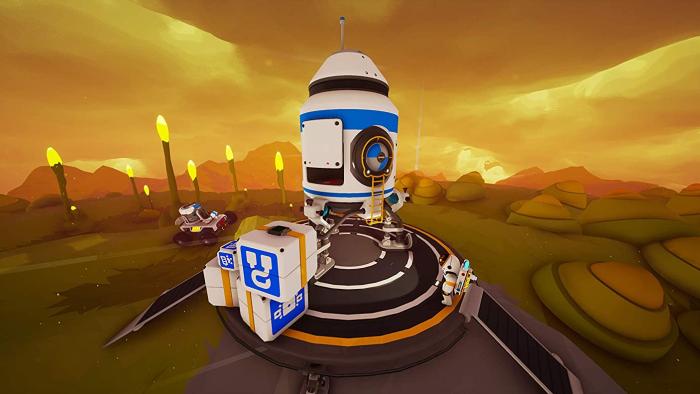
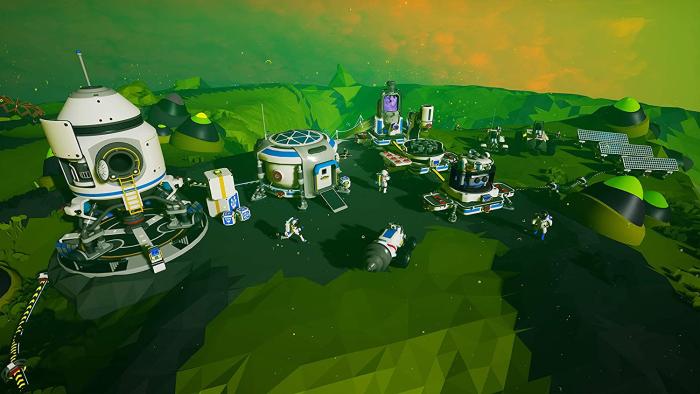
ASTRONEER doesn't contain many cutscenes to orient the player to a "story," and there aren't even really any "characters" to speak to or interact with. The moment the game begins, you—the Astroneer—land on a planet armed only with a complex backpack with its own energy source, an oxygen gauge, and item slots to carry precious resources. You also have a "Terrain Tool" used to modify any surrounding environments as you see fit (via flattening, elevating, or digging) and your curiosity. From there, the game's essentially yours to do with as you please; Astroneer is a game all about the simple joys of discovery, exploration, and growth. It's the player vs. nature, and you use your backpack and terrain tool together to collect resources, build and expand your base, create new equipment and vehicles, and discover new planets (all of which have different atmospheres/gravity levels/day and night cycles). When you initially land on Sylva (one of the seven planets in the game), there's a set of "main quest" missions you have the option of doing. But the missions are primarily there to get the player adjusted to the many mechanics and controls. There's certainly a level of mystery present as you'll eventually come across large, glowing structures bathed in ominous purple, and they'll require some method of "activation." Once activated, the structures lead to one another, and soon, players open new ways to quickly travel across the planet—and even pop up at other planets once their "structures" are activated.
Is It Any Good?
This is an outstanding game that's difficult to recommend to anyone who doesn't have the time to engage with it. Astroneer is an easy game to load and immediately become overwhelmed with the many menus you'll have to interact with to understand the game controls and features. It doesn't hold your hand or make it particularly "easy" to play at first. In fact, you may even find yourself eight hours in and still on the first planet. That being said, if you give it a chance, the game can leave you breathless with how gorgeous, endless, and meditative it can be. You're an astronaut trying to colonize multiple planets, and with time and perseverance, you can automate your bases so that they can do a lot of the early-game manual labor for you. You can make money (referred to as "bytes" within the game) hand over fist. You can craft tractors, labs, hoverboards, jetpacks, planet-puncturing drills, and even massive space shuttles. You can build yourself up to become a veritable ruler of the cosmos who can literally change the ground you walk upon if you choose to.
Nothing can prepare you for the first time you look up and see the sky slowly darken as the moon rises to its peak, or accidentally falling into a cave and finding a trove of new resources and research opportunities, or overlooking your completed base and seeing the effort of hours and hours of collecting, researching, crafting, and more laid bare before your eyes. The game's multiplayer allows friends to pop in and help out—or, via your own creativity, you can create silly, fun mini-games to play together, and even do whatever you wish without having to gain and spend resources in a "Creative Mode." Astroneer is an experience that will undoubtedly frustrate new players who would rather not spend hours trying to figure out where they are or what they're "supposed" to do. But past its steep learning curve lies a timeless, rewarding game that will be a treat for those with a creative streak as immeasurable as space.
Talk to Your Kids About ...
Families can discuss the pros and cons of traveling to other planets. In Astroneer, resource management goes a long way to advance the player, but is it worth going to other planets in search of rare, new resources that may benefit humankind? What would the effects of such an endeavor do to those planets—if anything? What precious resources do we have on Earth, and how could we be using them in more efficient ways? What do you think it would be like living on other planets?
Is it worth it to push yourself to do something difficult, no matter how hard it is, knowing that there's a nice reward when you're done? What if there isn't a guarantee of a reward? Can perseverance and hard work benefit you regardless of that? Why or why not?
Game Details
- Platforms : Nintendo Switch , PlayStation 4 , Windows , Xbox One
- Pricing structure : Paid
- Available online? : Available online
- Publisher : System Era Softworks
- Release date : January 13, 2022
- Genre : Action/Adventure
- Topics : Adventures
- ESRB rating :
- Last updated : September 30, 2025
Did we miss something on diversity?
Research shows a connection between kids' healthy self-esteem and positive portrayals in media. That's why we've added a new "Diverse Representations" section to our reviews that will be rolling out on an ongoing basis. You can help us help kids by
Suggest an Update
Common Sense Media's unbiased ratings are created by expert reviewers and aren't influenced by the product's creators or by any of our funders, affiliates, or partners.
See how we rate