







Common Sense Media Review
 By Chad Sapieha
,
based on child development research. How do we rate?
By Chad Sapieha
,
based on child development research. How do we rate?
Puzzle adventure with compelling themes, good conundrums.
Parents Need to Know
Why Age 13+?
Any Positive Content?
Where to Play
Videos and Photos


Contrast
Parent and Kid Reviews
What's It About?
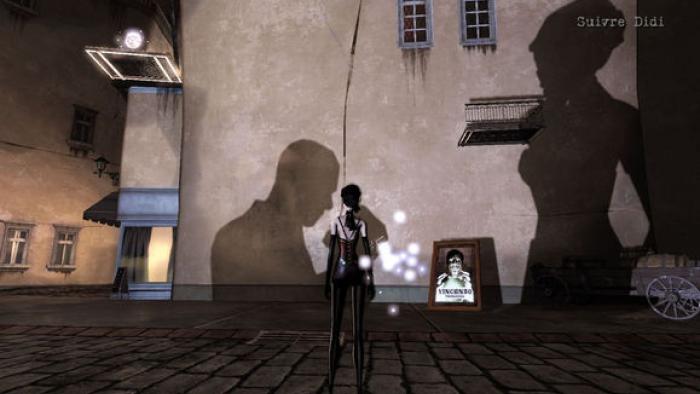
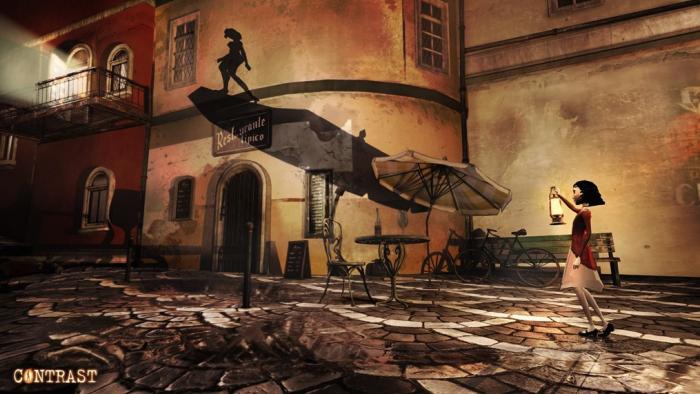
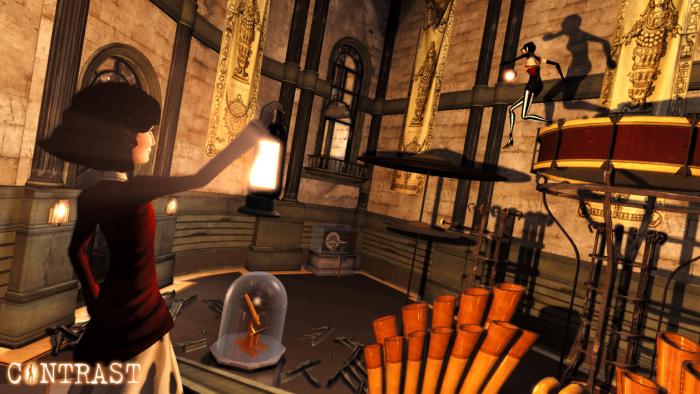
CONTRAST tells the story of Didi, a young girl living in 1920s Paris trying to deal with a rough home life. Her dad is gone, and she's having a hard time getting a straight story from her mom. So she invents an imaginary friend to help her on her quest for truth. Together, they slip into the night and explore the city looking for answers. Players control Dawn, Didi's imaginary friend. She's presented as a three-dimensional adult woman, but she sees the world of living people largely in the form of the shadows they cast, and she herself can take on shadow form at will. Most of the game sees Dawn exploring Paris in three-dimensional form, then turning into a shadow and moving amid other shadows on walls to solve various platforming puzzles and reach areas that would otherwise be inaccessible. She may, for example, move objects in front of a spotlight to change the height of the shadows they cast, creating steps for her shadow self to climb to a higher floor. The adventure lasts about five hours, perhaps more if you attempt to find all the hidden collectibles scattered around town.
Is It Any Good?
It's evident from the outset that Contrast, with its 1920s European fashion and architecture and highly stylized characters, has a personality all its own. It's even more evident once you get into its unusual shadow-based platformer puzzles, which see Dawn turning into a flat shadow and running along the silhouettes of billboards and merry-go-rounds before popping back into three-dimensional form. Transitioning between the physical and shadow planes in the middle of a jump to get past a crack high in a wall is the sort of unusual gaming experience most players will remember long after the credits roll.
Unfortunately, this compelling premise loses some steam by the end. Puzzles start to feel a little same-y in the second half, and the relationships among the imaginary, shadow, and real worlds isn't fully explained. But don't let these minor missteps dissuade you. Fans of innovative games that strive to impress with clever puzzles and beautiful art rather than simply delivering new ways to shoot people and blow stuff up will come away satisfied.
Talk to Your Kids About ...
Families can talk about how girls and women are depicted in games. Do you think this game has positive female role models? What do the girl and her imaginary friend do that is commendable? What do they do that might be considered ill-advised?
Families also can discuss differences between the 1920s Paris depicted in the game and our modern world. In what ways are they most noticeably different?
Game Details
- Platforms : PlayStation 3 , PlayStation 4 , PlayStation Vita
- Subjects : Science : physics
- Skills : Thinking & Reasoning : solving puzzles , Emotional Development : developing resilience
- Available online? : Available online
- Publisher : Sony Computer Entertainment
- Release date : November 14, 2013
- Genre : Puzzle
- ESRB rating :
- Last updated : November 11, 2020
Did we miss something on diversity?
Research shows a connection between kids' healthy self-esteem and positive portrayals in media. That's why we've added a new "Diverse Representations" section to our reviews that will be rolling out on an ongoing basis. You can help us help kids by
Suggest an Update
Common Sense Media's unbiased ratings are created by expert reviewers and aren't influenced by the product's creators or by any of our funders, affiliates, or partners.
See how we rate