






Common Sense Media Review
 By Chad Sapieha
,
based on child development research. How do we rate?
By Chad Sapieha
,
based on child development research. How do we rate?
Heavy RPG tackles teen depression, self-harm, suicide.
Parents Need to Know
Why Age 18+?
Any Positive Content?
Where to Play
Videos and Photos


Omori
Parent and Kid Reviews
Based on 9 parent reviews
Based on 33 kid reviews
 Summarized with AI
 Summarized with AI
What's It About?
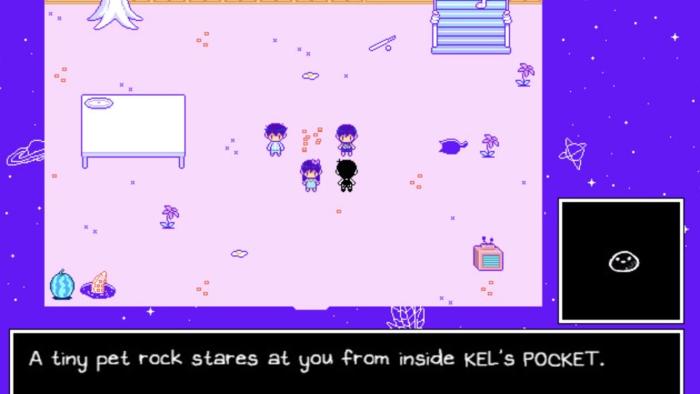
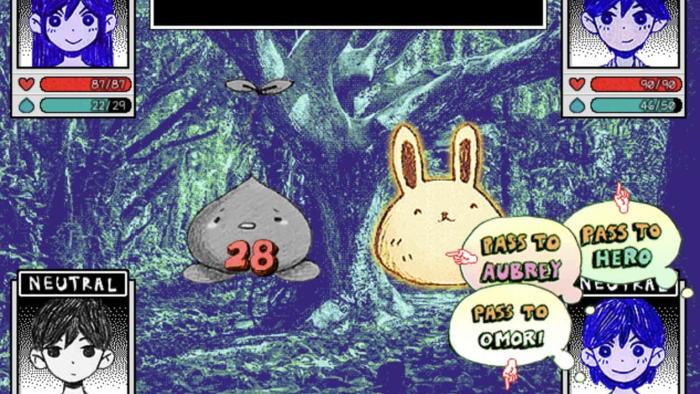
In OMORI, players assume the role of Sunny, an Asian American teenager grappling with depression, anxiety, and guilt, which causes his psyche to break in two. When this happens, he enters a fantasy headspace and becomes Omori, a dark version of Sunny who seems intent on punishing himself. The game is split between these real and fantasy worlds, with disturbing details about Sunny's past surfacing slowly as the story progresses. Sunny/Omori spends much of his time with friends, and the group gets into plenty of fights with strange enemies ranging from monster bunnies and slime girls to robot worms and even the Earth itself. Players must pay attention to each party member's emotions (they can be sad, angry, and happy, with each state carrying perks and disadvantages) as they use attacks and skills ranging from headbutts and body slams to more creative actions, such as reading a poem to induce sadness or mocking a foe to reduce its attack power. The decisions players make throughout the story will change how the tale ends both for Omori and for his companions.
Is It Any Good?
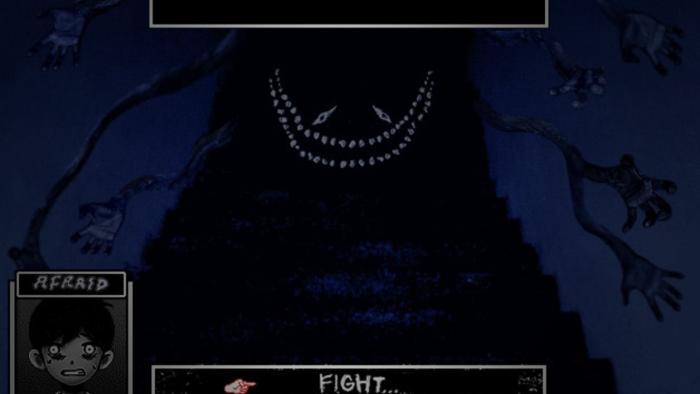
This is essentially a mental health simulator that takes players on an intense and emotional journey. Omori is, at times, very bleak, as it follows Sunny, a deeply troubled teen who is struggling to deal with his unresolved trauma and psychological issues. The game time spent in Omori's head can be frightening, psychologically grueling, and visually gruesome, with scenes serving as metaphors for what his real-world self is experiencing. And his time in the real world—especially near the end of the game as secrets are revealed and the story plays out to one of several endings—can be just as brutal.
Despite its heavy themes, there are also spots of genuine (if rather dark) humor, particularly during the combat scenes. What other game lets you choose to use a skill called "the painful truth" to damage an enemy and then cause both the enemy and the hero to become sad? Or choose to "annoy" a fellow party member to purposefully make them angry? These serve as a clever way to inject a bit of comic relief in what might otherwise be too relentlessly a depressing adventure, as well as mask what is actually a pretty basic and derivative turn-based battle system. That said, Omori is far from a lighthearted game, and players, regardless of age, should ensure they're in a healthy mental headspace before beginning.
Talk to Your Kids About ...
Families can talk about how Omori handles themes around mental health. The game tackles issues such as depression, anxiety, self-harm, and suicide head on, and what can happen when mental health issues aren't properly treated. Do you think it handles them well? Sensitively? Who do you turn to for help when you're feeling sad or anxious?
Discuss the game's violence. How did the game's simple hand-drawn images compare to the hyper-realistic gore found in some other games? Was it more or less impactful? What's the impact of media and screen violence on children?
Game Details
- Platforms : Nintendo Switch , Windows , Mac
- Available online? : Available online
- Publisher : OMOCAT, LLC.
- Release date : December 25, 2020
- Genre : Role-Playing
- Topics : Fantasy ( Magic ) , Friendship
- ESRB rating :
- Last updated : October 9, 2025
Did we miss something on diversity?
Research shows a connection between kids' healthy self-esteem and positive portrayals in media. That's why we've added a new "Diverse Representations" section to our reviews that will be rolling out on an ongoing basis. You can help us help kids by
Suggest an Update
Common Sense Media's unbiased ratings are created by expert reviewers and aren't influenced by the product's creators or by any of our funders, affiliates, or partners.
See how we rate