







Common Sense Media Review
 By Angelica Guarino
,
based on child development research. How do we rate?
By Angelica Guarino
,
based on child development research. How do we rate?
Nonsensical, clunky tale still has moments of fun.
Parents Need to Know
Why Age 13+?
Any Positive Content?
Where to Play
Videos and Photos


The Good Life
Parent and Kid Reviews
What's It About?
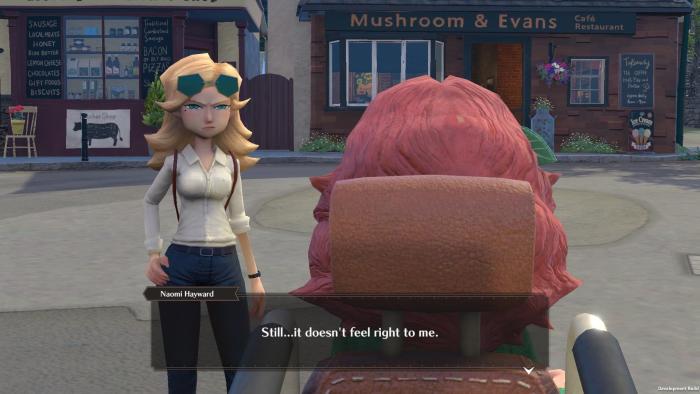
THE GOOD LIFE's Rainy Woods is an immediately suspicious setting, as the phrase "the happiest town on Earth" is thrown around almost 10 times in the prologue alone. When Naomi Hayward steps out of her cab and onto the unpaved dirt road outside the town square, she's immediately disgusted -- not by the primitive infrastructure, but by the quaint, idyllic nature of the town itself. She's annoyed by her task immediately and doesn't hesitate to let everyone know about her stereotypical New Yorker's superiority complex. She soon meets Elizabeth Dickens, a woman who speaks cryptically about the town and its secrets. It doesn't take long for Naomi to discover a bit of what Elizabeth means. On her first night in town, she's shocked to find that every person has been transformed into either a dog or a cat -- except Elizabeth, who continues to drop small clues as to what could possibly be the explanation for this. As the clues from Elizabeth get stranger and stranger, Naomi realizes that this assignment might be more difficult than irksome after all.
Is It Any Good?
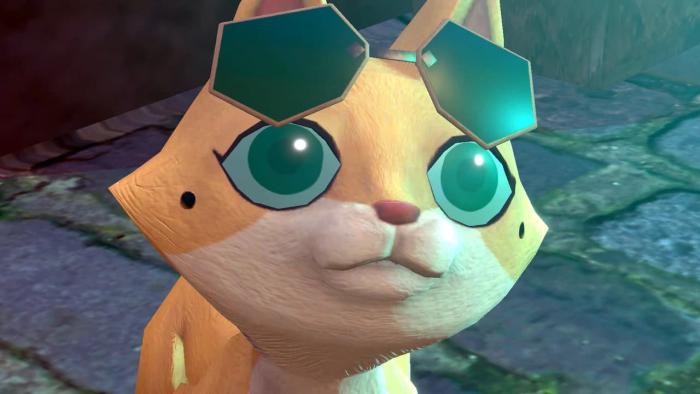
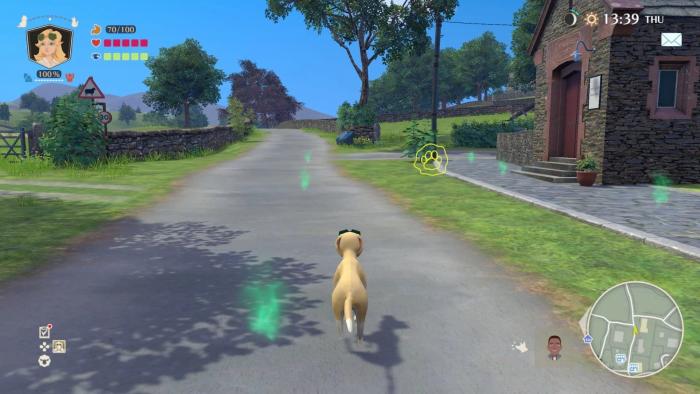
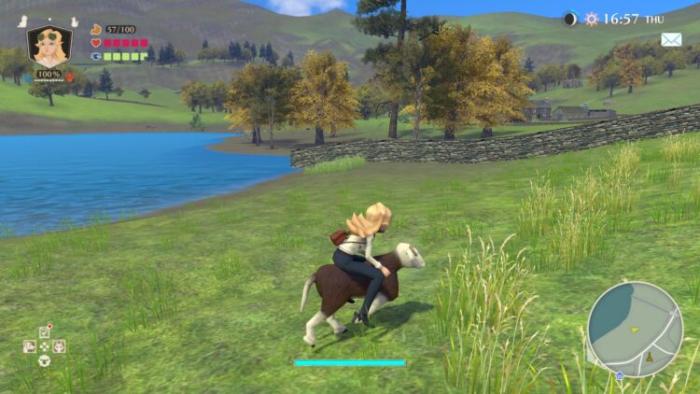
While the idea of taking a casual RPG (role-playing game) and adding a ton of absurdity is immediately fun, the nonsensical plot and clunky moments hamper your experience. The opportunity to play as both a cat and a dog as well as a human character in The Good Life is clever as part of a small-town mystery, so players in search of something new will be intrigued. Whether they will stay interested, though, depends on their tolerance for technical and structural flaws. Gamers already familiar with past titles of Japanese game director Hidetaka Suehiro (aka "Swery") will find themselves right at home in this narrative anarchy. So what if the plot is disjointed and nonsensical? Name one other casual RPG where players can scale a building Assassin's Creed-style while playing as a cute little cat whose form has a designated "meow" button? That's right, you can't.
But while this title is worth rewarding for its weirdness and risk-taking, some aren't as successful as others. Swery has come under fire in recent years for his handling of transgender characters in past games. He's insisted that this came not from a place of hate but rather from imperfect cultural translations between Japanese and English. His apology comes with a dedicated effort to re-write scenes in past games which have come off insensitively and create more positive representations of diversity. In The Good Life, it doesn't look as if Swery has completely changed his writing style to avoid potentially offensive jokes entirely, but has rather simply changed his targets. For instance, there are references to alcoholism that are played for comedy, and these can feel as if they've crossed a line. In addition, there are some suggestive themes, particularly referring to the relationship between Elizabeth Dickens and her half-brother William which feel totally unnecessary to the plot. For adults, it's easy to write off these instances as jokes that don't quite land and be able to move on, but younger players may be affected by mentions of these topics a bit more deeply.
Talk to Your Kids About ...
Families can talk about how The Good Life portrays alcohol use. What do you think when you see a character in a game drinking excessively? Are the characters in The Good Life rewarded for this behavior, and in what situations do you think this might leave an impression on a player?
Does it bother you that the story arc in The Good Life does not make sense at times? Can you picture why some people may care about this more than others?
Game Details
- Platforms : Nintendo Switch , PlayStation 4 , Windows , Xbox One
- Pricing structure : Paid
- Available online? : Available online
- Publisher : Playism
- Release date : October 15, 2021
- Genre : Role-Playing
- Topics : Fantasy ( Magic ) , Animals
- ESRB rating :
- Last updated : September 30, 2025
Did we miss something on diversity?
Research shows a connection between kids' healthy self-esteem and positive portrayals in media. That's why we've added a new "Diverse Representations" section to our reviews that will be rolling out on an ongoing basis. You can help us help kids by
Suggest an Update
Common Sense Media's unbiased ratings are created by expert reviewers and aren't influenced by the product's creators or by any of our funders, affiliates, or partners.
See how we rate