







Common Sense Media Review
 By Tara McNamara
,
based on child development research. How do we rate?
By Tara McNamara
,
based on child development research. How do we rate?
Animal interaction elevates perilous Amazon adventure.
Parents Need to Know
Why Age 8+?
Any Positive Content?
Where to Watch
Videos and Photos
Autumn and the Black Jaguar
What's the Story?
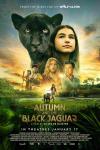
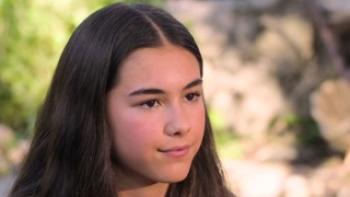
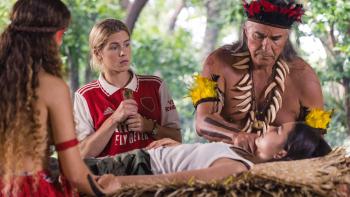
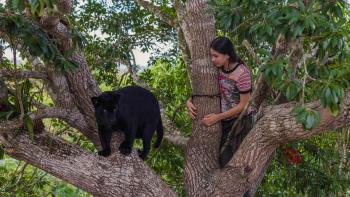
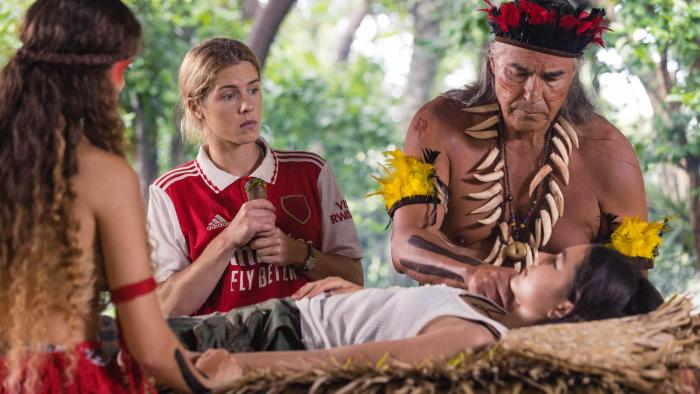
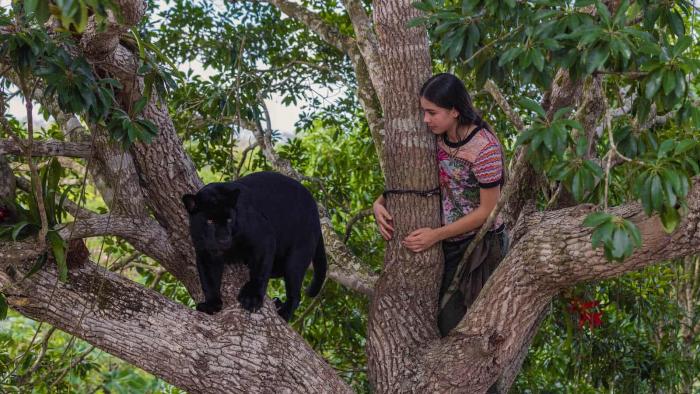
In AUTUMN AND THE BLACK JAGUAR, eight years have passed since Autumn (Lumi Pollack) and her father, Saul (Paul Greene), left the Amazon for New York after a tragic loss. When Autumn learns that Hope, a black jaguar cub she befriended as a child, is being targeted by poachers, the girl impulsively returns to the rainforest to get the jaguar to the safety of a wildlife sanctuary. She's joined by her agoraphobic biology teacher, Miss Shimmer (Emily Bett Rickards), who doesn't have time to stop the teen from getting on the plane and so grabs a seat on the same flight to protect her. Once in the Amazon, they work with the (fictional) Indigenous Amerindian tribe that Autumn's family used to live with to help Hope and fight against deforestation, poaching, and animal trafficking.
Is It Any Good?
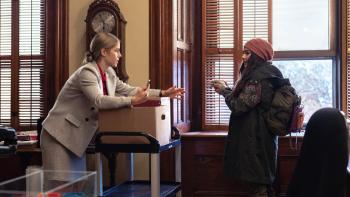
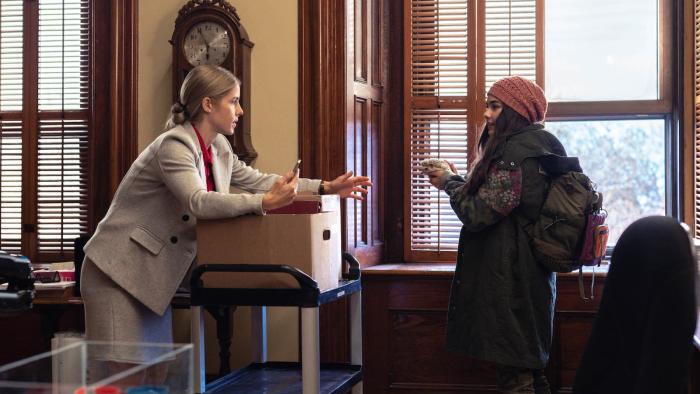
Filmmakers Gilles and Prune de Maistre are committed to inspiring young people to create change, and here they incorporate a new element into their work: laughter. Messages are often driven home more effectively with humor, and, in Autumn and the Black Jaguar, the de Maistres mix a serious topic—the existential threat of deforestation and animal trafficking in the Amazon—with comic relief in the form of Miss Shimmer. She suffers from agoraphobia and OCD, using a disabled hedgehog (which uses a wagon to get around) as an emotional support animal. The hedgehog's antics are a mix of cute and funny, and Rickards' comedic chops take the edge off of the film's earnestness. While her diagnosis isn't played for laughs, the movie's tone still sometimes feels off balance, as if Miss Shimmer is in a comedy and everyone else is in a drama (the classroom scenes feel so much like a Disney Channel series that it's shocking not to hear a laugh track). That might be a bit off-putting to adults, but for kids and tweens, there's a lot here that works.
Kids tend to enjoy seeing other kids in aspirational fantasy situations, and having a wild animal as a best friend tops the list for many. Autumn plays and snuggles with jaguar Hope, and the wishfulness of it all works to transfer her passion to viewers. That's worthwhile, because human intervention is needed to stop the decline of jaguar populations caused by human interference. But a scene in which a White American evangelizes to Indigenous Amazon people about why they need to get involved to stop deforestation and animal trafficking is cringe-inducing. Still, the de Maistres—who are devoted to making movies about protecting animals and inspiring children to see ways they can contribute to making positive change in the world—appear to be well-intentioned. And they do seem to be learning with each film they make how to effectively communicate information about a dire problem to kids without too much harsh reality.
Talk to Your Kids About ...
Families can talk about why deforestation in the Amazon is an issue for the entire world. What message does Autumn and the Black Jaguar share about this issue?
Animal movies often feature a kid developing a friendship with a wild animal, including scenes of their playful, loving interactions. What is viewers' typical emotional response to this, and why do you think it works so consistently? How do you think the scenes with Autumn and the adult jaguar were filmed?
What makes movies (and other media) persuasive? Why do you think that many filmmakers believe that reaching kids and their parents will make the most impact? What did you learn?
The filmmakers got the jaguars in this film (and other animals for their other films) from breeders in countries where animal trade is legal, used them for filming with a purpose of educating audiences (the animals weren't trained, and the director says he filmed around their natural inclination to sleep, play, and splash in the water), and then placed them permanently in a wildlife sanctuary in their natural habitat, since animals bred in captivity are unlikely to survive in the wild. How do you feel about this approach?
Since it's not explicitly said in the film, families may want to talk about how complex emotions, such as grief over the loss of a parent, sometimes result in kids acting out. What are some positive ways to deal with complicated feelings?
Movie Details
- In theaters : January 17, 2025
- On DVD or streaming : March 4, 2025
- Cast : Lumi Pollack , Emily Bett Rickards , Wayne Charles Baker
- Director : Gilles de Maistre
- Studio : Blue Fox Entertainment
- Genre : Family and Kids
- Topics : Activism , STEM , Animals ( Wild Animals )
- Character Strengths : Compassion , Courage , Integrity , Perseverance
- Run time : 100 minutes
- MPAA rating :
- MPAA explanation : thematic material, violent content, peril and some language
- Last updated : September 18, 2025
Did we miss something on diversity?
Research shows a connection between kids' healthy self-esteem and positive portrayals in media. That's why we've added a new "Diverse Representations" section to our reviews that will be rolling out on an ongoing basis. You can help us help kids by
Suggest an Update
Common Sense Media's unbiased ratings are created by expert reviewers and aren't influenced by the product's creators or by any of our funders, affiliates, or partners.
See how we rate