








Common Sense Media Review
 By Tara McNamara
,
based on child development research. How do we rate?
By Tara McNamara
,
based on child development research. How do we rate?
Some violence in compassionate, faith-centric refugee story.
Parents Need to Know
Why Age 13+?
Any Positive Content?
Where to Watch
Videos and Photos



Between Borders

What's the Story?
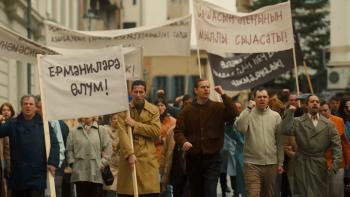
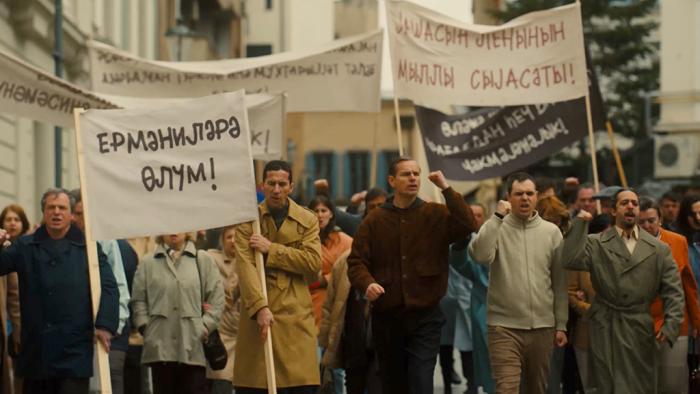
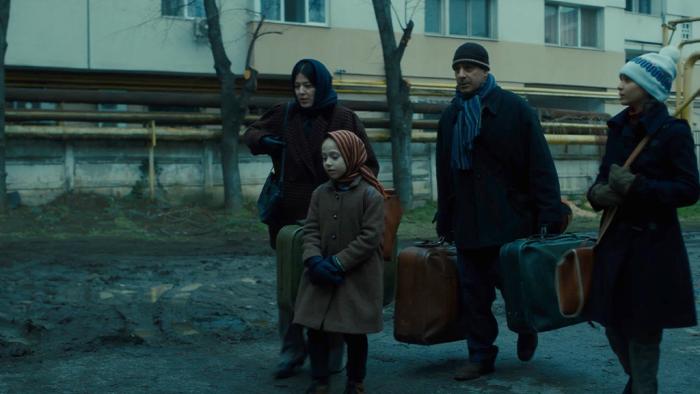
In a U.S. immigration court, a couple pleads for their family to be granted asylum. The movie then flashes back to the late 1980s to tell the story of why they're not safe or welcome in Azerbaijan or Russia. Ivan (Patrick Sabongui) and Violetta (Elizabeth Tabish) Petrosyan are well-educated, upper-middle-class professionals with two young daughters. With the fall of the Soviet Union, long-simmering racist attitudes against Armenians become bolder, and, after witnessing an Armenian neighbor being shot in cold blood, the family flees in the middle of the night. They receive asylum in Russia, only to find cruel mistreatment and hateful attitudes there, too, including from police—which ultimately leaves them BETWEEN BORDERS.
Is It Any Good?
This fact-based drama is just so-so, but building compassion for refugees is never a waste of time—and, sadly, never loses relevance. As Violetta says in immigration court, Jesus was a refugee, which may remind viewers that this topic is literally one of biblical proportions. That said, director Mark Freiburger takes a somewhat unusual approach to create visceral empathy, following a family that faces lower stakes. Movies about refugees generally feel pretty life-or-death. And, as Between Borders points out, the U.S. government tends to see persecution in much the same way. The question that opens and closes the film is the same question that determines whether asylum should be granted: Did the Petrosyans encounter a direct act of violence? It's a black-and-white question, but the film shows how gray the answer can be. And it then goes further, asking viewers whether someone has to literally look down the barrel of a gun to be worthy of welcome and assistance.
This faith-based true story embraces humility, both in its characters and its storytelling. Once they're in Russia, the Petrosyans still don't find many friendly faces—until members of a local church show up to help them move in, find jobs, and receive support. Viewers later learn that this church exists because it's funded by the parishioners of a church in West Virginia. So the story could have been told from the Americans' point-of-view, to ramp up the savior element or pat themselves on the back—but it's not. Instead, the entire American church is represented by one American man who has only a couple of lines. By choosing not to overplay the U.S. hand, the movie highlights principles that many people of faith hold to: Love one another, treat others like you would want to be treated, and, to help yourself, help others.
Talk to Your Kids About ...
Families can talk about how Beyond Borders uses entertainment to let viewers walk in the shoes of people facing persecution. What makes this approach more effective than, say, reading about it in the newspaper?
While the Petrosyans are repeatedly asked whether they faced "direct acts of violence" as a measure of whether they should or shouldn't be granted asylum, this is not the way the United States actually assesses danger. What are the grounds on which an immigrant can be granted asylum?
In what ways do Violetta and Ivan demonstrate courage, perseverance, humility, gratitude, and communication? How do the church leaders and members demonstrate compassion, integrity, kindness, generosity, and teamwork? Why are these important character strengths? Can you think of any times when you've displayed these traits?
What makes issues related to refugees complex and controversial?
Does knowing that this is a true story give the movie more impact? What will you take away from seeing it?
Movie Details
- In theaters : January 26, 2025
- On DVD or streaming : March 4, 2025
- Cast : Elizabeth Mitchell , Elizabeth Tabish , Patrick Sabongui
- Director : Mark Freiburger
- Studio : Fathom Events
- Genre : Drama
- Topics : Activism , History
- Character Strengths : Compassion , Humility , Perseverance , Teamwork
- Run time : 88 minutes
- MPAA rating :
- Last updated : October 8, 2026
Did we miss something on diversity?
Research shows a connection between kids' healthy self-esteem and positive portrayals in media. That's why we've added a new "Diverse Representations" section to our reviews that will be rolling out on an ongoing basis. You can help us help kids by
Suggest an Update
Common Sense Media's unbiased ratings are created by expert reviewers and aren't influenced by the product's creators or by any of our funders, affiliates, or partners.
See how we rate