







Common Sense Media Review
 By Michael Ordona
,
based on child development research. How do we rate?
By Michael Ordona
,
based on child development research. How do we rate?
Lots of language in Lee's fact-based dark comedy.
Parents Need to Know
Why Age 15+?
Any Positive Content?
Where to Watch
Videos and Photos


BlacKkKlansman
Parent and Kid Reviews
Based on 26 parent reviews
Based on 44 kid reviews
Kids say the film successfully addresses themes of racism and social justice while showcasing the experiences of African Americans in the 1970s through engaging storytelling and humor, making it both entertaining and thought-provoking. Many reviews caution that due to its strong language, graphic content, and serious themes, it is best suited for mature audiences, particularly teens aged 14 and up.
- entertaining message
- strong language
- powerful themes
- mature audiences
- social commentary
- historical context
 Summarized with AI
What's the Story?
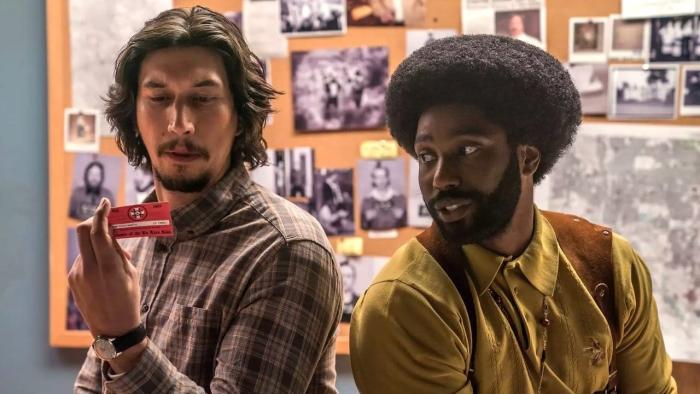
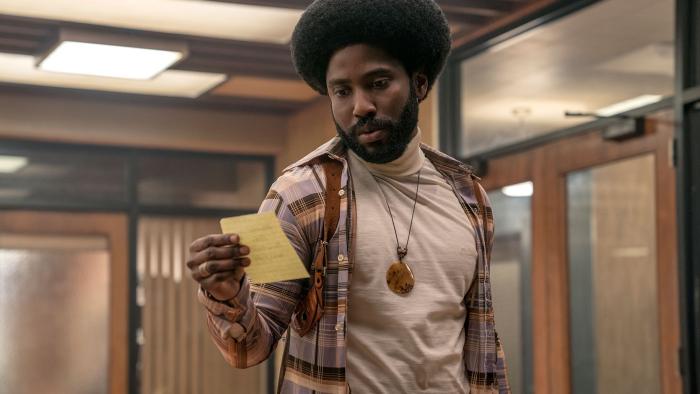
In BLACKKKLANSMAN, it's the 1970s, and Ron Stallworth (John David Washington) is the first black police officer in Colorado Springs. He becomes a detective and infiltrates the local Ku Klux Klan chapter by impersonating a white recruit on the phone. Stallworth enlists his white Jewish colleague Flip Zimmerman (Adam Driver) for the times when his undercover persona must appear at Klan functions and even befriends Klan leader David Duke (Topher Grace). As the deception risks unraveling, Stallworth learns that the beautiful young activist leader he loves (Laura Harrier) could be in danger.
Is It Any Good?
Although it's occasionally weighed down by cinematic choices, this dark comedy is director/co-writer Spike Lee's strongest work in years. While there's some tension around the fact that the jig could be up at any moment, this isn't a thriller. Rather, BlacKkKlansman plays as an absurd comedy with a premise that defies credulity. But the real Stallworth apparently did spy on the Klan by using a telephone persona and apparently did interact with Duke. Thanks to solid performances by an extremely well-chosen cast, the too-bizarre-to-be-true situation feels real. And because the interactions are so crazy, the film's deadpan approach makes them all the funnier.
Lee can't help but lecture at times, with extended public speech sequences and even excerpts of the infamous The Birth of a Nation designed as viewers' lesson for the day. Despite a few of these heavy-handed lapses that break the film's stride, Lee's commentary is perhaps his most effective since Do the Right Thing. The movie includes undisguised links to today's sociopolitical environment, with Duke and others reviving the 1930s-era isolationist/anti-Semitic slogan "America First" (which they did) and promising to "make America great again" via ethnic cleansing. As you'd likely expect from a Lee production, the cinematography and editing are excellent. And Washington and Driver form a solid, heads-down, hardworking team. Driver's Flip has a particularly affecting moment in which he reconnects with the importance of his Jewish heritage. As Duke, Grace is a fool you enjoy laughing at -- until he shows what lies beneath his three-piece-suit veneer in a moment of anger. Given BlacKkKlansman's subject matter and injections of the real-life horrors of racial violence from America's past, it's notable that its touch stays light enough to let its humor shine ... and then a devastating postscript reminds us how real and present this danger remains.
Talk to Your Kids About ...
Families can talk about the language in BlacKkKlansman. Did it seem appropriate for the story, the characters, and the time and place? When does frequent strong language get in the way of your viewing experience, and when does it help? How did the stream of racial, anti-Semitic, and homophobic insults make you feel?
The film is based on a true story. Did any of it feel too hard to believe? How accurate do you think it is? Why might filmmakers choose to alter the facts in a movie inspired by real-life events?
Have racial tensions/relations changed since the 1970s? If so, how? What's different, and what's the same?
Do you think filmmakers/artists should be responsible for exploring big social issues in their work, or do you prefer movies and other works of art to be an escape from the real world? Why?
Movie Details
- In theaters : August 10, 2018
- On DVD or streaming : November 6, 2018
- Cast : John David Washington , Adam Driver , Laura Harrier , Topher Grace , Alec Baldwin
- Director : Spike Lee
- Studio : Focus Features
- Genre : Comedy
- Run time : 135 minutes
- MPAA rating :
- MPAA explanation : language throughout, including racial epithets, and for disturbing/violent material and some sexual references
- Award : NAACP Image Award - NAACP Image Award Nominee
- Last updated : August 21, 2024
Did we miss something on diversity?
Research shows a connection between kids' healthy self-esteem and positive portrayals in media. That's why we've added a new "Diverse Representations" section to our reviews that will be rolling out on an ongoing basis. You can help us help kids by
Suggest an Update
Common Sense Media's unbiased ratings are created by expert reviewers and aren't influenced by the product's creators or by any of our funders, affiliates, or partners.
See how we rate