





Common Sense Media Review
 By Barbara Shulgasser-Parker
,
based on child development research. How do we rate?
By Barbara Shulgasser-Parker
,
based on child development research. How do we rate?
Singer overcomes bullying to achieve success; violence.
Parents Need to Know
Why Age 14+?
Any Positive Content?
Where to Watch
Videos and Photos
Can You See Us?
What's the Story?
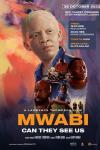
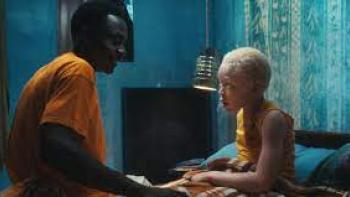
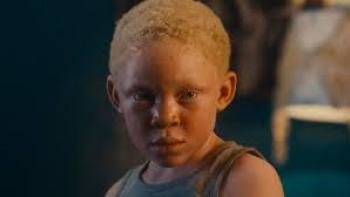
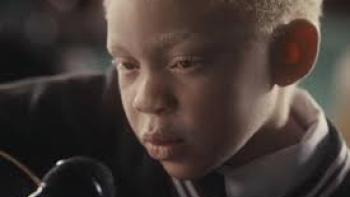
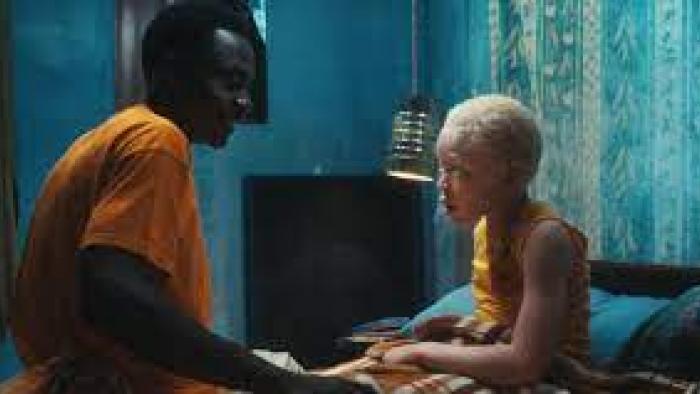
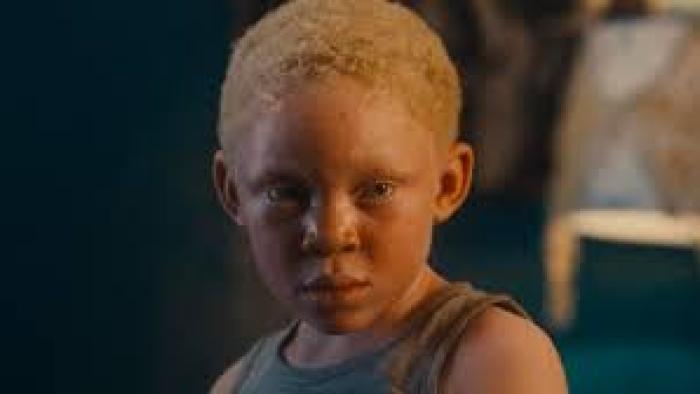
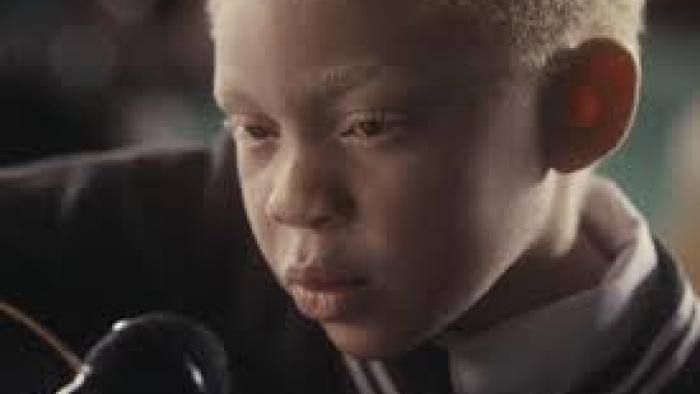
CAN YOU SEE US? begins as poverty-stricken Kennedy (Kangwa Chileshe) desperately tries to pay the only person in his village with a car to drive him and his pregnant wife, Chama (Ruth Jule), to the hospital. His excitement over welcoming his first child into the world is dampened when the child is born with albinism. Albinos lack pigmentation, so the child has extremely light skin and blue eyes. Kennedy's mother has already badmouthed Chama, so when Kennedy kicks the wife and newborn out, it doesn't seem surprising. It isn't clear if Kennedy and his mother are dismissing the child on the assumption that his wife became pregnant by a White man or because albinos are simply culturally shunned as evil or undesirable in Zambia. Either way, the new mom, who also rejects the child at first, has nowhere to go. A kind taxi driver takes her in, and in a flash forward to 10 years ahead, we see the driver, Martin (Kondwani Elliot Zulu), has married Chama and raised the boy, Joseph (Thabo Kaamba), as his own. When the mother and Martin die suddenly of undescribed causes, Joseph is sent to his biological father, who is inexplicably wealthy now, remarried, and oddly free of the prejudice against albinism that broke up his first family. What will happen to Joseph?
Is It Any Good?
Both the filmmakers and actors in Can You See Us? seem too inexperienced to do justice to the important subject tackled here. All involved in the enterprise should be credited for taking on the subject of prejudice based on skin color among Africans, but screenwriting, acting, direction, and cinematography skills are necessary ingredients in effective and moving storytelling. Without them, this falls flat, despite what seem to be heartfelt efforts. This is billed as Zambia's first full-length feature on Netflix and for that reason, rather than for greatness, it may be a source of pride and interest among Zambian viewers who hope to see more such productions showcased on the worldwide platform.
Instead of depth, there is repetition. Things that need no explanation are explained and repeated at length, while things that desperately need to be explained aren't even addressed. Joseph asks questions and no one answers him. His parents die. We have no idea how. The father who threw him and his mother out of the house now wants him to live with him. What changed? His prejudice just fell away? Character development is nonexistent and, unfortunately, without it, the moving underlying story fails to move us. Every opportunity for exploration of the issue is bypassed for melodrama and trite, insight-free homilies. The message in the average Hallmark card has more meaning than what passes for wisdom here. Someone says, "The greatest truths are the simplest ones." What does that even mean? Not that there isn't a moving moment or two out of the film's 109-minute running time (most poignant: the reunion between Joseph and the one stranger who was kind to him), but for the most part, the subject of John Chiti's life was wasted on these striving but inexperienced filmmakers.
Talk to Your Kids About ...
Families can talk about prejudice. Where does it come from? What do you think can prevent prejudice?
Why do you think some people are afraid of those who look different?
Prejudice against albinism seems strong in the first part of the movie, but then disappears. Does the movie explain this?
Movie Details
- On DVD or streaming : February 27, 2023
- Cast : Thabo Kaamba , Kangwa Chileshe , Ruth Jule
- Director : Kenny Mumba
- Studio : Netflix
- Genre : Drama
- Run time : 109 minutes
- MPAA rating :
- Last updated : September 19, 2023
Did we miss something on diversity?
Research shows a connection between kids' healthy self-esteem and positive portrayals in media. That's why we've added a new "Diverse Representations" section to our reviews that will be rolling out on an ongoing basis. You can help us help kids by
Suggest an Update
Common Sense Media's unbiased ratings are created by expert reviewers and aren't influenced by the product's creators or by any of our funders, affiliates, or partners.
See how we rate