







Common Sense Media Review
 By Jeffrey Anderson
,
based on child development research. How do we rate?
By Jeffrey Anderson
,
based on child development research. How do we rate?
Troubling Bruce Willis actioner has guns, blood, swearing.
Parents Need to Know
Why Age 16+?
Any Positive Content?
Where to Watch
Videos and Photos


Detective Knight: Rogue
What's the Story?
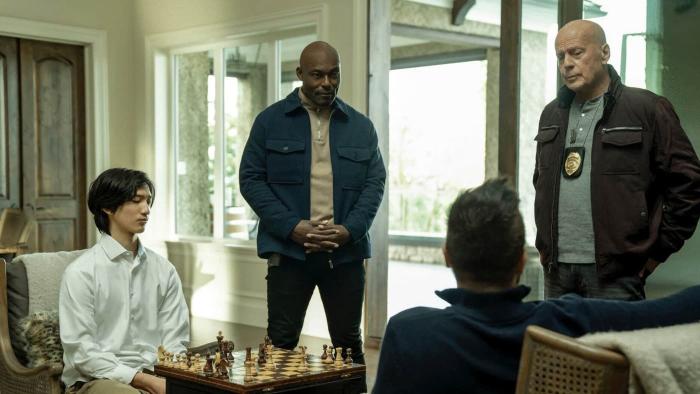
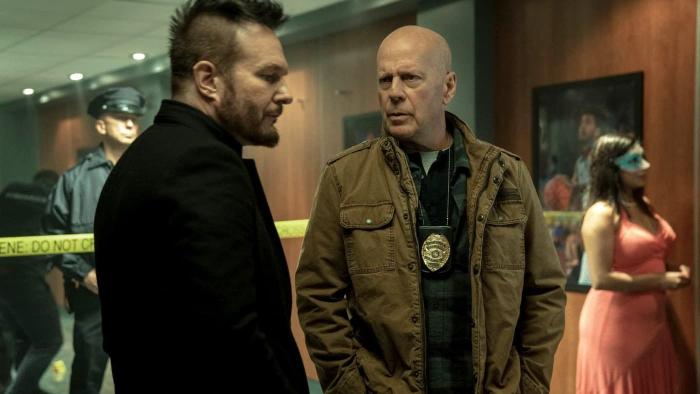
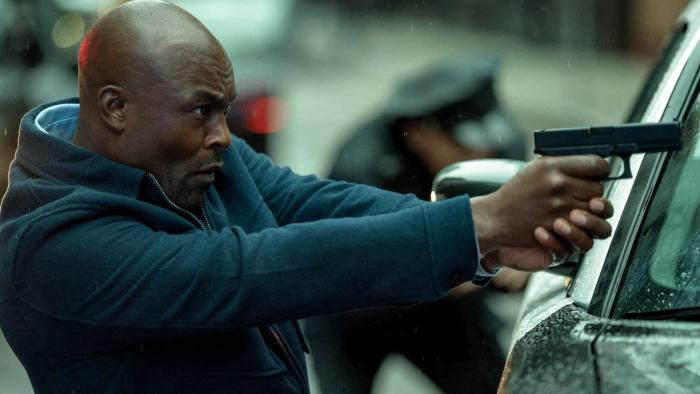
In DETECTIVE KNIGHT: ROGUE, Los Angeles detective James Knight (Bruce Willis) and his partner, Fitzgerald (Lochlyn Munro), investigate a robbery. In the aftermath, Fitzgerald is shot and wounded. As Knight and fellow officer Godwin Sango (Jimmy Jean-Louis) follow a lead to New York, the robbers -- disgraced former pro athletes Corey Rhodes (Beau Mirchoff), Mercer (Corey Large), Sykes (Keeya Keeyes), and Mike Rochester (Trevor Gretzky) -- divide their earnings. Corey meets with their handler, Winna (Michael Eklund), a wealthy scoundrel who provides a private plane to get the robbers to and from their jobs. Winna has a new job for them: Steal a valuable Wayne Gretzky rookie card. Unfortunately, the job doesn't go as planned, but there's a wild card yet to be played: a secret connection between Winna and Detective Knight.
Is It Any Good?
Certainly one of the better Bruce Willis low-budget action movies, this one still suffers from confusing bits, as well as an uncomfortable vacancy where its star ought to have been. Coming from director and co-writer Edward Drake, whose previous credits with Willis include the atrocious Cosmic Sin, Detective Knight: Rogue clearly had more effort put into it. The story is decently constructed, with enough twists and turns to keep the sturdy, interesting characters moving through it with a semblance of logic. Having the team of robbers consist of pro athletes who were, for one reason or another, banned from their respective sports is a good idea. Society appears to have no more use for them, and they feel like they have no other choice than to turn to crime. (One of them, Mike, is played by the son of Wayne Gretzky, whose face graces the million-dollar sports card the team is asked to steal.)
The characters are also designed to create a buffer around Willis, who in real life suffers from aphasia. He's the title character here, but it's the others who more or less keep the plot moving. This is especially true of Detective Sango, who's deeply sympathetic and interacts easily with Willis. Drake also seems to have had more time to craft scenes around his star in this film, and things flow more naturally than in the pair's earlier movies. Even so, certain scenes in Detective Knight: Rogue -- such as a flashback to a man being shot and killed in front of a screaming toddler, or a man allowing himself to be killed by police -- are baffling. And if you're aware of Willis' real-life condition, it's very difficult to let go and have a good time.
Talk to Your Kids About ...
Families can talk about Detective Knight: Rogue's violence. How did it make you feel? Was it exciting? Shocking? What did the movie show or not show to achieve this effect? Why is that important?
The characters decide at a turning point that violence is their only solution. Do you agree? Did they cross a line? What other options did they have?
Do you agree that the ex-athletes had no other option but to turn to crime? Why, or why not? What statement does their situation make about opportunity and privilege?
Movie Details
- In theaters : October 21, 2022
- On DVD or streaming : October 21, 2022
- Cast : Bruce Willis , Beau Mirchoff , Jimmy Jean-Louis
- Director : Edward Drake
- Studio : Lionsgate
- Genre : Action/Adventure
- Run time : 105 minutes
- MPAA rating :
- MPAA explanation : pervasive language, violence, and some drug use
- Last updated : October 8, 2026
Did we miss something on diversity?
Research shows a connection between kids' healthy self-esteem and positive portrayals in media. That's why we've added a new "Diverse Representations" section to our reviews that will be rolling out on an ongoing basis. You can help us help kids by
Suggest an Update
Common Sense Media's unbiased ratings are created by expert reviewers and aren't influenced by the product's creators or by any of our funders, affiliates, or partners.
See how we rate