







Common Sense Media Review
 By Sandie Angulo Chen
,
based on child development research. How do we rate?
By Sandie Angulo Chen
,
based on child development research. How do we rate?
Well-acted drama explores racism, grief, childhood.
Parents Need to Know
Why Age 15+?
Any Positive Content?
Where to Watch
Videos and Photos


Don't Let's Go to the Dogs Tonight
Parent and Kid Reviews
What's the Story?
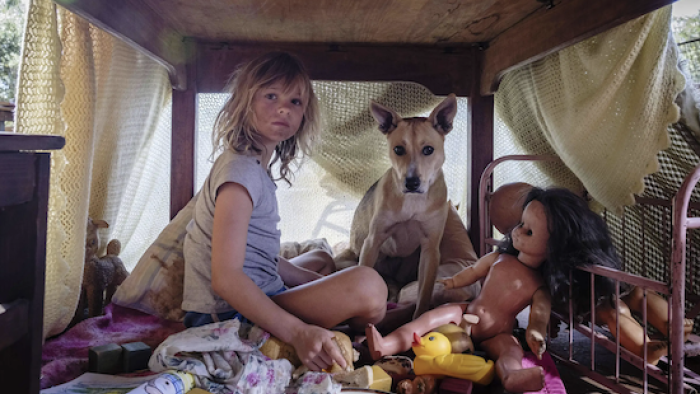
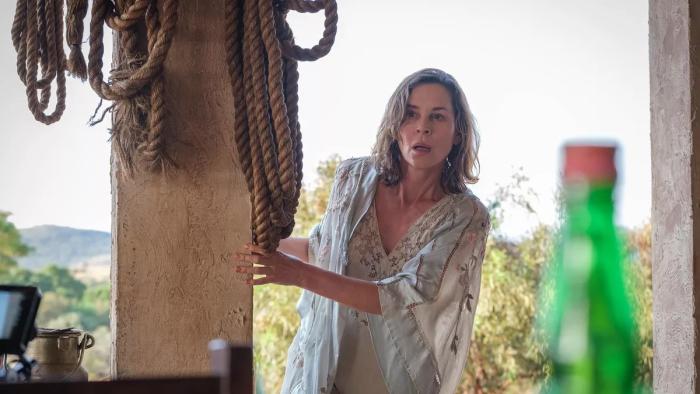
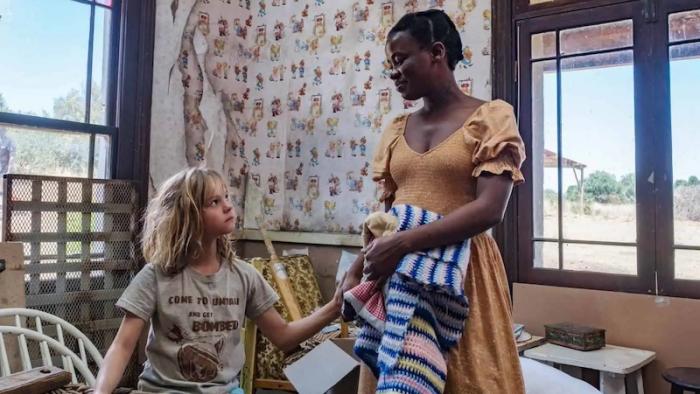
Based on Alexandra Fuller's same-named bestselling 2001 memoir, DON'T LET'S GO TO THE DOGS TONIGHT follows a young White girl (Lexi Venter) growing up in war-torn Zimbabwe (then known as Rhodesia) as it transitions out of racially segregated White minority rule. As Alexandra (nicknamed "Bobo") comes of age, her British-born parents (Embeth Davidtz and Rob van Vuuren) struggle to hold on to their farm and colonialist way of life amid the brutalities of civil war, political upheaval, substance abuse, mental illness, and personal tragedy. Told from Bobo's perspective, the movie explores the complexities of race, privilege, loss, and belonging through the eyes of a little girl who loves both her family and her Black caretaker, Sarah (Zikhona Bali), but begins to question what's true in the world around her.
Is It Any Good?
Davidtz' powerful, personal adaptation of Fuller's memoir memorably captures a young girl's coming-of-age amid civil war and political upheaval. Venter, a non-actor, delivers a remarkable performance in Don't Let's Go to the Dogs Tonight as Bobo, a curious, clever child who's navigating a land she inhabits but doesn't fully understand. She unthinkingly parrots the racist comments made by her parents and grandparents, revealing how prejudice is so easily passed down. Child protagonists in mature dramas often risk being too precious or precocious, but Bobo strikes just the right balance. She's slightly wild and independent, believably 8 years old, and unaware of why it's inappropriate to ask the Black farmhand's children to play "servants." The talented ensemble boasts several other layered, compelling performances, particularly from Davidtz—who pulls triple duty as director, writer, and actor—and Bali, whose Sarah cares for Bobo across a tense racial divide.
The film wisely favors character development over a more traditional plot, unfolding in an impressionistic style that captures key emotional beats during a compressed, tumultuous time. Venter's voice-over narration is both authentically unreliable and often darkly funny, grounding the story in a child's incomplete but vivid perceptions of her family and homeland. And Davidtz, like Fuller, resists offering easy answers about the legacy of European colonialism in Zimbabwe. Instead, the film challenges viewers to sit with their discomfort. Unlike Hotel Rwanda or The Last King of Scotland, Don't Let's Go to the Dogs Tonight offers little historical exposition, trusting viewers to engage more deeply with the context after the credits roll. This is an ambitious and confident directorial debut from Davidtz, who, as a South African, brings personal insight to the film's subject matter. While the narrative is limited to one White girl's perspective, the film ultimately encourages reflection and a deeper understanding of how personal histories are shaped by loss and conflict.
Talk to Your Kids About ...
Families can talk about the violence in Don't Let's Go to the Dogs Tonight. How does realistic violence compare to stylized violence in movies? Does violence have more impact when it's experienced or witnessed by a child?
What role does race play in the story? How do the characters' attitudes reflect the legacy of White colonial rule in Zimbabwe? How do those attitudes change (or not) over the course of the movie?
How are grief and mental illness portrayed in the movie? How does Bobo's family cope with tragedy?
How does the political and historical context of Rhodesia/Zimbabwe shape Bobo and her family's experiences? What did you learn about colonialism and civil war from the film? How might a Black child's perspective differ from Bobo's?
The movie is based on a true story. How accurate do you think it is both to the source memoir and to actual events? How could you find out more?
Movie Details
- In theaters : July 11, 2025
- On DVD or streaming : September 16, 2025
- Cast : Lexi Venter , Embeth Davidtz , Zikhona Bali
- Director : Embeth Davidtz
- Studio : Sony Pictures Classics
- Genre : Drama
- Topics : Book Characters , Friendship , History
- Character Strengths : Curiosity , Perseverance
- Run time : 98 minutes
- MPAA rating :
- MPAA explanation : violent/bloody images, language, sexual assault, and some underage smoking/drinking
- Last updated : September 18, 2025
Did we miss something on diversity?
Research shows a connection between kids' healthy self-esteem and positive portrayals in media. That's why we've added a new "Diverse Representations" section to our reviews that will be rolling out on an ongoing basis. You can help us help kids by
Suggest an Update
Common Sense Media's unbiased ratings are created by expert reviewers and aren't influenced by the product's creators or by any of our funders, affiliates, or partners.
See how we rate