







Common Sense Media Review
 By Joyce Slaton
,
based on child development research. How do we rate?
By Joyce Slaton
,
based on child development research. How do we rate?
Sweet story about compassion, nonviolence has a few scares.
Parents Need to Know
Why Age 6+?
Any Positive Content?
Where to Watch
Videos and Photos


Ferdinand
Parent and Kid Reviews
Based on 90 parent reviews
Parents say the film elicits mixed reactions, with many praising its beautiful animation and meaningful messages about non-violence, compassion towards animals, and embracing one's true self. However, some parents express concern over inappropriate humor, sad themes of loss and animal cruelty, and elements that could confuse or distress young children, leading to a debate about its appropriateness for younger audiences.
- thought-provoking themes
- beautiful animation
- inappropriate humor
- sensitive content
- messages of kindness
- non-violence
 Summarized with AI
Based on 44 kid reviews
What's the Story?
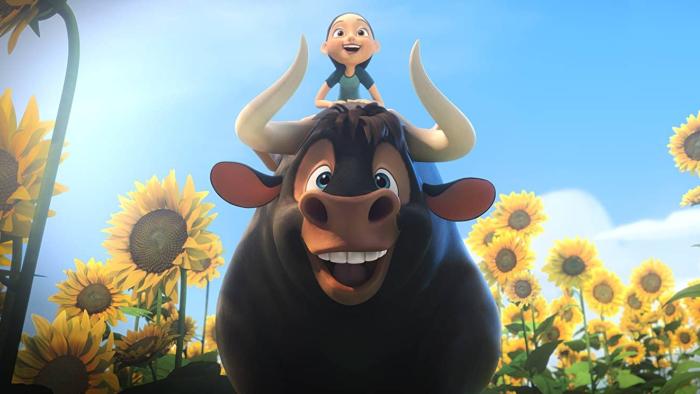
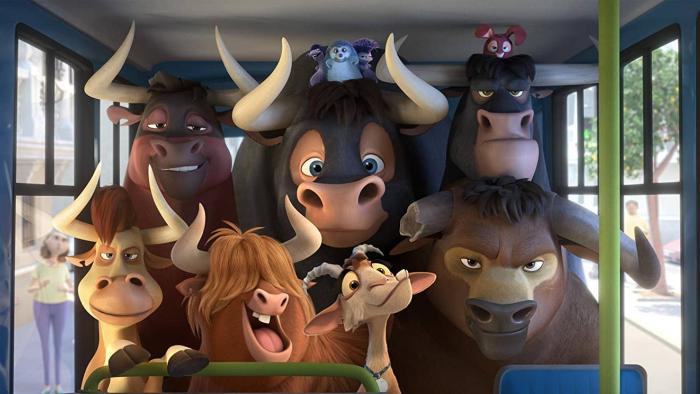
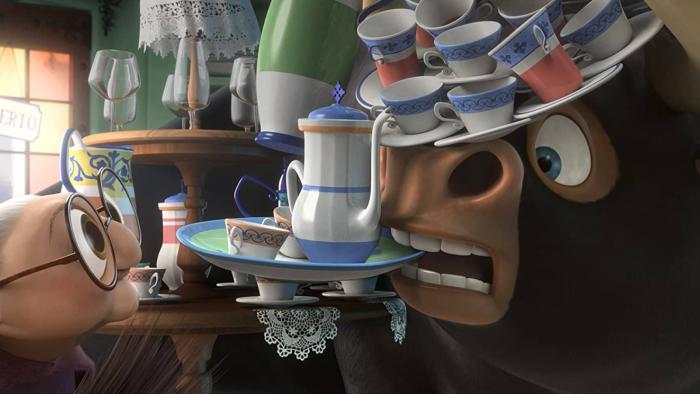
FERDINAND (John Cena) was born to be a fighting bull, bred to compete with matadors in the Spanish bullfighting ring. But he prefers flowers and friendship to training and fighting, which disgusts and mystifies many other bulls at the farm, including tough Valiente (Bobby Cannavale). When Ferdinand discovers the true fate of fighting bulls -- death, not the glory promised by Ferdinand's powerful father (Jeremy Sisto) -- he makes a desperate bid for freedom and finds a happy home at the flower farm of Juan (Juanes) and his daughter, Nina (Lily Day). Life is beautiful on the farm until the fateful day Ferdinand is mistaken for a dangerous beast and forced into a matador battle. Can he escape without anyone getting hurt -- especially him?
Is It Any Good?
Based on the 1936 children's book The Story of Ferdinand, this charming tale about a lover-not-a-fighter bull is surprisingly relevant for a vintage property. Ferdinand is a gentle giant who's -- literally -- bullied by his peers. They tell him, in not so friendly ways, that fighting is expected of him, and that his habit of admiring and sniffing flowers is suspect. It's a message that may resonate with children who struggle with traditional gender roles (and the parents who work hard to support them). When Ferdinand finally escapes the bare, brutal farm on which he was raised and gallops up a green hill strewn with flowers, we see that he's found a place where he can be himself, accepted and appreciated just as he is. It's positively beautiful, and sensitive viewers may find themselves welling up while wishing every person who doesn't feel like they fit in could find a place just like that.
For their part, young viewers will find Ferdinand lots of fun. A trio of wisecracking manic hedgehogs keeps Ferdinand on his toes during the movie's second act, and Ferdinand's "calming goat," Lupe (Kate McKinnon), is a lovable goofball in the Dory tradition. The songs are a little anemic, and there are a few plot holes (why doesn't Nina age as Ferdinand grows from calf to bull?), but the serious message this movie sends is a great one for our times, or any times. "It looks like weird is the new normal," observes one character -- and if that's not true, it ought to be.
Talk to Your Kids About ...
Families can talk about Ferdinand's theme of following traditions vs. personal principles. Which characters in Ferdinand are role models, and which character strengths do they demonstrate?
Why do you think stories about young characters who run away and go through difficult experiences to find out about themselves are popular? What does Ferdinand learn? How do his experiences away from the farm help him grow? Could he have grown in the same way if he didn't return to the farm after living with Juan and Nina? Do difficult experiences teach us more than easy ones?
How does Ferdinand show courage by refusing to follow traditions he doesn't agree with despite criticism from other characters? How does compassion for other creatures figure into his personal code?
Is Ferdinand a hero? What ways would you want to be like Ferdinand, and what ways would you want to be different? How does his character defy gender stereotypes? Why is it important for kids to see a wide range of behavior from both genders in the media they consume?
Did you think any parts of the movie were scary? How much scary stuff can young kids handle? Who do you think is the ideal audience for this movie? Why?
Movie Details
- In theaters : December 15, 2017
- On DVD or streaming : March 13, 2018
- Cast : John Cena , Kate McKinnon , Gina Rodriguez
- Director : Carlos Saldanha
- Studio : Twentieth Century Fox Film Corporation
- Genre : Family and Kids
- Topics : Activism ( Animal rights ) , Adventures , Animals ( Farm Animals , Wild Animals ) , Book Characters , Competition , Friendship , STEM ( Nature ) , Sports
- Character Strengths : Compassion , Courage
- Run time : 106 minutes
- MPAA rating :
- MPAA explanation : rude humor, action and some thematic elements
- Award : Common Sense Selection
- Last updated : October 3, 2026
Did we miss something on diversity?
Research shows a connection between kids' healthy self-esteem and positive portrayals in media. That's why we've added a new "Diverse Representations" section to our reviews that will be rolling out on an ongoing basis. You can help us help kids by
Suggest an Update
Common Sense Media's unbiased ratings are created by expert reviewers and aren't influenced by the product's creators or by any of our funders, affiliates, or partners.
See how we rate