






Common Sense Media Review
 By Sandie Angulo Chen
,
based on child development research. How do we rate?
By Sandie Angulo Chen
,
based on child development research. How do we rate?
Heartfelt drama about first love and loss; substance use.
Parents Need to Know
Why Age 15+?
Any Positive Content?
Where to Watch
Videos and Photos


Girls Like Girls
Parent and Kid Reviews
What's the Story?
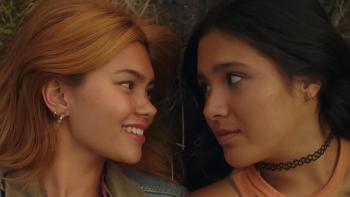
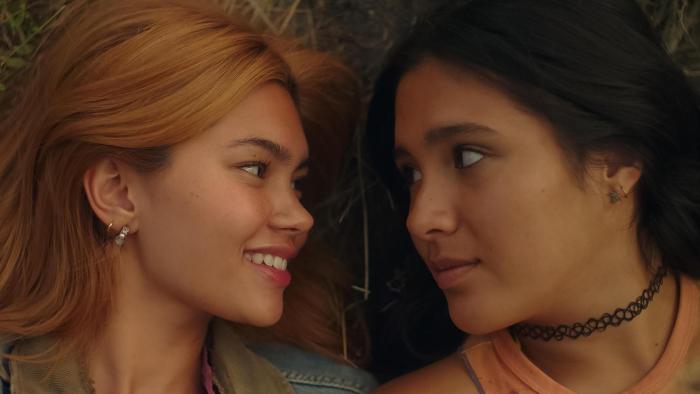
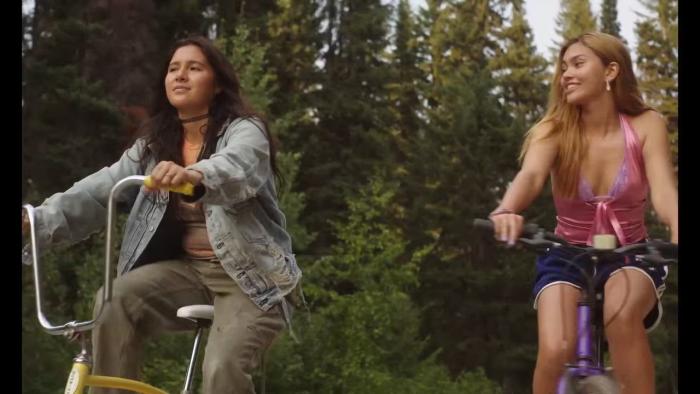
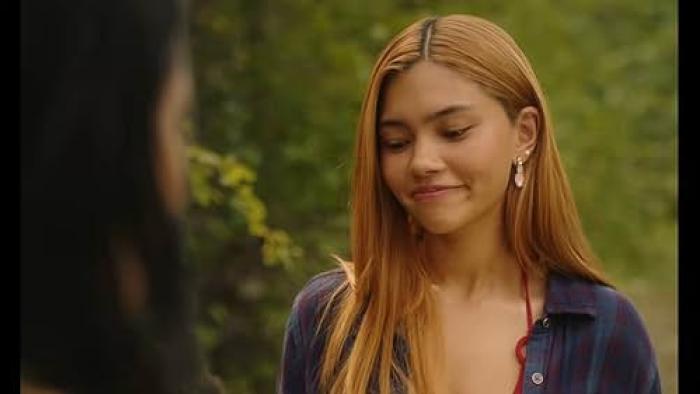
GIRLS LIKE GIRLS—director/co-writer Hayley Kiyoko's adaptation of her own song-turned-YA novel, follows 17-year-old Coley (Maya da Costa), who moves from San Diego to semi-rural Oregon in the summer of 2006 after her mother's unexpected death. She'll now be living with her previously estranged father, Curtis (Zach Braff), who's eager to make up for his years of absence. Struggling with grief and feeling like an outsider in a new town the summer before her senior year, Coley falls in with a boisterous group of local teens who spend their days and nights hanging out at restaurants, watering holes, and parties. She befriends Sonya (Myra Molloy), a popular girl who's in an on-again, off-again relationship with Trenton (Levon Hawke). As Coley and Sonya spend more and more time together over the summer, Coley's lingering sadness starts to ease—while her romantic feelings for her new best friend grow. But with Sonya still caught between her feelings for Coley and the expectations of her family and friends, both teens must figure out who they are and what they're willing to risk to be true to themselves.
Is It Any Good?
Kiyoko's directorial debut is a tender coming-out drama about a young woman who falls in love for the first time after a heartbreaking loss. Both of the young stars of Girls Like Girls do a wonderful job conveying the intense emotional intimacy of teenage girls' friendships and how that bond can develop into romance for someone who's figuring out their sexuality. With her sad, mournful eyes and melancholic half-smiles, da Costa is well cast as Coley, who's struggling with the many transitions in her life: a new home, a new parent, and a new group of kids to get to know. Molloy is equally compelling as Sonya, a magnetic competitive dancer who wants to be much more than a cliché queen-bee mean girl. It's Sonya who won't take no for an answer when she asks the introverted Coley to hang out, instant message, or go to a party with her. It seems inevitable that Coley quickly falls for Sonya as a friend and, later, realizes that those feelings have become something more.
Set in the mid-aughts, when a lot of teens still relied on AIM, the movie explores how fraught digital communication could be in the pre-iPhone era (the familiar open-door sound effect when Sonya appears online is filled with either anticipatory joy or tension). Contrasting with the technology (Coley is often listening to music on her iPod) is Oregon's gorgeous scenery, which is beautifully captured by cinematographer Sonja Tsypin. Unlike most teen romances, there are more than a few moments in Girls Like Girls when audiences will likely hope that Coley walks away from Sonya. But Kiyoko takes a nuanced approach, emphasizing the fact that not everyone is ready to come out at the same time and allowing Coley to work on herself—and have an honest conversation with her father—before she's ready for a relationship. The movie's ambiguous ending may rankle some viewers, but it feels true to that stage of life: uncertain, hopeful, and a little messy.
Talk to Your Kids About ...
Families can talk about how alcohol and drug use are portrayed in Girls Like Girls. Do the characters' choices have consequences? Why does that matter?
How does the movie depict coming out and self-acceptance in the early 2000s? Do you think those experiences have changed for LGBTQ+ teens since then?
Do viewers need to be familiar with Kiyoko's same-named song and/or book to enjoy the film? How is the movie different? Do you like the changes?
The movie explores the line between friendship and romantic attraction. How do Coley and Sonya's feelings for each other evolve? Why can those emotions be confusing?
Movie Details
- In theaters : June 19, 2026
- Cast : Maya da Costa , Myra Molloy , Zach Braff
- Director : Hayley Kiyoko
- Inclusion Information : Female Movie Director(s) , Lesbian Movie Director(s) , Asian Movie Director(s) , Multiracial Movie Director(s) , Female Movie Actor(s) , Female Movie Writer(s) , Asian Movie Writer(s)
- Studio : Focus Features
- Genre : Drama
- Topics : Book Characters , Friendship
- Character Strengths : Compassion , Empathy , Integrity
- Run time : 95 minutes
- MPAA rating :
- MPAA explanation : teen alcohol and drug use, and some language
- Award : Common Sense Selection
- Last updated : June 22, 2026
Did we miss something on diversity?
Research shows a connection between kids' healthy self-esteem and positive portrayals in media. That's why we've added a new "Diverse Representations" section to our reviews that will be rolling out on an ongoing basis. You can help us help kids by
Suggest an Update
Common Sense Media's unbiased ratings are created by expert reviewers and aren't influenced by the product's creators or by any of our funders, affiliates, or partners.
See how we rate