







Common Sense Media Review
 By Monique Jones
,
based on child development research. How do we rate?
By Monique Jones
,
based on child development research. How do we rate?
Sweet holiday romcom about coming out; drinking, language.
Parents Need to Know
Why Age 13+?
Any Positive Content?
Where to Watch
Videos and Photos





Happiest Season


Parent and Kid Reviews
Based on 9 parent reviews
Based on 11 kid reviews
Kids say this movie offers a heartfelt yet humorous take on the challenges faced by a lesbian couple during Christmas, emphasizing themes of acceptance and self-identity. However, opinions vary widely, with some praising its representation and lightheartedness while others criticize the depiction of certain character traits and the plot's realism.
- representation struggles
- humor and heart
- mixed reviews
- family dynamics
- character criticism
 Summarized with AI
What's the Story?
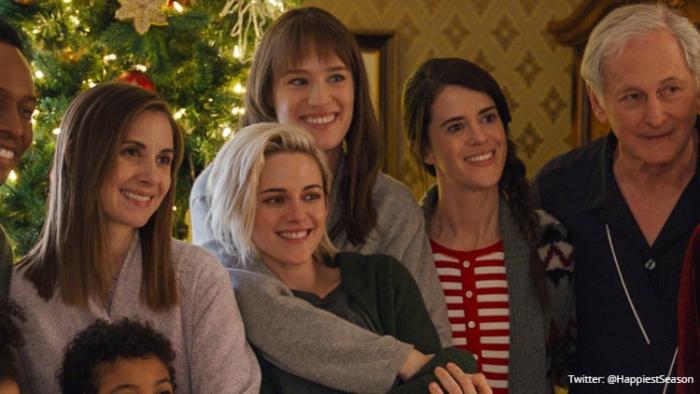
HAPPIEST SEASON tells the story of Harper (Mackenzie Davis), a young woman living in Pittsburgh with her girlfriend, Abby (Kristen Stewart). Harper invites Abby to spend the holidays with her family, but then -- at the last minute -- confesses that she hasn't come out to her parents or told them about Abby. The situation leads to a heartfelt comedy of errors that brings Abby in contact with Harper's family: her sisters -- uptight Sloane (Alison Brie) and creative Jane (Mary Holland) -- and her parents, mayoral hopeful Ted (Victor Garber) and wife Tipper (Mary Steenburgen). And then there's both Harper's ex-boyfriend, Connor (Jake McDorman), and her ex-girlfriend, Riley (Aubrey Plaza). Harper's reluctance to come out to those around her begins to take its toll on her relationship with Abby (who vents to both her friend John, played by Daniel Levy, and to Riley). Can Harper overcome her fear -- and save her relationship?
Is It Any Good?
Written and directed by Clea DuVall, this romcom is groundbreaking in that it's one of the few LGBTQ+-themed films made for the holiday season. But Happiest Season ultimately hits many of the same beats that a holiday film about a heterosexual, cisgender couple would. For better or worse, this makes it feel immediately comfortable and familiar. The cast does a great job at keeping the film feeling light, funny, and heartwarming. And the film's humor also ensures that the tough, complex subject of coming out never gets too dramatic or possibly triggering. But the retreading of popular holiday movie/romcom themes does prevent the film from breaking out of traditional Hollywood modes. For instance, Levy's character, John, embodies several too-familiar "gay male best friend" stereotypes -- i.e. characters who are often mysteriously devoid of familial ties, always have snappy comebacks ready, and are the emotional backup for their best friend when needed. John does have a more serious, expansive moment when he counsels Abby on Harper's reticence to come out to her family, citing how some families disown or disapprove of children who identify within the LGBQ spectrum and talking about his own traumatic coming-out experience. But beyond this, John remains a character of cliches, which is unfortunate in a film like this, which overall aims to break stereotypes.
Davis does well with Harper, who could be read as unlikable or even manipulative. Harper's fear of her parents' reaction to her sexuality is understandable, and the regretful actions she takes can be put into the context of that fear. But compared to Stewart's likable Abby, who's comfortable with herself, Harper can seem like she's taking advantage of Abby's love and devotion. Things only ramp up when viewers learn more about what Harper did to Riley in the past, making you wonder whether Abby and Riley should be together instead. But Harper's fear is only part of the problem with her dysfunctional family, and her courage to be herself eventually helps the rest of her family members be themselves, too, bringing the film back to its ;roots of togetherness, happiness, and holiday cheer. Despite its flaws, Happiest Season does remind audiences that, for many people, the point of the holidays is to be with family and celebrate love and joy. And the film's message that everyone deserves love, understanding, and empathy rings true.
Talk to Your Kids About ...
Families can talk about how it feels to stand up for yourself. How can you muster courage to speak up despite your fears? How do Happiest Season's characters demonstrate -- and learn -- empathy? How can family members practice empathy in real life?
Did you notice any stereotyping in the movie? If so, which characters? Why are stereotypes harmful?
How does feeling accepted feel vs. not feeling accepted? How can you practice self-acceptance? What message do you think parents are intended to take away from the film? What about kids?
How does the movie portray drinking? Why do characters drink? Do their reasons seem justified?
How does Happiest Season compare to other romcoms you've seen? What's similar, and what's different? Why do you think holiday movies so often have a romance plot?
Movie Details
- On DVD or streaming : November 25, 2020
- Cast : Kristen Stewart , Mackenzie Davis , Daniel Levy , Mary Steenburgen , Victor Garber
- Director : Clea DuVall
- Studio : Hulu
- Genre : Romance
- Topics : Holidays
- Character Strengths : Courage , Empathy
- Run time : 102 minutes
- MPAA rating :
- MPAA explanation : some language
- Last updated : October 8, 2026
Did we miss something on diversity?
Research shows a connection between kids' healthy self-esteem and positive portrayals in media. That's why we've added a new "Diverse Representations" section to our reviews that will be rolling out on an ongoing basis. You can help us help kids by
Suggest an Update
Common Sense Media's unbiased ratings are created by expert reviewers and aren't influenced by the product's creators or by any of our funders, affiliates, or partners.
See how we rate