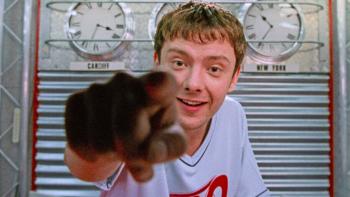
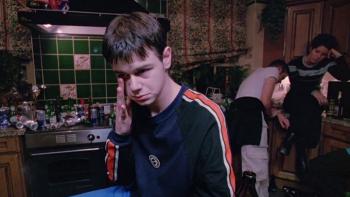
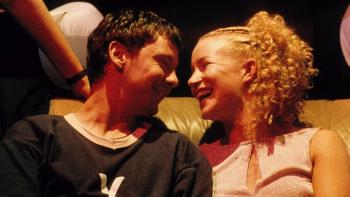
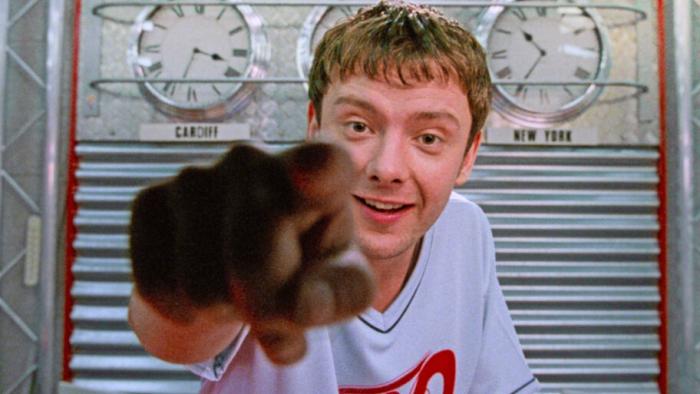
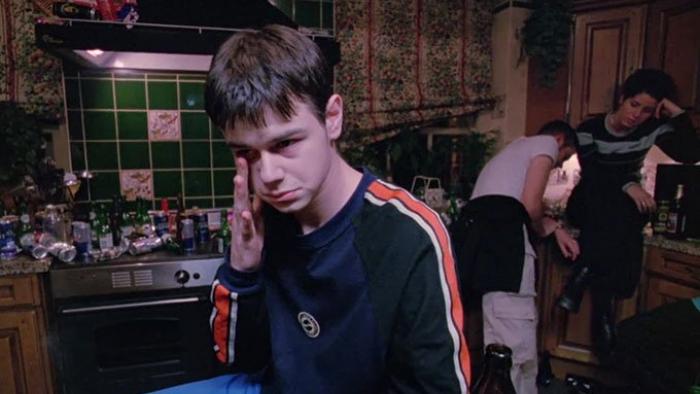
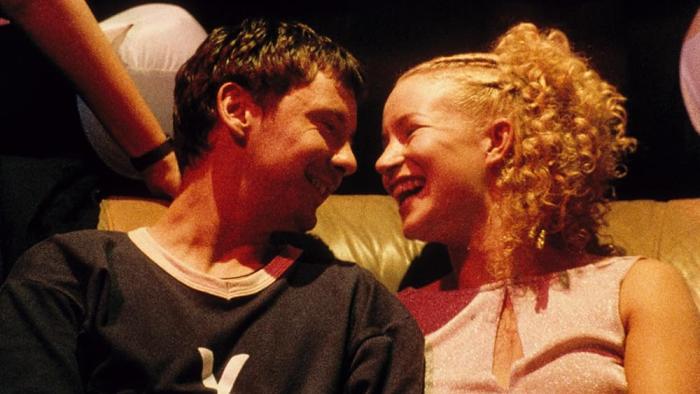
Parents need to know that Human Traffic is an insightful but hedonistic British comedy about late-1990s U.K. nightclub and drug culture. It follows a group of friends—Jip (John Simm), Lulu (Lorraine Pilkington), Koop (Shaun Parkes), Nina (Nicola Reynolds), and Moff (Danny Dyer)—who work mundane jobs and live to party on the weekends. It explores their problems, hopes, and dreams, with characters facing and discussing their anxieties, sexual dysfunction, jealousy, and paranoia while navigating young adulthood. The movie is frank and honest about drug use, with characters seen taking and enjoying recreational drugs including Ecstasy, cocaine, and pot. However, the downsides of such drug use are also portrayed, with characters feeling paranoid and depressed. Characters also drink and smoke cigarettes. There is strong language throughout, including variants of "f--k," one use of "c--t," and racist and homophobic slurs. A couple are shown having sex with bare breasts visible, while another character is walked in on while masturbating. In a fantasy sequence, Jip imagines his boss sexually assaulting him—a scene played for laughs that may be distasteful to some viewers.
To stay in the loop on more movies like this, you can sign up for weekly Family Movie Night emails
.
Language
a lot
Frequent language includes "f--king," "f--ked," "d--k," "f--k," "pr--k," "arsehole," "motherf----r," "s--t," "t-ts," "arse," "piss," "c--t," "bitch," and the British swear words "wanky," "twat," "wanker," and "wank." Also use of the "N" word and "queer" as a derogatory term. The offensive term "Jap's eye" is used to refer to a part of a man's genitals.
Did you know you can flag iffy content?
Adjust limits for Language in your kid's entertainment guide.
The characters take Ecstasy on a night out. The movie takes an even-handed approach to drugs, with characters explaining their positive feelings as well as some negative issues. Widely held beliefs about drug dangers are challenged to show a more realistic and less scaremongering view of the 1990s "chemical generation." This includes real-life footage of people enjoying themselves on drugs at music events. Other drugs used or mentioned include cannabis and speed. Two young women joke about taking heroin and crack to go clubbing when interviewed by a TV crew. A fake TV segment, "Spliff Politics," about the rotation of joints at parties is guest-presented by the famous drug dealer Howard Marks. A character watches a clip of comedian Bill Hicks' pro-drugs routine. A character pledges to stop taking drugs after a troubling night. Many characters smoke cigarettes. People drink alcohol on a night out. A character refers to being "off his t-ts."
Did you know you can flag iffy content?
Adjust limits for Drinking, Drugs & Smoking in your kid's entertainment guide.
Lots of sex talk and innuendo. People kiss and a couple have sex, with bare breasts shown. Erectile dysfunction is a plot point, with flashbacks and fantasies replaying stressful sexual experiences. Bare bottoms are shown in a comedy scene. A character's parent is a sex worker. A pimp in a fantasy sequence mentions a "blow job." A character calls a phone sex line. A character's bare bottom is shown while they are masturbating before being walked in on. A character acts out an orgasm. Another character uses the British slang "fanny fart."
Did you know you can flag iffy content?
Adjust limits for Sex, Romance & Nudity in your kid's entertainment guide.
Brief violent documentary footage of police attacking people at protests. In a fantasy sequence played for exaggerated comedy, a male character imagines being sexually assaulted by his boss, who is depicted as a Nazi. Someone is verbally threatened during a paranoid episode. Another talks about killing a pop star.
Did you know you can flag iffy content?
Adjust limits for Violence & Scariness in your kid's entertainment guide.
Various drinks brands shown, as well as lots of music posters for real-life artists.
Positive Messages
some
Promotes empathy and nonjudgmental friendship as characters openly support each other through personal struggles and navigating young adulthood. When friends share vulnerabilities like insecurity, jealousy, or other personal challenges, they're met with understanding rather than ridicule. People can overcome self-doubt and anxiety through persistence and self-acceptance. While it depicts drug use, the film presents a balanced perspective that shows both positive and negative consequences, avoiding glamorization while maintaining compassion for the characters' choices.
Diverse Representations
a little
The cast is predominantly White with one Black main character in the core friend group, which is a near even mix of men and women. The film addresses male sexual health issues with honesty and compassion, showing how friends support each other through personal challenges. Mental health struggles are portrayed sympathetically, including a storyline about a parent receiving care for mental illness. A character's mother is a sex worker, and while he says he's not happy about it, he is accepting of it. The film satirizes various types of 1990s cultural appropriation, particularly White characters' adopting elements of Black hip-hop culture. Racist and homophobic slurs are used.
Did we miss something on diversity?
.
Positive Role Models
very little
Young adult friends take drugs and party. Jip is a young man who dislikes his job and—like his friends—lives for the weekend. He is stressed with erectile dysfunction and sexual anxiety. His friend Koop is a charismatic record shop salesperson who is paranoid about his girlfriend cheating on him. Koop's girlfriend, Nina, works at a fast-food restaurant but wants to go to college. She quits due to a lecherous boss. Lulu is a feminist and empathetic to Jip's problems. Moff is the son of a police officer who deals drugs. He decides to quit drugs after the bad feelings outweigh the good.
In HUMAN TRAFFIC, a group of young friends in Cardiff party together in the pursuit of forgetting their problems and facing the confusing world of young adulthood.
Is It Any Good?
Our review:
Parents say :Not yet rated
Kids say :Not yet rated
Now regarded as a cult classic, this British comedy offers a smart and satirical look at the country's late-1990s subcultures and society. Amid Human Traffic's party atmosphere, the inner lives of its characters are revealed as cleverly as the British TV show Peep Show would do a few years later. Without judgment, the film follows five friends—Jip (John Simm), Lulu (Lorraine Pilkington), Koop (Shaun Parkes), Nina (Nicola Reynolds), and Moff (Danny Dyer)—through a typical weekend of clubs and drugs. The movie's biggest success is that it avoids being pro drugs while remaining pro young people who happen to use drugs. Rather than condemning its imperfect characters, the film shows empathy for the problems they face and stays on their side, however they choose to tackle them.
Talk to Your Kids About ...
Families can talk about the depiction of drug use in Human Traffic. Were you surprised at how the characters' experiences with drug use were portrayed? Why, or why not? Do you think the movie handled it responsibly?
Discuss some of the worries and fears the characters had. Did you relate with any of them? If so, did the film help you at all?
Discuss the strong language used in the movie. Did it seem necessary, or excessive? What did it contribute to the movie?
Research shows a connection between kids' healthy self-esteem and positive portrayals in media. That's why we've added a new "Diverse Representations" section to our reviews that will be rolling out on an ongoing basis. You can help us help kids by
Common Sense Media's unbiased ratings are created by expert reviewers and aren't influenced by the product's creators or by any of our funders, affiliates, or partners.







 By Tom Cassidy
,
based on child development research. How do we rate?
By Tom Cassidy
,
based on child development research. How do we rate?