







Common Sense Media Review
 By Betsy Bozdech
,
based on child development research. How do we rate?
By Betsy Bozdech
,
based on child development research. How do we rate?
Growing up is emotional in thoughtful sequel; some peril.
Parents Need to Know
Why Age 6+?
Any Positive Content?
Where to Watch
Videos and Photos


Inside Out 2
Parent and Kid Reviews
Based on 146 parent reviews
Parents say the film presents a heartfelt and humorous exploration of emotions, particularly anxiety, making it relatable for older children and teenagers, though some find it too dark or complex for younger kids. While many appreciate its positive messages and character development, there are mixed feelings about its portrayal of anxiety, with some expressing concern that it might overwhelm or confuse younger audiences.
- emotional exploration
- relatable for teens
- mixed reviews
- concerns for children
- humorous elements
 Summarized with AI
Based on 173 kid reviews
Kids say that the sequel is a mixed bag, with some praising its relatable themes, particularly about anxiety and emotional growth in adolescence, while others feel it doesn't live up to the original's charm and depth. Many reviews highlight its educational value for pre-teens and teens, although it includes mature themes that may not resonate with younger viewers.
- emotional growth
- relatable themes
- educational value
- mixed reception
- mature content
Summarized with AI
What's the Story?
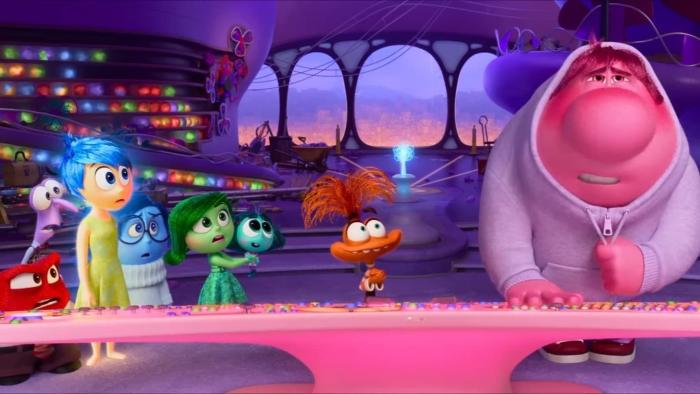
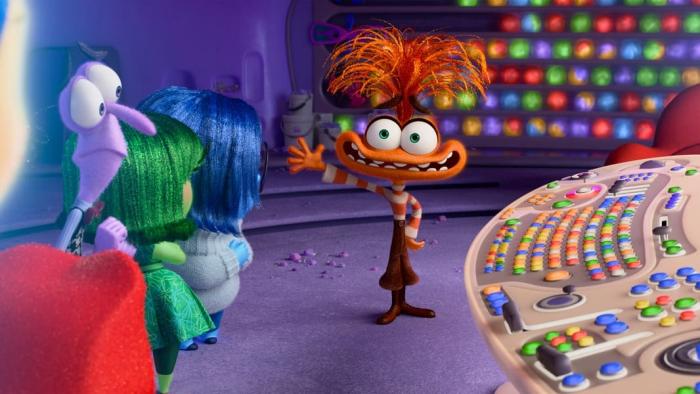
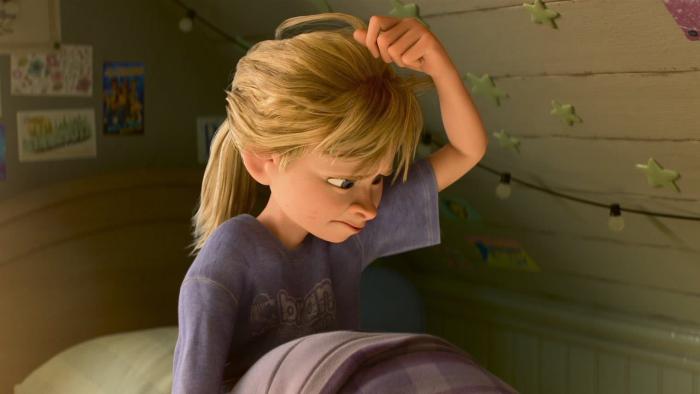
Set about two years after the events of 2015's Inside Out, INSIDE OUT 2 finds Riley (voiced by Kensington Tallman) at the top of her game: She's getting great grades in school, she's leading her hockey team to victory, and she has two amazing best friends. Everything is running like clockwork among her emotions at Headquarters, too, with Joy (Amy Poehler) confidently in control but remembering to make room for Sadness (Phyllis Smith), Anger (Lewis Black), Fear (Tony Hale, taking over for Bill Hader), and Disgust (Liza Lapira, stepping in for Mindy Kaling). Then Riley turns 13, and puberty arrives with a literal bang when a wrecking crew shows up to demo HQ and make room for several new emotions: Anxiety (Maya Hawke), Envy (Ayo Edebiri), Embarrassment (Paul Walter Hauser), and Ennui (Adèle Exarchopoulos). As all of the emotions try to figure one another out and get along, Riley heads to a competitive hockey camp and receives some unexpected—and unwelcome—news. With Anxiety trying to wrest control, Riley starts spiraling into self-doubt, which threatens her core sense of who she is. Can Joy and the others restore equilibrium and save their girl? If they can navigate her stream of consciousness and avoid a few massive Sar Chasms, it just might work.
Is It Any Good?
This thoughtful, emotional (literally!) return to the world of Riley and her colorful, expressive emotions is a worthy follow-up to the original. While nothing could quite recapture the full wow factor of seeing Inside Out for the first time, Inside Out 2 comes awfully close. The voice cast is great (though Hader and Kaling are missed), the story about teen friendship drama is relatable, the observations about puberty and teenage behavior are hilarious, and the messages about what it means to be your true self—and to love yourself and others unconditionally—are exceptionally relevant for teens but important for kids of all ages.
Plus, the emotions' journey through Riley's mind means that viewers get another round of imaginative takes on how memory and feelings function. A sequence set in the Deep Vault where Riley buries things she'd rather forget about is especially funny, and a tour of Riley's current Personality Island landscape feels spot on in the way it represents teenage priorities. Inside Out 2 is also nuanced and empathetic in how it depicts dealing with anxiety—both the emotion and the character. Like Joy in the first film, Anxiety is doing what she thinks is best for Riley. But also like Joy in the first film, her best intentions go awry, and she needs to learn to work with the other emotions to truly help Riley succeed. All of this again feels poised to help parents and kids have meaningful conversations about how they're feeling, and that's ultimately what makes the Inside Out films so special.
Talk to Your Kids About ...
Families can talk about how Riley's emotions are different in Inside Out 2 than they were in Inside Out. Why does she have more of them now? What happens when they conflict with each other? Do you ever feel like that happens to you?
The characters in Inside Out 2 learn and demonstrate many important character strengths. How do Riley and her emotions show teamwork, communication, self-control, perseverance, and empathy?
What is someone's "sense of self"? How does Riley's change over the course of the movie? What do you think makes up your own sense of self? Can you truly be yourself without acknowledging and understanding all of yourself?
If you've dealt with anxiety (or know someone who has), how does the way it's portrayed here feel? What's the danger of having anxiety take over? Are there ways to help avoid that?
What role does puberty/growing up play in the story? Do you think that makes it more relevant to tweens and teens than to younger kids?
Movie Details
- In theaters : June 14, 2024
- On DVD or streaming : August 20, 2024
- Cast : Amy Poehler , Maya Hawke , Kensington Tallman , Phyllis Smith
- Director : Kelsey Mann
- Studios : Walt Disney Studios Motion Pictures , Pixar Animation Studios
- Genre : Family and Kids
- Topics : Adventures , Friendship , School ( Middle School )
- Character Strengths : Communication , Empathy , Perseverance , Self-control , Teamwork
- Run time : 100 minutes
- MPAA rating :
- MPAA explanation : some thematic elements
- Awards : Academy Award - Animated Feature Nominee , BAFTA - BAFTA Nominee , Common Sense Media Award , Common Sense Selection , Golden Globe - Golden Globe Award Nominee , Kids' Choice Award , NAACP Image Award - NAACP Image Award Winner , NAACP Image Award - NAACP Image Award Nominee
- Last updated : April 29, 2026
Did we miss something on diversity?
Research shows a connection between kids' healthy self-esteem and positive portrayals in media. That's why we've added a new "Diverse Representations" section to our reviews that will be rolling out on an ongoing basis. You can help us help kids by
Suggest an Update
Common Sense Media's unbiased ratings are created by expert reviewers and aren't influenced by the product's creators or by any of our funders, affiliates, or partners.
See how we rate