







Common Sense Media Review
 By Barbara Shulgasser-Parker
,
based on child development research. How do we rate?
By Barbara Shulgasser-Parker
,
based on child development research. How do we rate?
Classic Hitchcock thriller has mature themes, sexual trauma.
Parents Need to Know
Why Age 13+?
Any Positive Content?
Where to Watch
Videos and Photos


Marnie

Parent and Kid Reviews
What's the Story?
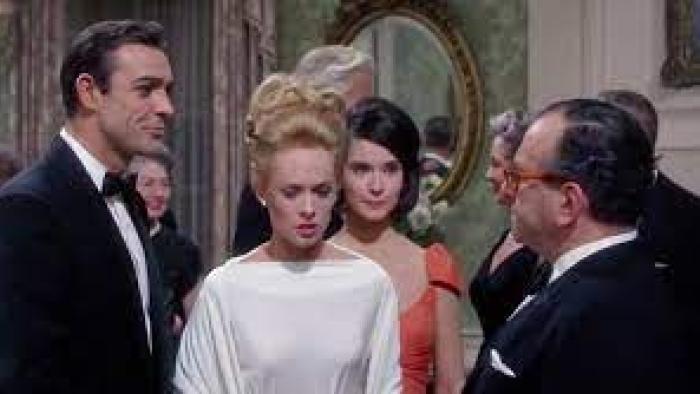
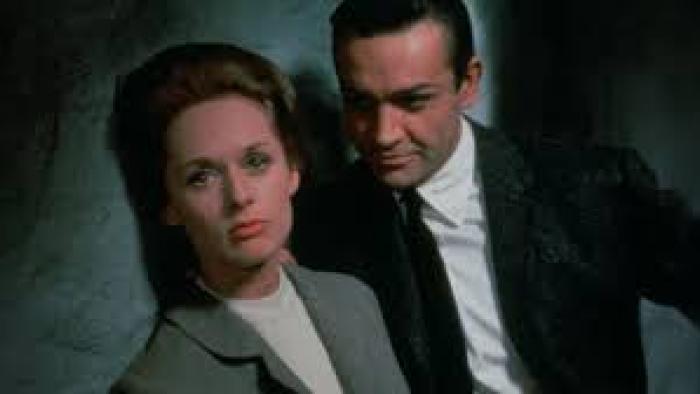
MARNIE (Tippi Hedren) is a wily, intelligent, polished, and well-organized sociopath. She is a pro at changing her name and appearance as she infiltrates companies run by gullible men swayed by her beauty. She embezzles, switches social security cards, and moves on to the next victim. The heists support her limping, cold-hearted mother and give her the wherewithal to reject the men who come on to her. She finds them disgusting, "pigs," in fact. Her smooth operation comes to a halt when businessman Mark Rutland (Sean Connery) remembers her from an encounter at another man's firm, one she stole from. After pulling off that job, she comes to his company for a job -- with a new name and different hair color. He is seized with curiosity and lust. After she robs his company and disappears, he finds her. He has replaced what she took and is now an accessory to her crime. She will either have to marry him, he says, or go to jail. He soon learns she won't let any man touch her and despite a promise to leave her alone, he breaks his promise and forces himself on her -- marital rape by any standards -- which leads to a suicide attempt. Her triggers -- the color red, thunder storms, tapping -- send her into trances of terror that intrigue Mark and elicit his protective instincts. He claims he just wants to "take care" of her, but she becomes his virtual prisoner as he hunts down her past and discovers the forgotten traumatic childhood incident that set her on her mentally disturbed path.
Is It Any Good?
Marnie is an absorbing heist movie, and also a window into some creaky mid-20th century views about male-female relations. The compelling, well-constructed narrative is a showcase of contradictions, not all of them deliberate. Hitchcock's hyper-controlled style tells the story of an out-of-control woman who compulsively lies and steals, as well as the story of the man who can't control his lust for her. The contradictions multiply. The man is both her paternalistic savior and her prison guard. He advertises himself as having only her best interests in mind yet, in the name of helping, treats her badly -- imprisoning her and raping her -- supposedly for her own good.
Hitchcock himself is known to have famously tortured Hedren in the making of this and The Birds, in response to her rejection of his crude sexual overtures. That dynamic feels overwhelmingly present here as sexuality is no longer an undercurrent, but one brought into the forefront. When police ask the gray-suited, little balding businessman for a description of the perpetrator, he offers a peek into his lascivious study of her: "five-foot-five, 110 pounds, even features, good teeth." He practically licks his lips as he outlines her form. He adds, in frustration, that he watched as she "pulled her skirt down over her knees as if they were a national treasure," a treasure he'd never have access to. Hedren gives a stunningly convincing performance of a woman in barely controlled turmoil, annoyed that her "frigidity" is considered a symptom of dysfunction. "Oh, men -- you say ‘No, thanks' to one of them and, bingo, you're a candidate for the funny farm. It would be hilarious if it weren't pathetic." Hitchcock is still playing with contradictions because while many mentally sound women may sensibly come to that exact same conclusion about some men, Marnie is clearly psychologically damaged. Connery, two years into his James Bond stint, is also perfect as the suave, smooth-talking do-gooder who can handle every situation with maddening aplomb. The tidy ending offers a lot of psycho-mumbo jumbo, unconvincingly suggesting that the damaged Marnie and her thus-far rocky marriage are now going to be just fine. Watch for Hitchcock exiting a hotel room, making one of his iconic cameo appearances.
Talk to Your Kids About ...
Families can talk about Mark's character. How does Hitchcock balance Mark's claim that he wants to help Marnie with the way he has trapped her into marriage? Does Mark seem like a good guy, a bad guy, or something in between?
How does Hitchcock use Marnie's powerful determination to tell the story?
Do you think Marnie's mental health improves after the movie ends? Why or why not?
How does this compare to other Alfred Hitchcock movies you've seen?
Movie Details
- On DVD or streaming : January 1, 1964
- Cast : Tippi Hedren , Sean Connery , Louise Latham
- Director : Alfred Hitchcock
- Studio : Universal
- Genre : Drama
- Run time : 130 minutes
- MPAA rating :
- MPAA explanation : thematic elements, smoking
- Last updated : April 10, 2023
Did we miss something on diversity?
Research shows a connection between kids' healthy self-esteem and positive portrayals in media. That's why we've added a new "Diverse Representations" section to our reviews that will be rolling out on an ongoing basis. You can help us help kids by
Suggest an Update
Common Sense Media's unbiased ratings are created by expert reviewers and aren't influenced by the product's creators or by any of our funders, affiliates, or partners.
See how we rate