







Common Sense Media Review
 By Kat Halstead
,
based on child development research. How do we rate?
By Kat Halstead
,
based on child development research. How do we rate?
Complex sci-fi thriller has strong language, mild violence.
Parents Need to Know
Why Age 15+?
Any Positive Content?
Where to Watch
Videos and Photos


Minor Premise
Parent and Kid Reviews
What's the Story?
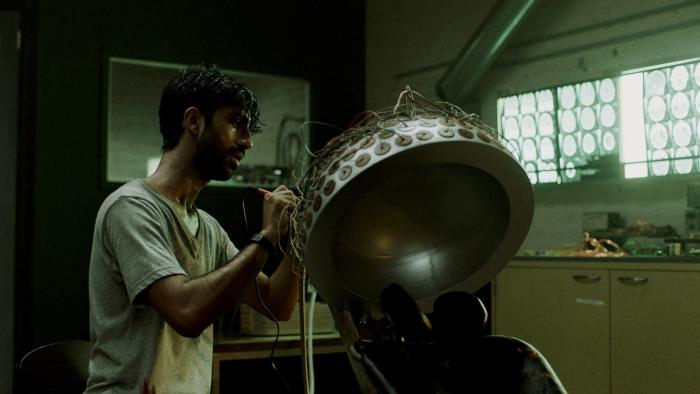
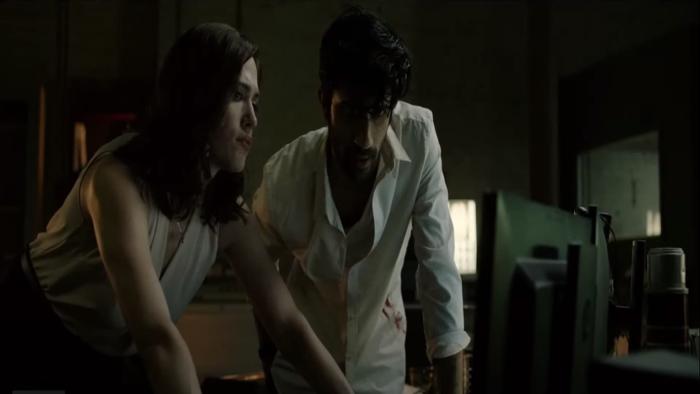
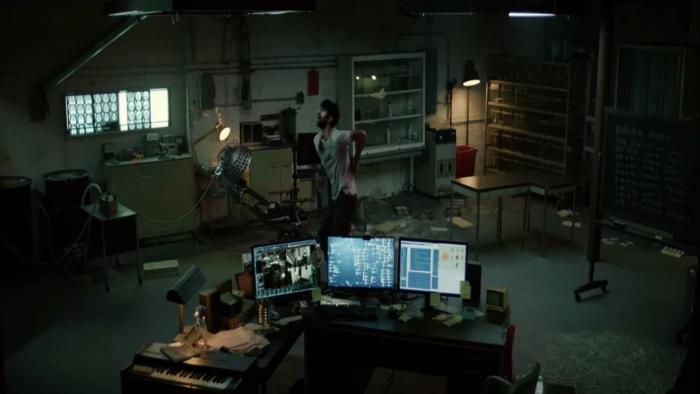
In MINOR PREMISE, neuroscientist Ethan (Sathya Sridharan) uses a research project being developed at his university to experiment on his own brain. But when the experiment fractures his consciousness into 10 fragments -- with each taking over his body for six minutes an hour -- the battling aspects of his psyche start to wreak havoc and fight for supremacy. Can he and fellow researcher Alli (Paton Ashbrook) figure out the formula to reintegrate the fragments before Ethan's mind is destroyed for good?
Is It Any Good?
It is ambitious to root a sci-fi so deeply in the science that it starts to become about that, rather than the personal story. But, perhaps partly due to writer Justin Moretto's background in neuroscience and partly the clear, tight structure, the scenario of Minor Premise feels believable enough to work. Sridharan explores a wide acting range in expressing Ethan's 10 different "personalities," while maintaining the same physical form -- flying from extreme, obvious types to more nuanced fluctuations that leave both Ashbrook's Alli, the audience, and the original Ethan guessing.
The game, then, is a Memento-style piecing together of memories and surveillance footage to catch up on the actions of each separate fragment, while maintaining focus on the overall goal of reintegrating the parts before an undesirable one breaks free. It's formulaic, for sure. But that formula keeps the ambition in check, using genre tropes like the fractured personalities, a rogue scientist, and ticking clock countdown to keep us in familiar territory, even while the scientific jargon and brain scans on screen are blowing our tiny little minds.
Talk to Your Kids About ...
Families can talk about the ethical questions raised in Minor Premise. Why do you think Ethan undertook the experiment? Should there be limitations on what we can, and should, experiment on?
Discuss the language used in the movie. Did it seem necessary or excessive? What did it contribute to the movie?
Talk about the violence in the movie. Did the violent scenes help tell the story in an effective way? Was it shocking or thrilling? Why? Does exposure to violent media desensitize kids to violence?
Can you think of any ways in which different parts of the consciousness have been explored in other films? How did this movie compare?
Discuss the ways in which memories and different kinds of experiences are represented visually in the film. How effective was this done?
Movie Details
- In theaters : December 4, 2020
- On DVD or streaming : December 4, 2020
- Cast : Sathya Sridharan , Paton Ashbrook , Dana Ashbrook
- Director : Eric Schultz
- Studio : Utopia Films
- Genre : Science Fiction
- Topics : STEM
- Run time : 95 minutes
- MPAA rating :
- Last updated : September 29, 2025
Did we miss something on diversity?
Research shows a connection between kids' healthy self-esteem and positive portrayals in media. That's why we've added a new "Diverse Representations" section to our reviews that will be rolling out on an ongoing basis. You can help us help kids by
Suggest an Update
Common Sense Media's unbiased ratings are created by expert reviewers and aren't influenced by the product's creators or by any of our funders, affiliates, or partners.
See how we rate