






Common Sense Media Review
 By Jeffrey M. Anderson
,
based on child development research. How do we rate?
By Jeffrey M. Anderson
,
based on child development research. How do we rate?
Godard drama ideal for cinema buffs; smoking, language.
Parents Need to Know
Why Age 14+?
Any Positive Content?
Where to Watch
Videos and Photos

Nouvelle Vague
Parent and Kid Reviews
What's the Story?
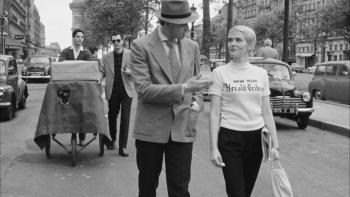
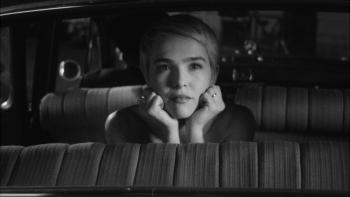
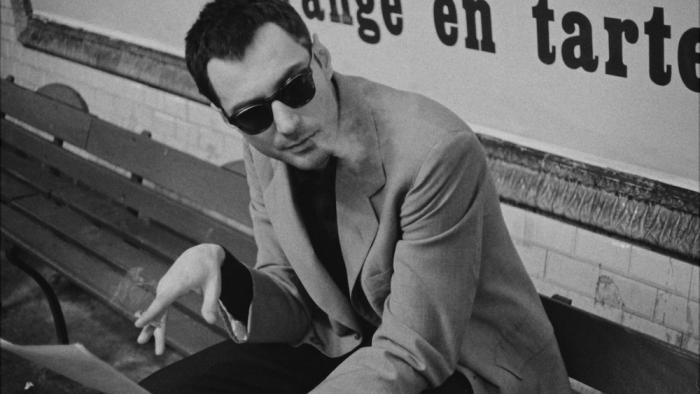
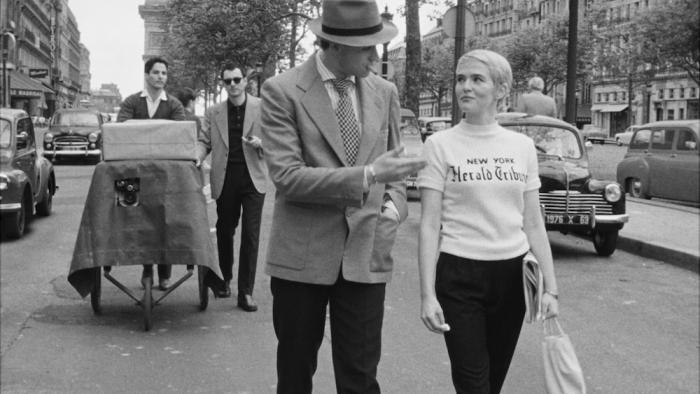
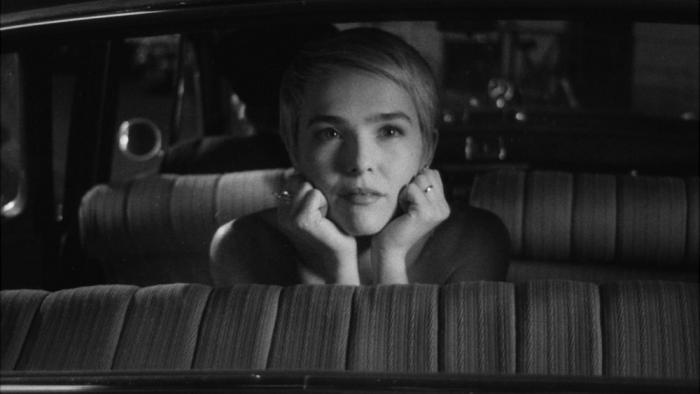
In NOUVELLE VAGUE, it's 1959 in Paris. Jean-Luc Godard (Guillaume Marbeck), a film critic at Cahiers du Cinéma, is starting to feel restless. His friend/co-worker, François Truffaut (Adrien Rouyard), has just had a massive success with his debut feature The 400 Blows, and Godard feels that the only way to properly critique films is to make one himself. Producer Georges de Beauregard (Bruno Dreyfürst) lines up a sordid little crime tale and a small budget for Godard. He casts Jean-Paul Belmondo (Aubry Dullin) and American star Jean Seberg (Zoey Deutch), and the filming—which is unorthodox at best—begins. They use a light, handheld camera with no sync sound. Godard doesn't provide a script, merely shouting the lines he wants the actors to say. And he shuts down for the day if he runs out of ideas. Everyone thinks the finished movie will be a disaster. But perhaps Godard knows what he's doing?
Is It Any Good?
For die-hard cinema buffs, this drama, crafted to look like a vintage French New Wave film, will be a pure pleasure. But some homework is required to fully enjoy Nouvelle Vague; there's not much here to invite newcomers in. Directed by Richard Linklater in what's clearly meant to be a valentine to a lost era, Nouvelle Vague introduces its many characters with printed titles, but a lot of them will be unfamiliar to all but the most devoted scholars of the New Wave—like script supervisor Suzon Faye (Pauline Belle), who constantly butts heads with Godard over continuity, and Seberg's contractual makeup artist, Phuong Maittret (Jade Phan-Gia). (The two women bond over their mutual frustration.) Other New Wavers are here, too, including Cahiers du Cinéma co-workers Éric Rohmer, Claude Chabrol, and Jacques Rivette; their pal Suzanne Schiffman; and other filmmakers or filmmakers-to-be: Jean Cocteau, Agnès Varda, Jean-Pierre Melville, Roberto Rossellini, Robert Bresson, etc. All of them are played by remarkable dead ringers who are almost indistinguishable from the real people.
The drama is lean and spare, focusing largely on the nuts and bolts of this guerilla-type production. Much of the friction comes from Seberg, who has just worked with Otto Preminger on Saint Joan and Bonjour Tristesse and is dismayed by Godard's ramshackle shoot. But she also brings spirit and bounce to things, bonding with Belmondo and responding to his unfettered brand of cool. (She teaches him a funny little dance in a couple of charming sequences.) The movie intricately and with minute detail re-creates moments from the movie that all of this is leading up to: the 1960 masterpiece Breathless. Going into Nouvelle Vague without having seen Breathless is fairly pointless, but having an excuse to see it, again or for the first time, is always welcome.
Talk to Your Kids About ...
Families can talk about how Nouvelle Vague depicts smoking and drinking. Is substance use glamorized? Are there consequences? Why does that matter?
How does Jean-Luc Godard making a movie in 1959 differ from celebrities and influencers making videos today? How are they the same?
How does the film visually reference Godard's Breathless and the French New Wave? Did these references enhance your understanding or appreciation of the era?
What can we learn from the personalities of Godard, Jean Seberg, and Belmondo about the collaborative nature of filmmaking?
How might the film resonate differently with audiences who aren't familiar with French New Wave cinema?
Movie Details
- In theaters : October 31, 2025
- On DVD or streaming : November 14, 2025
- Cast : Guillaume Marbeck , Zoey Deutch , Aubry Dullin
- Director : Richard Linklater
- Inclusion Information : Female Movie Actor(s)
- Studio : Netflix
- Genre : Drama
- Topics : Arts , History ( Biopic )
- Run time : 106 minutes
- MPAA rating :
- MPAA explanation : some language
- Last updated : November 14, 2025
Did we miss something on diversity?
Research shows a connection between kids' healthy self-esteem and positive portrayals in media. That's why we've added a new "Diverse Representations" section to our reviews that will be rolling out on an ongoing basis. You can help us help kids by
Suggest an Update
Common Sense Media's unbiased ratings are created by expert reviewers and aren't influenced by the product's creators or by any of our funders, affiliates, or partners.
See how we rate