







Common Sense Media Review
 By Jeffrey Anderson
,
based on child development research. How do we rate?
By Jeffrey Anderson
,
based on child development research. How do we rate?
Long Italian drama is pretty but empty, with graphic nudity.
Parents Need to Know
Why Age 16+?
Any Positive Content?
Where to Watch
Videos and Photos


Parthenope
Parent and Kid Reviews
What's the Story?
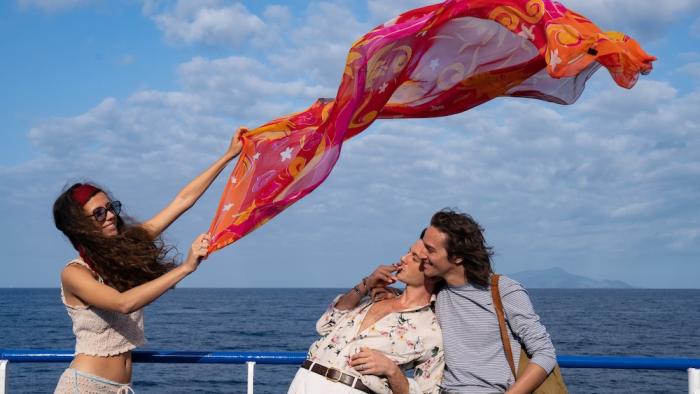
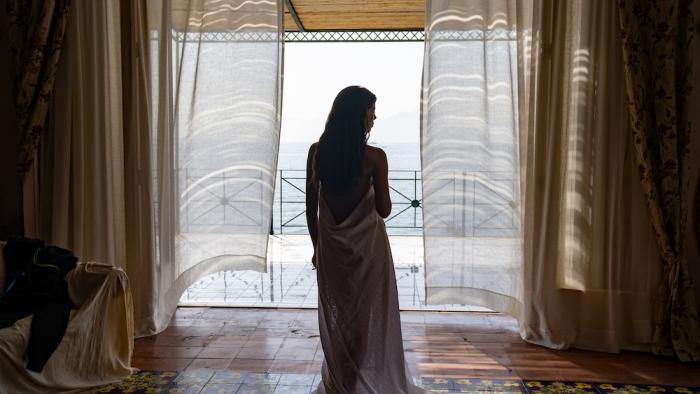
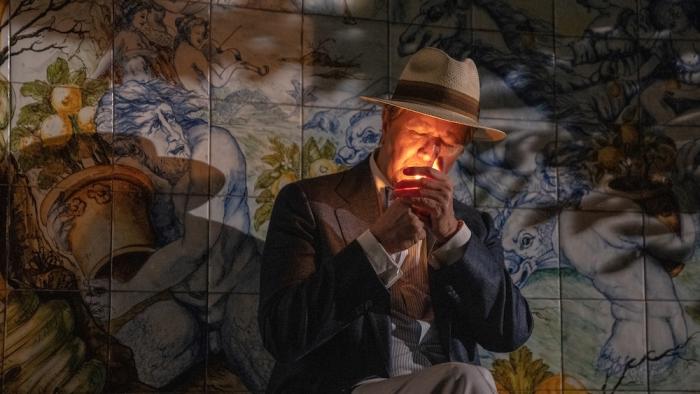
In PARTHENOPE, it's 1950 in Naples, and a baby girl is born. Her godfather, the Commander (Alfonso Santagata), names her after the town of her birth, "Parthenope." Years later, a grown-up Parthenope (Celeste Dalla Porta) has a close, loving relationship with her doting brother, Raimondo (Daniele Rienzo), and another man, Sandrino (Dario Aita), becomes smitten with her. The three of them go on a carefree trip to Capri, where Parthenope meets her literary idol, John Cheever (Gary Oldman)—but a tragedy will forever change her innocent ways. She then begins to study anthropology with the help of a grumpy professor, Devoto Marotta (Silvio Orlando). But even in the world of academia, life has many mysteries left.
Is It Any Good?
This long life story contains many beauties, rhyming imagery, and repeated bits of dialogue meant to sound clever and witty, but it soon becomes clear that there's not much going on. With Parthenope, Italian-born, Oscar-winning filmmaker Paolo Sorrentino returns to his beloved Naples—and, even better, he returns with Dalla Porta, who apparently played a small, uncredited part in Sorrentino's The Hand of God. He undoubtedly noticed her while making that movie and gave her this very large, very central leading role as a result, perhaps hoping to follow in the footsteps of the old Italian masters and their muses (Anita Ekberg splashing in the Trevi Fountain in Federico Fellini's La Dolce Vita, Sophia Loren becoming a star in Vittorio De Sica's Two Women, Monica Vitti being vacantly mysterious in Michelangelo Antonioni's L'Avventura, etc.).
It's been clear since The Great Beauty that Sorrentino is trying to follow in the footsteps of Fellini, who openly explored his own past, childhood, fantasies, and longings in grandiose style. But it's less clear what Sorrentino himself is actually trying to say, especially here. Parthenope seems more concerned with beauty as a concept than with humanness. It continually returns to and echoes images and sounds, attempting to mirror them and to seem like it's building to something. But ultimately they're just pretty pictures and pretty sounds, and it all just wafts out to sea on a warm breeze.
Talk to Your Kids About ...
Families can talk about Parthenope's depiction of sex. What values are shown? Is there agency? Trust? Consent? Why are these things important?
How are smoking and drinking depicted? Are they glamorized? Are there consequences? Why does that matter?
What does Parthenope learn over the course of her life?
What does the movie have to say about beauty? Is it a gift, or a curse? Why?
Movie Details
- In theaters : February 7, 2025
- On DVD or streaming : March 11, 2025
- Cast : Celeste Dalla Porta , Silvio Orlando , Gary Oldman
- Director : Paolo Sorrentino
- Studio : A24
- Genre : Drama
- Run time : 136 minutes
- MPAA rating :
- MPAA explanation : strong sexual content/graphic nudity, and language
- Last updated : March 30, 2025
Did we miss something on diversity?
Research shows a connection between kids' healthy self-esteem and positive portrayals in media. That's why we've added a new "Diverse Representations" section to our reviews that will be rolling out on an ongoing basis. You can help us help kids by
Suggest an Update
Common Sense Media's unbiased ratings are created by expert reviewers and aren't influenced by the product's creators or by any of our funders, affiliates, or partners.
See how we rate