







Common Sense Media Review
 By Michael Ordona
,
based on child development research. How do we rate?
By Michael Ordona
,
based on child development research. How do we rate?
Lots of sex in drama about longtime couple's experiment.
Parents Need to Know
Why Age 17+?
Any Positive Content?
Where to Watch
Videos and Photos



Permission

Parent and Kid Reviews
What's the Story?
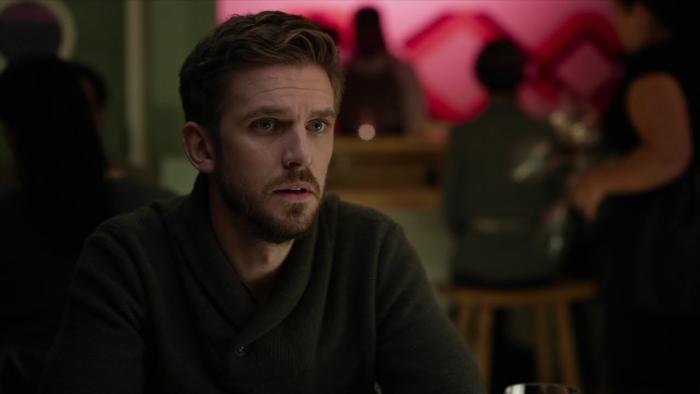
In PERMISSION, longtime couple Anna and Will (Rebecca Hall and Dan Stevens) are on the verge of getting engaged when they suddenly decide to try having sex with other people. After all, each of them is the only sex partner the other has ever had, so why not check out others? They assure each other that their relationship will be even stronger after they're done exploring. Witness to the idea are Anna's brother, Hale (David Joseph Craig), and his boyfriend/Will's best friend, Reece (Morgan Spector), a similarly perfectly happy couple of many years who likewise have a sudden realization. In their case, it's that they've never discussed having kids, an issue that's now become extremely important to one of them. Anna and Will immediately find viable sexual options (and then some!), and -- surprise -- discover that their voyage of discovery might take them to unexpected destinations.
Is It Any Good?
The film wants to dive into the waters of polyamory, but -- like most real couples thinking about it -- it's too timid to do more than dip its toe. Permission is kind of a New York sex comedy à la Woody Allen, but it doesn't feel like New York, the characters don't seem like New Yorkers (both leads are Brits), it's not particularly funny (the film takes itself pretty seriously, despite stabs at humor), and there's none of Allen's wit or insight. The plot movement is predictable (the characters decide to see other people, and the very next scene introduces Viable Option No. 1), and the characters' sexual experiences are depicted with an antiseptic feeling. They're definitely not awful, even when they probably should be; they're also definitely not mind-blowing, even when they probably should be. Compounding this is the lack of chemistry between Hall and Stevens. It's hard to root for them to stick together because, despite Anna and Will insisting that they love each other, we don't see it. We don't feel it. As a couple, they don't feel bonded by anything but history. (And from all indications, he's a lousy lover, so there's that.)
The characters' actions are also pretty mean. They involve other folks in their experiment without full disclosure. When an earnest person falls for one of them, that person is just plain out of luck -- and is treated with utter disdain. Not to mention the foolishness of their idea in the first place, which Reece actually tells them, repeatedly. Reece (who's played by actress/producer Hall's real-life husband), in fact, represents the most immediate presence in the film. He brings some muscular emotion to the role. But the entire B story in which he and Hale contemplate adoption feels extraneous. It's not explored with any depth; the realities of parenting are never considered, and we never see a serious discussion between them. Worst, though, is the film's almost genteel glance at Anna and Will's sexual adventures, especially Anna's. There's nudity, there are unusual locations. But none of it has the visceral power of, say, Shame or Eyes Wide Shut. The fear, the excitement, the eroticism -- none of it is present or accounted for. We're not drawn into the vortex with Anna because the whole exercise feels hesitant. This, on top of yet another depiction of New York in which nearly everyone is lily-white and has spectacular living spaces, sprinkled with forced laughs and unengaging banter. Apart from Spector's performance and a nice turn by Gina Gershon, the most memorable thing about Permission is Adam Bricker's lush, warm-toned cinematography (despite a fall/winter setting), which adds another romantic portrait of New York to the cinematic library.
Talk to Your Kids About ...
Families can talk about how sex is portrayed in Permission. How does it compare to the way you've seen it shown in other movies? Is it usually seen as a bad thing to have sex without love? Parents, talk to your teens about your own values regarding sex and relationships.
Did you find the characters and their relationships believable? Did they seem sensitive to one another's needs and to the feelings of their other partners (outside the core relationship)?
Did the film end the way you expected? Did the story go as you thought it might, considering the characters' "experiment"?
Movie Details
- In theaters : February 9, 2018
- On DVD or streaming : March 27, 2018
- Cast : Rebecca Hall , Dan Stevens , Gina Gershon
- Director : Brian Crano
- Studio : Good Deed Entertainment
- Genre : Drama
- Run time : 96 minutes
- MPAA rating :
- Last updated : February 15, 2023
Did we miss something on diversity?
Research shows a connection between kids' healthy self-esteem and positive portrayals in media. That's why we've added a new "Diverse Representations" section to our reviews that will be rolling out on an ongoing basis. You can help us help kids by
Suggest an Update
Common Sense Media's unbiased ratings are created by expert reviewers and aren't influenced by the product's creators or by any of our funders, affiliates, or partners.
See how we rate