







Common Sense Media Review
 By Sandie Angulo Chen
,
based on child development research. How do we rate?
By Sandie Angulo Chen
,
based on child development research. How do we rate?
Thought-provoking comic origin story has lots of sex.
Parents Need to Know
Why Age 16+?
Any Positive Content?
Where to Watch
Videos and Photos

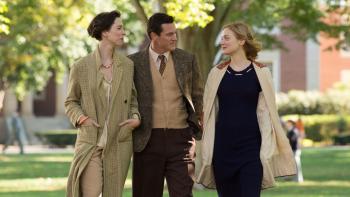

Professor Marston and the Wonder Women
Parent and Kid Reviews
What's the Story?
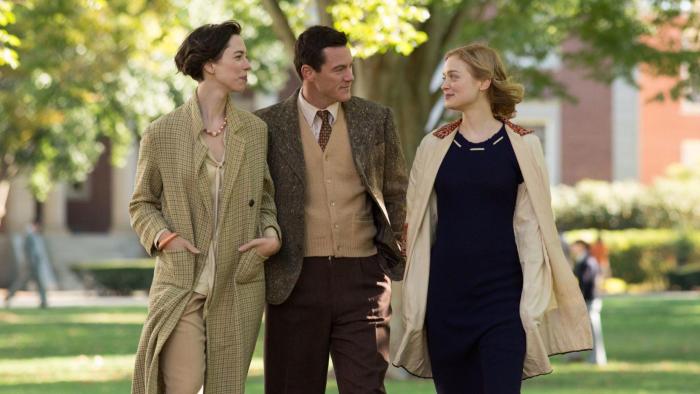
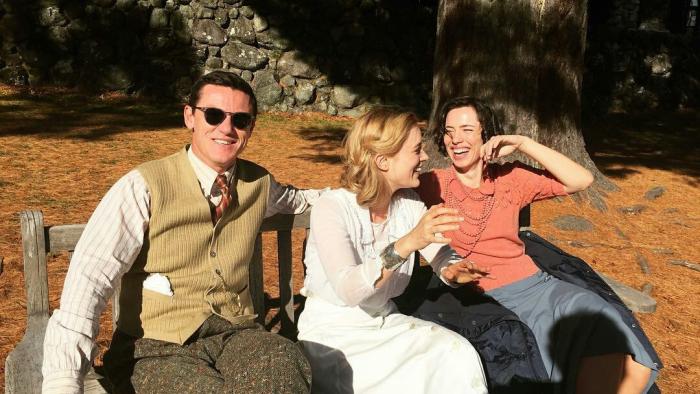
Inspired by true events, PROFESSOR MARSTON AND THE WONDER WOMEN is the little-known story of the creator of the original Wonder Woman comic and his polyamorous relationship with his wife and another woman. The framing story begins in 1945, with Dr. William "Bill" Marston (Luke Evans) forced to defend the Wonder Woman comics in front of a powerful decency board. During Marston's testimony, the story flashes back to 1928: Marston is a psychology professor at Harvard, where he lectures and researches with the help of his brilliant wife, Elizabeth (Rebecca Hall). The Marstons meet exceptionally beautiful (and engaged) young Radcliffe student Olive Byrne (Bella Heathcote) and hire her as their assistant ... but not before Elizabeth asks Olive to kindly not sleep with her husband. Soon the trio discovers a key component to lie-detector test functionality, which allows them to interview one another about intimate topics -- such as the fact that it's clear that they're all very much in love with one other. Fast-forward, and the Marstons have created a polyamorous life, complete with children (all fathered by Marston) and a cover story (that Olive was a single mom "taken in" by the Marstons). Eventually, a trip to a custom lingerie shop leads to light bondage and dominance/submission role play, and, voilà -- Wonder Woman is born.
Is It Any Good?
Bolstered by excellent performances, this earnest biopic elevates the ménage à trois to its truest meaning: a "household of three." What should seem scandalous is portrayed as inevitable from the very first time Olive is backlit like a porcelain-skinned goddess in the Marstons' class. Hall is particularly outstanding as the put-upon Elizabeth, who's every bit as intelligent as her husband but can't convince Harvard to admit her to a Ph.D. program. The blunt, brilliant woman tells her husband that she doesn't experience sexual jealousy, yet the moment they hire Olive as an assistant, Elizabeth asks her not to sleep with her husband. It turns out that while Bill is smitten with Olive, she's actually fallen for Elizabeth, even though Olive is engaged to a man who thinks the Marstons are perverse.
Eventually -- and thanks to the lie-detector test the Marstons helped invent (or at least improve) -- the truth is revealed. All three of them harbor sexual feelings for one another. The story fast-forwards, showing how the trio (now with kids!) has moved, Big Love-style, into a suburban home. By the time Bill takes the women to a lingerie shop that's a front for a circle of BDSM aficionados, it's crystal clear how he was inspired by his two lovers to create Wonder Woman: the lasso of truth, the bracelets of submission, and so forth. Fascinating if overly fictionalized, this is a compelling look at just how subversive the feminist superhero really was -- and, if director Angela Robinson's interpretation is substantiated, still could be perceived.
Talk to Your Kids About ...
Families can talk about what viewers learn about the original Wonder Woman comic and its creation. Does knowing this story change the way you think about the superhero?
Do you think Bill and Elizabeth's relationship with Olive would be accepted today? Why or why not? How has society changed since this story took place?
How does the movie portray sex? Parents, talk to your teens about your own values regarding sex and relationships.
The movie is based on real events, but there's no evidence that the central relationship was as open and sexual as the filmmaker envisions. Do you think biographical films have a duty to stick to only fact-based material, or is it OK for them to fictionalize aspects of their subjects' lives?
Movie Details
- In theaters : October 13, 2017
- On DVD or streaming : January 30, 2018
- Cast : Luke Evans , Rebecca Hall , Bella Heathcote
- Director : Angela Robinson
- Studio : Annapurna Pictures
- Genre : Drama
- Topics : Superheroes , Friendship , History
- Run time : 108 minutes
- MPAA rating :
- MPAA explanation : strong sexual content including brief graphic images, and language
- Award : NAACP Image Award - NAACP Image Award Nominee
- Last updated : October 1, 2025
Did we miss something on diversity?
Research shows a connection between kids' healthy self-esteem and positive portrayals in media. That's why we've added a new "Diverse Representations" section to our reviews that will be rolling out on an ongoing basis. You can help us help kids by
Suggest an Update
Common Sense Media's unbiased ratings are created by expert reviewers and aren't influenced by the product's creators or by any of our funders, affiliates, or partners.
See how we rate