







Common Sense Media Review
 By Kat Halstead
,
based on child development research. How do we rate?
By Kat Halstead
,
based on child development research. How do we rate?
Existential sci-fi drama has language, sex, adult themes.
Parents Need to Know
Why Age 14+?
Any Positive Content?
Where to Watch
Videos and Photos


Solaris


What's the Story?
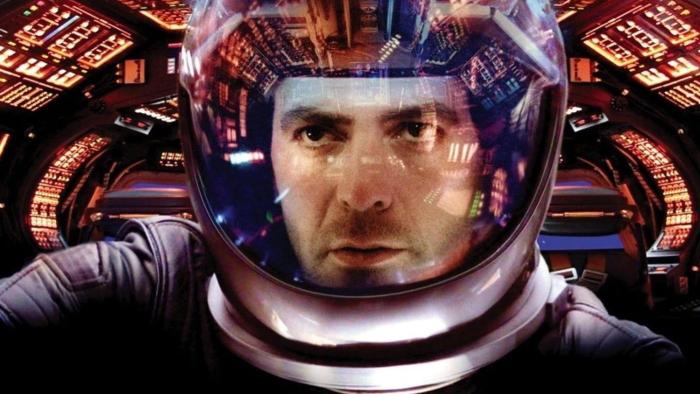
In SOLARIS, psychologist Chris Kelvin (George Clooney) is sent aboard a space station to investigate a series of unexplained events, which appear to be caused by the nearby planet Solaris. When he begins to experience the phenomena himself, being reunited with a version of his deceased wife, Rheya (Natascha McElhone), he struggles to separate his emotions from reality as he gets pulled further into the mystery that threatens to envelop all onboard.
Is It Any Good?
Steven Soderbergh's slick, Hollywood retelling of Stanislaw Lem's novel leans deeper into the emotional turmoil than Andrei Tarkovsky's acclaimed (if lengthy) 1972 version. In this 2002 version of Solaris, Clooney begins in familiar territory: successful, charming, seductive. But he soon stretches his acting muscles in an intimate portrayal of a man broken by grief. McElhone's Rheya has a disjointed, other-worldly quality, a character that never fully materializes either in flashback or present-day. Yet this perfectly encapsulates the movie's uneasy relationship between reality and simulation, memory and lived experience.
Also responsible for the cinematography and editing, Soderbergh's visuals are magnificent. Atmospheric, visual flashbacks are paired with stark, claustrophobic space station interiors. While lingering, awe-inspiring views of space, with displays of red, blue, and purple light, ebb and spark like the nerve impulses of a giant brain. Though there's a slightness to the way the story is told, these visuals ensure the film's enigmatic allure makes a lasting impact.
Talk to Your Kids About ...
Families can talk about the nature of grief and how it manifests itself in Solaris. What are some of the ethical questions raised? How would you interpret the ending, and how did it connect to the film's wider philosophical questions?
Discuss the language used in the movie. Did it seem necessary, or excessive? What did it contribute to the movie?
How did the movie portray sex and love? Was it affectionate? Respectful? Parents, talk to your teens about your own values regarding sex and relationships.
How does this movie compare to other sci-fi movies you might have seen?
Movie Details
- In theaters : November 27, 2002
- On DVD or streaming : July 29, 2003
- Cast : George Clooney , Natascha McElhone , Viola Davis
- Director : Steven Soderbergh
- Studio : Twentieth Century Fox
- Genre : Science Fiction
- Character Strengths : Communication , Curiosity , Empathy
- Run time : 99 minutes
- MPAA rating :
- MPAA explanation : sexuality/nudity, brief language and thematic elements
- Last updated : February 23, 2021
Did we miss something on diversity?
Research shows a connection between kids' healthy self-esteem and positive portrayals in media. That's why we've added a new "Diverse Representations" section to our reviews that will be rolling out on an ongoing basis. You can help us help kids by
Suggest an Update
Common Sense Media's unbiased ratings are created by expert reviewers and aren't influenced by the product's creators or by any of our funders, affiliates, or partners.
See how we rate