







Common Sense Media Review
 By Barbara Shulgasser-Parker
,
based on child development research. How do we rate?
By Barbara Shulgasser-Parker
,
based on child development research. How do we rate?
Estranged brothers team up to win a race; language.
Parents Need to Know
Why Age 14+?
Any Positive Content?
Where to Watch
Videos and Photos



The (Almost) Legends


Parent and Kid Reviews
What's the Story?
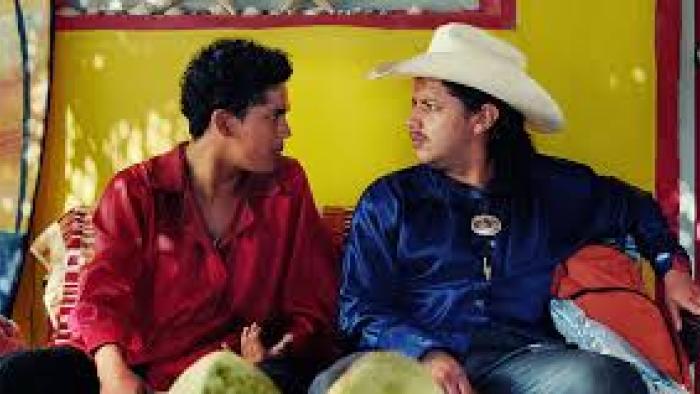
THE (ALMOST) LEGENDS is a comedy about a collection of kooky eccentrics placed in oddball circumstances in a Mexican small town. The garish palette of turquoise, pink, and orange interiors as well as purple and lilac sequined costumes further reminds us that this is all being played for laughs. Just to be sure we get the silliness, Valentin (Guillermo Quintanilla), the mechanic/bandleader, father of two families, and narrator, continues to narrate even after he dies. His accidental demise sets the action in motion as he leaves behind wife and son Romeo (Benny Emmanuel) in one town and secret wife and son, Preciado (Harold Azuara), somewhere else. When Preciado's mother dies, the boy comes to live with Romeo and his mom. Romeo isn't welcoming, and a war between the sons commences. Preciado wants to mimic Valentin's supposed musical fame, and he heads his own band, playing accordion. Romeo, who is a gifted car mechanic at his dad's garage, leaves town for Mexico City to find fame and fortune as a telenovela villain, a role for which he's perfectly suited. Preciado becomes a solid mechanic, too, under his gearhead grandma's tutelage. When Romeo returns to the village broke but still claiming he's made it on television, the sons scramble to compete in the local 30-hour car race their father always wanted to win. Forced to race as a team, they bond.
Is It Any Good?
When the burping of a tuba is the signal that we're supposed to laugh, you know you're watching a movie that's struggling to be funny. But there's something admirably dogged about this effort. Neither the director nor the cast ever gives up on the quest to see through the mission of dragging this fraying production to completion, whether it works or not. And, for that, you have to give it credit.
The (Almost) Legends tries so, so hard, but the try-hard spirit is part of its downfall. This most resembles the labored work of director Wes Anderson, who often dwells on deadpan tableaus of ridiculous people taking themselves seriously. Director Ricardo Castro puts his absurdly dressed cast members in static-camera shots and lets them wither and die as they strain to be funny. The cast struggles to compete with the film's highly stylized, almost distracting look. The actors chew the pastel-hued scenery, playing it straightest when they are dressed to match the yellow, red, pink, and green interiors. One imagines how hard it must have been for the actors to suppress their laughter when they donned their preposterous glittery attire, then walked on set and tried to say their lines.
Talk to Your Kids About ...
Families can talk about what this movie tries to say about families. Do you think the frosty relations between the brothers are meant to set up a reconciliation as part of the film's ending?
What does the movie have to say about the definition and meaning of success?
Why do you think people want to become famous? What do you imagine are the upsides of fame? What are the downsides?
Movie Details
- On DVD or streaming : July 19, 2023
- Cast : Benny Emmanuel , Guillermo Quintanilla , Harold Azuara
- Director : Ricardo Castro
- Studio : Netflix
- Genre : Comedy
- Run time : 120 minutes
- MPAA rating :
- Last updated : August 2, 2023
Did we miss something on diversity?
Research shows a connection between kids' healthy self-esteem and positive portrayals in media. That's why we've added a new "Diverse Representations" section to our reviews that will be rolling out on an ongoing basis. You can help us help kids by
Suggest an Update
Common Sense Media's unbiased ratings are created by expert reviewers and aren't influenced by the product's creators or by any of our funders, affiliates, or partners.
See how we rate