






Common Sense Media Review
 By Monique Jones
,
based on child development research. How do we rate?
By Monique Jones
,
based on child development research. How do we rate?
Messy message in satire about Black experience; language.
Parents Need to Know
Why Age 14+?
Any Positive Content?
Where to Watch
Videos and Photos


The American Society of Magical Negroes
What's the Story?
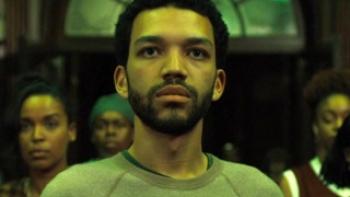
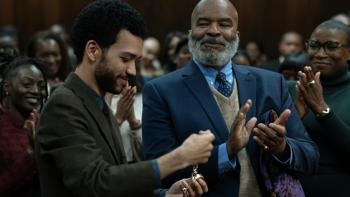
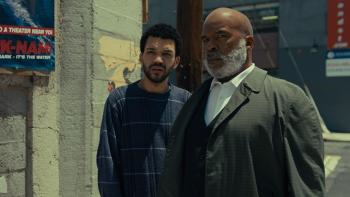
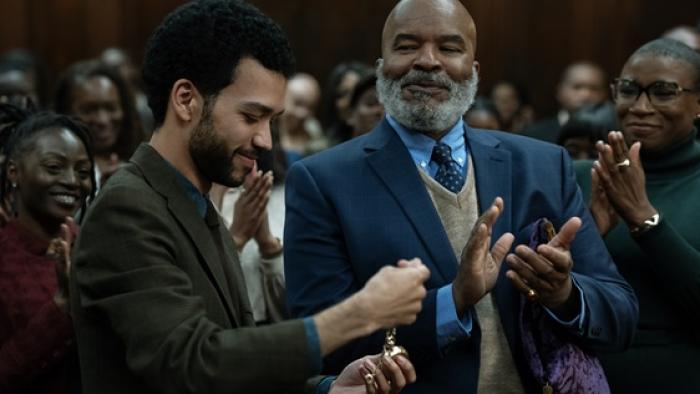
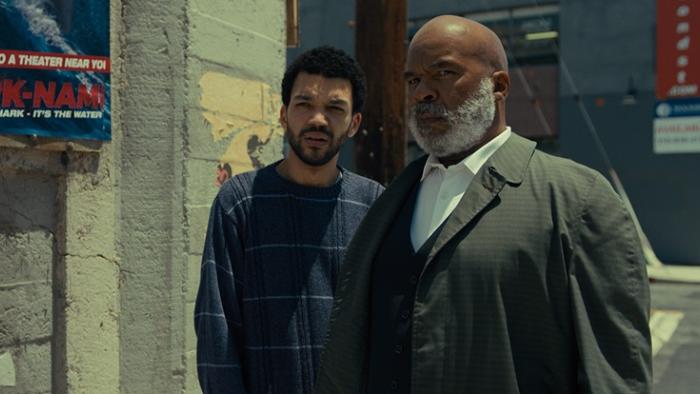
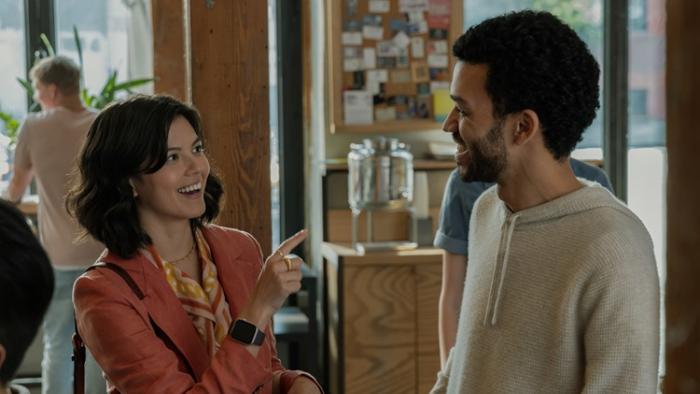
THE AMERICAN SOCIETY OF MAGICAL NEGROES follows Aren (Justice Smith), who gets recruited by Roger (David Alan Grier) into a society of Black people who work to keep the Black population safe by being "magical Negroes"—i.e., Black people who serve White people by giving them sage advice, helping them with issues, and being emotional caretakers. Aren's first assignment finds him at a design firm helping Jason (Drew Tarver)—but he also finds love in the form of Jason's co-worker, Lizzie (An-Li Bogan). Aren must decide whether he'll pursue his own emotional goals, putting the society at risk, or forget his personal desires and continue being a magical Negro.
Is It Any Good?
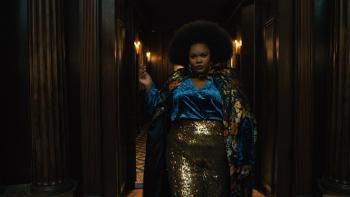
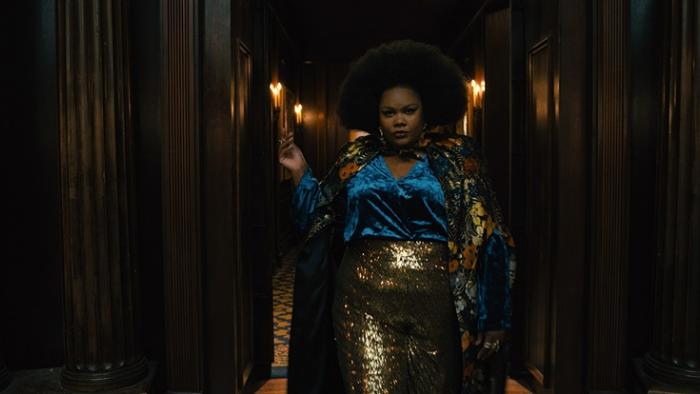
This film wants to say a lot of things, but as hard as it's trying, it doesn't make any point concretely enough to stick. Despite strong performances by Smith, Grier, Bogan, and Tarver—as well as solid turns by great Black actors like Aisha Hinds and Nicole Byer—The American Society of Magical Negroes is sadly too convoluted to make any of its messages truly meaningful. Aren makes a powerful speech at the end of the film, but that speech also highlights one of the film's flaws: shoving in ham-fisted racial discussions. There's too much the film wants to say at once—for example, highlighting the biracial ethnic experience in the United States without actually making a concrete statement on the topic. Writer-director Kobi Libii is biracial himself, yet he doesn't actually make it clear why the "magical Negro" discussion adds layers to the experience of being a biracial Black American.
Another miss is the fundamentally flawed way that the film presents the concept of the "magical Negro" cliché. It's a media trope that filmmakers have historically relied on to help White audiences (and studio heads) feel more comfortable about their historic role in upholding Whiteness as a social construct. A film dissecting this concept is a good idea. But, instead, this movie tries to argue that the "magical Negro" role is one that Black people have filled in real life, which isn't accurate. In doing so, it lightly pokes fun at historical figures like Crispus Attucks and Nancy Green, the model who portrayed Aunt Jemima on pancake product packaging. This feels rude (to say the least), because it positions them as Uncle Tom-like characters—Black people who love to center Whiteness even at their own detriment—which flattens their real experiences, choices, decisions, and very lives. By trying to equate the idea of the "magical Negro" with Black people doing what they had to in order to survive, the film indirectly discounts the way that Black history has been forged by people who not only survived (which sometimes did mean biting your tongue) but also challenged the status quo by rebelling, protesting, marching, and more.
Talk to Your Kids About ...
Families can talk about how The American Society of Magical Negroes addresses race relations and experiences in the United States. How does the film try to break down the experience of being Black in America? What does a "magical Negro" do in the film?
Do you know the background of the term "magical Negro"? If you're familiar with that cliché, what movies and TV shows can you think of that have used it? Why is it problematic?
Why is Aren scared to interact with White people? How does he overcome his fear and anger?
How do Lizzie and Aren connect regarding their shared racial experiences? How does Aren affect the Society going forward?
Movie Details
- In theaters : March 15, 2024
- On DVD or streaming : April 2, 2024
- Cast : Justice Smith , David Alan Grier , An-Li Bogan , Nicole Byer
- Director : Kobi Libii
- Studio : Focus Features
- Genre : Comedy
- Run time : 104 minutes
- MPAA rating :
- MPAA explanation : some strong language, suggestive material and thematic material
- Award : NAACP Image Award - NAACP Image Award Nominee
- Last updated : January 15, 2025
Did we miss something on diversity?
Research shows a connection between kids' healthy self-esteem and positive portrayals in media. That's why we've added a new "Diverse Representations" section to our reviews that will be rolling out on an ongoing basis. You can help us help kids by
Suggest an Update
Common Sense Media's unbiased ratings are created by expert reviewers and aren't influenced by the product's creators or by any of our funders, affiliates, or partners.
See how we rate