






Common Sense Media Review
 By Jeffrey Anderson
,
based on child development research. How do we rate?
By Jeffrey Anderson
,
based on child development research. How do we rate?
Well-organized, hopeful docu dispels fears about socialism.
Parents Need to Know
Why Age 13+?
Any Positive Content?
Where to Watch
Videos and Photos

The Big Scary "S" Word
What's the Story?
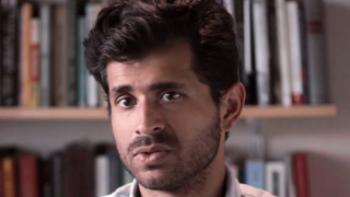
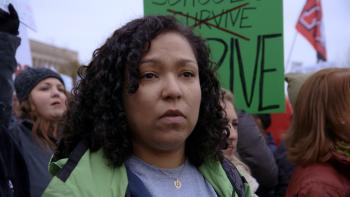
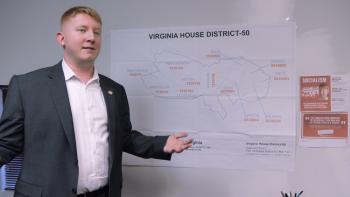
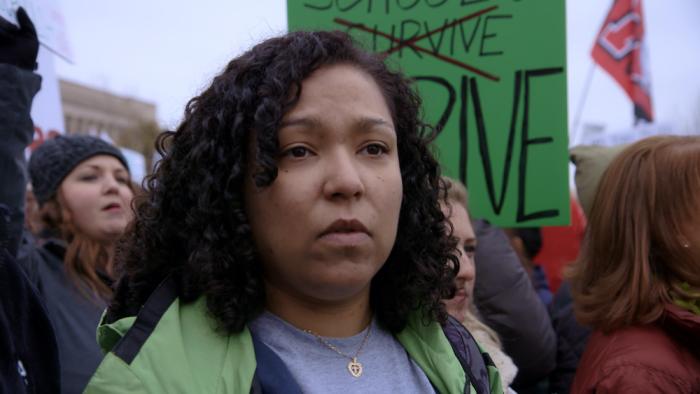
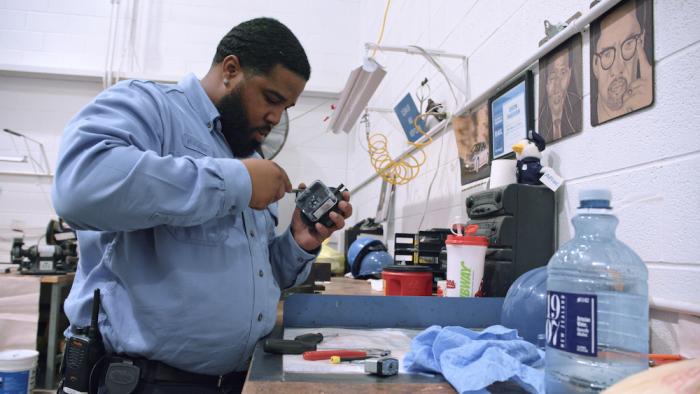
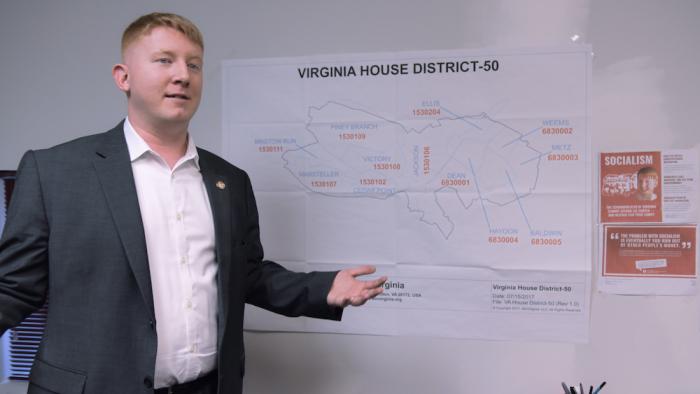
In THE BIG SCARY "S" WORD, documentary filmmaker Yael Bridge explores the concept of socialism, which is frequently misunderstood and used by many U.S. politicians and lawmakers as a scare word. The movie argues that capitalism, which is a "recent mutation," is not necessarily the definition of the United States -- and that socialism is "at heart, the ultimate expression of democracy." Things like a decent living wage and health care are offered as examples of socialism's successes. Viewers are introduced to the worker-owned Evergreen Cooperative Laundry and the state-owned Bank of North Dakota, both of which function on socialist principles and run smoothly. It also follows Oklahoma schoolteacher Stephanie Price as she protests the low wages that keep her in poverty, and elected official Lee J. Carter, who tried to make positive change within the Virginia House of Delegates.
Is It Any Good?
This documentary is a hopeful, easy-to-grasp primer on that old trigger word "socialism." The movie's thesis is supported by an impressive roster of scholars, offering clear examples of how socialism can work. The Big Scary "S" Word realizes that, while most of us have heard the word "socialism," far fewer can explain exactly what it is or offer legitimate reasons for why anyone should be afraid of it. Societies that share and help each other generally do better as a whole, but, as the movie explains, capitalism -- the entrenched economic and political philosophy of the United States -- evolved when a few people began acquiring more wealth and turning that wealth into power, while almost everyone else became workers with little voice (or choice).
The positive aspects of socialism are presented as ways to make everyone's lives better, the most basic of which is the right to a living wage, or, as Representative Alexandria Ocasio-Cortez says, "no person in America should be too poor to live." The movie's examples are concrete and varied, and the array of featured professors (from Harvard, Columbia, Princeton, NYU, etc.) and authors -- including the always fascinating Cornel West -- lend the film credibility and trustworthiness. Director Bridge keeps things moving in easily digestible sections, makes sure the tone stays optimistic, and gets out at 82 minutes. Hopefully, The Big Scary "S" Word will open a few minds and make people question the scare tactics that have been used to manipulate them.
Talk to Your Kids About ...
Families can talk about The Big Scary "S" Word's central message. Did it convince you that socialism might be something worth pursuing? Why, or why not?
Why is "socialism" such a scary word for some people? Why do you think certain people try to stop socialism from happening?
Why is it important to take action for the things you believe in? Can you think of other movies that offer ideas for how to make a difference?
How does the movie embrace diversity? Why is diverse representation in the media important?
Movie Details
- In theaters : September 3, 2021
- On DVD or streaming : September 3, 2021
- Cast : Cornel West , Naomi Klein , Richard Wolff
- Director : Yael Bridge
- Studio : Greenwich Entertainment
- Genre : Documentary
- Topics : Activism , History
- Run time : 83 minutes
- MPAA rating :
- Last updated : September 29, 2025
Did we miss something on diversity?
Research shows a connection between kids' healthy self-esteem and positive portrayals in media. That's why we've added a new "Diverse Representations" section to our reviews that will be rolling out on an ongoing basis. You can help us help kids by
Suggest an Update
Common Sense Media's unbiased ratings are created by expert reviewers and aren't influenced by the product's creators or by any of our funders, affiliates, or partners.
See how we rate