







Common Sense Media Review
 By Sandie Angulo Chen
,
based on child development research. How do we rate?
By Sandie Angulo Chen
,
based on child development research. How do we rate?
Intense musical adaptation promotes resilience, shows abuse.
Parents Need to Know
Why Age 14+?
Any Positive Content?
Where to Watch
Videos and Photos


The Color Purple
What's the Story?
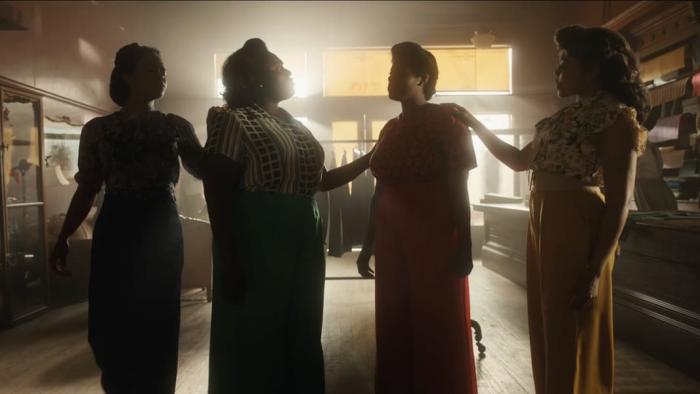
THE COLOR PURPLE is the stage-to-screen adaptation of the musical based on Alice Walker's award-winning 1982 novel. The story opens in early 1900s Georgia, where young Black shopkeeper's daughter Celie (Phylicia Pearl Mpasi) deals with her second pregnancy by her abusive Pa, Alphonso (Deon Cole), who insists on "giving the babies away to God." When a widower local farmer, Mister (Colman Domingo), asks to marry Celie's beautiful sister, Nettie (Halle Bailey), Alphonso offers him Celie instead. Nettie briefly comes to live with the couple, but when she fights Alphonso's sexual advances, he violently kicks her out and refuses to allow the sisters to contact each other. Mister consistently abuses Celie (played as an adult by Fantasia Barrino), who discovers that her husband's only love is sexy blues singer Shug Avery (Taraji P. Henson), who flits in and out of town in between gigs. Celie, who hasn't heard from Nettie in years, also falls under Shug's spell of charisma and attention. As the decades pass, Celie continues to hold out hope that one day she'll be free of her abusive marriage and get to see her sister and babies again.
Is It Any Good?
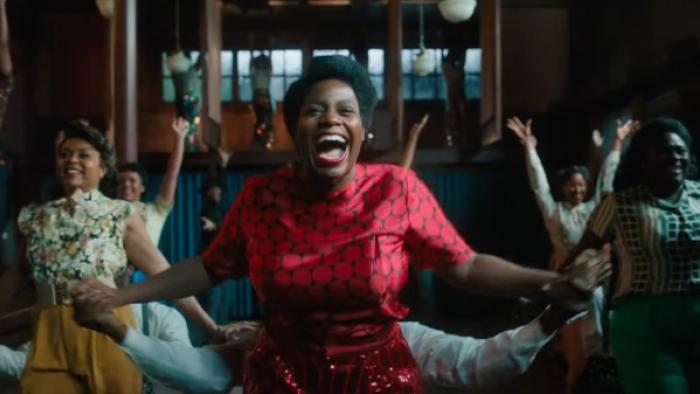
This heartfelt musical adaptation features touching songs and great performances. Barrino, who reprises her Broadway role, beautifully conveys Celie's emotional journey of grief and survival. Her voice evokes everything from fragility to sorrow to empowerment, and her version of "I'm Here" is a fantastic, unapologetic show-stopper that sums up the story's overarching themes of resilience and perseverance. Director Blitz Bazawule, like his directorial predecessor Steven Spielberg, knows how to focus the film not only on Celie's quiet strength but also on the supporting ensemble, who all get moments to shine. Danielle Brooks is quite the scene-stealer as the fiercely independent Sofia, who doesn't back down from a fight. Henson also stands out as the vivacious Shug, who's a catalyst for Celie's change, love, and joy. The male characters have less nuance to express, but Domingo and Corey Hawkins, who plays Mister's son Harpo, are the inhumane and the tender sides of masculinity in the movie. And despite much smaller roles, David Alan Grier and Louis Gossett Jr. are both effective as Shug's father Reverend Avery and Old Mister.
It might initially feel odd to see such a serious story translated into a musical, but viewers should remember that many musicals tackle mature themes and upsetting topics: war, pogroms, forbidden love, assault, murder. The songs weave seamlessly into the plot, deepening Walker's formative tale. The technical aspects of the film deserve praise, including costume designer Francine Jamison-Tanchuck's array of early 20th-century fashions and production designer Paul Austerberry's recreations of the rural South at that time, particularly juke joints, churches, shops, and Mister's lands. Devotees of the LGBTQIA aspects of Walker's novel may not be more satisfied with Bazawule's handling of Celie and Shug's relationship than they were with Spielberg's, but the romantic thread is more obvious now than it was 37 years ago. Ultimately, it's the message of a Black woman's survival and sisterhood that makes The Color Purple a timeless story, and the musical captures that powerful spirit.
Talk to Your Kids About ...
Families can talk about the violence and abuse in The Color Purple. Does realistic violence, particularly domestic and intimate partner abuse, impact viewers differently than violence perpetrated by strangers?
How well does the story work as a musical? Discuss the differences between dramatic musicals and comedic musicals. What makes this one work?
What makes film adaptations of novels successful? What are the pitfalls? Do you think this is a successful adaptation?
How do the characters in The Color Purple demonstrate compassion and perseverance? Why are these important character strengths?
Movie Details
- In theaters : December 25, 2023
- On DVD or streaming : January 16, 2024
- Cast : Taraji P. Henson , Danielle Brooks , Fantasia Barrino , Halle Bailey , Aunjanue Ellis-Taylor
- Director : Blitz Bazawule
- Studio : Warner Bros.
- Genre : Musical
- Topics : Book Characters , Family Stories ( Siblings ) , Friendship , History , Arts ( Music and Sing-Along )
- Character Strengths : Compassion , Empathy , Perseverance
- Run time : 140 minutes
- MPAA rating :
- MPAA explanation : mature thematic content, sexual content, violence and language
- Awards : Common Sense Selection , NAACP Image Award - NAACP Image Award Winner
- Last updated : September 18, 2025
Did we miss something on diversity?
Research shows a connection between kids' healthy self-esteem and positive portrayals in media. That's why we've added a new "Diverse Representations" section to our reviews that will be rolling out on an ongoing basis. You can help us help kids by
Suggest an Update
Common Sense Media's unbiased ratings are created by expert reviewers and aren't influenced by the product's creators or by any of our funders, affiliates, or partners.
See how we rate