







Totsuko perceives the world in a unique way due to her synesthesia. She's deeply faithful and often prays for guidance, embodying loyalty, generosity, and kindness in her friendships. Kimi is dedicated to her growing craft as a guitarist and songwriter. Although she initially lies to her grandmother about being dismissed from school, she eventually learns the value of honesty. Sister Hiyoshiko is a compassionate, supportive teacher, always offering personal and religious guidance with warmth. Rui is an enthusiastic musician and a loving, steadfast friend.
Common Sense Media Review
 By Sandie Angulo Chen
,
based on child development research. How do we rate?
By Sandie Angulo Chen
,
based on child development research. How do we rate?
Moving coming-of-age story about friendship and music.
Parents Need to Know
Why Age 8+?
Any Positive Content?
Where to Watch
Videos and Photos


The Colors Within
What's the Story?
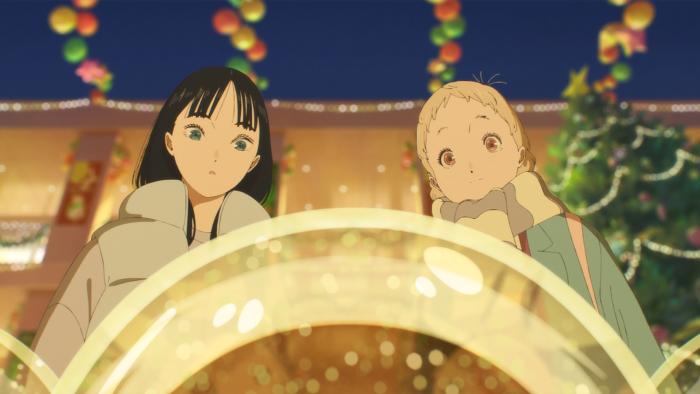
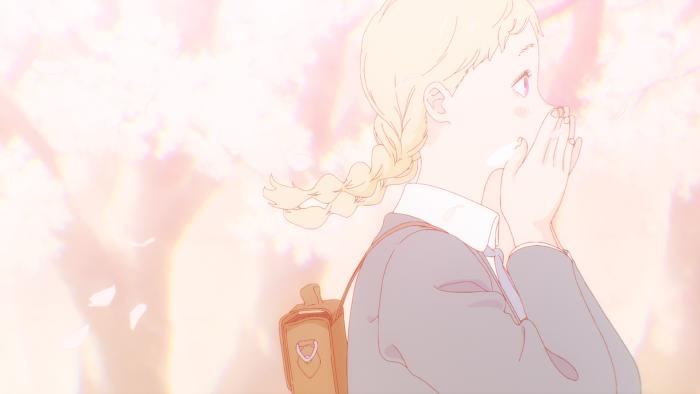
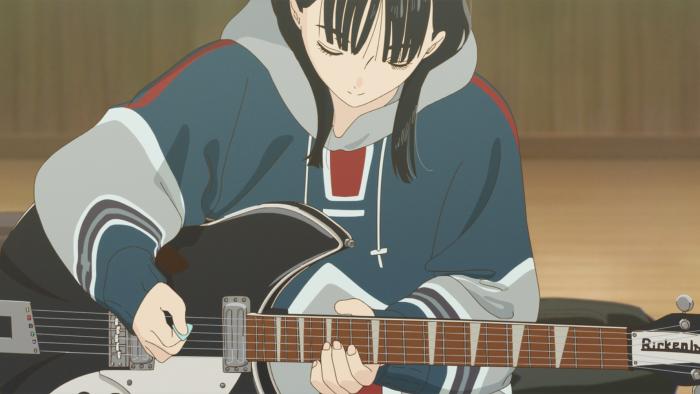
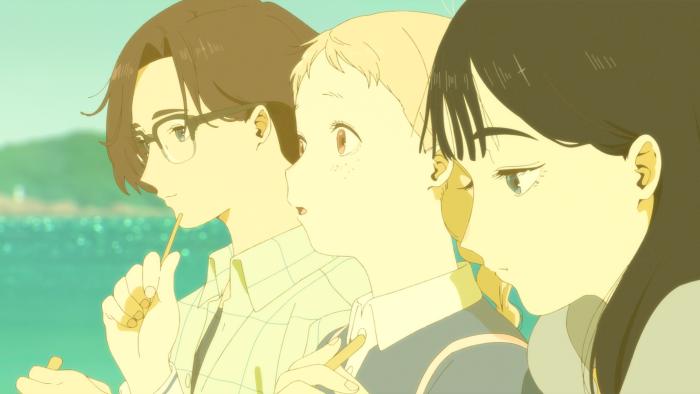
Director Naoko Yamada's animated coming-of-age story THE COLORS WITHIN tells the story of Totsuko Higurashi (voiced by Sayu Suzukawa), a kind-hearted high school student at a Catholic boarding school in Japan. She quietly lives with synesthesia, a neurodivergent condition that allows her to perceive people as colors. Totsuko hides this gift from others, but when Kimi Sakunaga (Akari Takaishi), a classmate whom Totsuko senses as a vibrant shade of blue, leaves school to work at a bookstore, Totsuko finds a reason to visit her. During their visit, the two talk about music, and a young regular at the bookstore, Rui (Taisei Kido), suggests that the three of them form a band. The trio begin to practice together—Kimi on guitar, Totsuko on piano, and Rui on theremin—at a vacant church on the island where Rui lives. As they grow closer, each teen hides their own secrets, but they soon realize that in order to truly connect, they must be vulnerable and honest with one another.
Is It Any Good?
This is another heartfelt, impactful teen drama from Japanese animator Naoko Yamada and screenwriter Reiko Yoshida. With The Colors Within, the two deliver a fresh take on adolescence through the lens of the sweet, earnest Totsuko, portrayed by Suzukawa with a delightful sincerity that's often missing in teen dramas. Kimi brings the angst, dealing with a difficult school situation while deceiving her grandmother, while Rui plays the familiar overachiever, pressured by his physician mother to focus on exams rather than his secret passion for music. Each character's storyline offers a satisfying arc of personal growth, but, ultimately, this is Totsuko's journey. Though she can perceive the colors of others, she struggles to see her own and is left questioning why.
The blossoming friendship between Totsuko, Kimi, and Rui is made all the sweeter by the absence of toxicity or gossipy drama—each of the teens' struggles is deeply personal, rather than taking the form of conflicts between them—and there's a refreshing lack of overt romance or predictable love triangles. Instead, the focus remains on their genuine connections and individual growth. The movie's musical numbers serve as a powerful reminder of how art helps artists express their innermost thoughts, and, for Totsuko, they become a way to sing a new kind of hymn to God and the universe, offering a sense of serenity and personal liberation.
Talk to Your Kids About ...
Families can talk about The Colors Within's messages. What do you think the filmmakers are trying to say?
Does the movie's depiction of synesthesia seem authentic? Does the representation make you interested in learning more about that form of neurodiversity?
What do you think about the movie's religious elements? How do faith, prayer, and Sister Hiyoshiko play a role in Totsuko's life?
Who do you consider a role model in the movie? What character strengths are most clearly demonstrated?
Movie Details
- In theaters : January 24, 2025
- On DVD or streaming : April 1, 2025
- Cast : Akari Takaishi , Sayu Suzukawa , Taisei Kido
- Director : Naoko Yamada
- Studio : GKIDS
- Genre : Anime
- Topics : Friendship , History , Arts ( Music and Sing-Along )
- Character Strengths : Compassion , Empathy , Teamwork
- Run time : 100 minutes
- MPAA rating :
- MPAA explanation : mild thematic elements
- Award : Common Sense Selection
- Last updated : October 8, 2026
Did we miss something on diversity?
Research shows a connection between kids' healthy self-esteem and positive portrayals in media. That's why we've added a new "Diverse Representations" section to our reviews that will be rolling out on an ongoing basis. You can help us help kids by
The Colors Within
Suggest an Update
Common Sense Media's unbiased ratings are created by expert reviewers and aren't influenced by the product's creators or by any of our funders, affiliates, or partners.
See how we rate