





Common Sense Media Review
 By Jeffrey M. Anderson
,
based on child development research. How do we rate?
By Jeffrey M. Anderson
,
based on child development research. How do we rate?
Captivating, surreal, play-based thriller addresses racism.
Parents Need to Know
Why Age 15+?
Any Positive Content?
Where to Watch
Videos and Photos


The Dutchman
Parent and Kid Reviews
What's the Story?
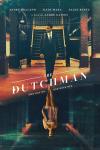
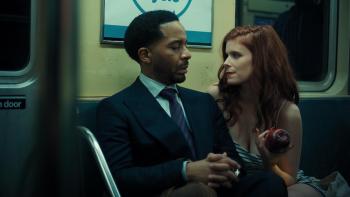
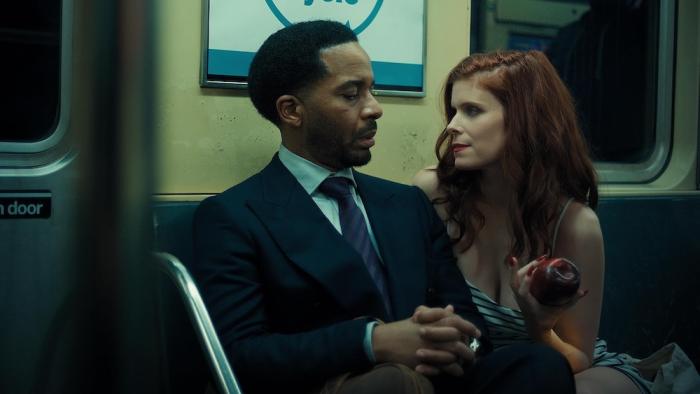
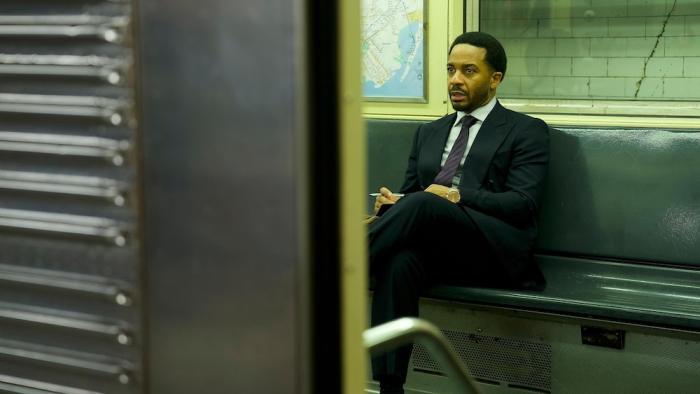
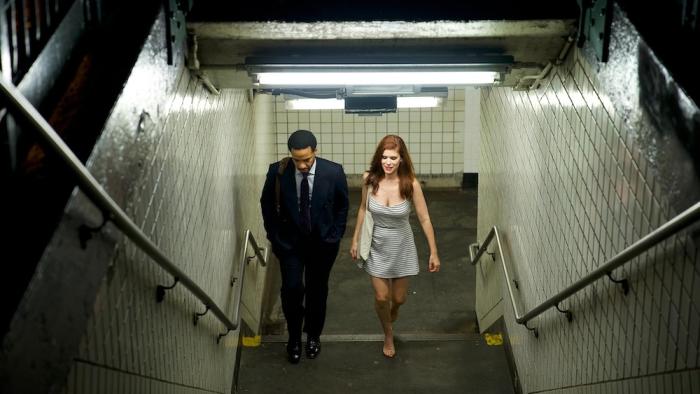
In THE DUTCHMAN, Clay (André Holland) and his wife, Kaya (Zazie Beetz), are in couples therapy with Dr. Amiri (Stephen McKinley Henderson). Kaya has been unfaithful, which Clay is still trying to process, and she accuses him of not communicating with her. As they leave, Dr. Amiri offers Clay a copy of the play Dutchman, noting that it helped him during a difficult time. Later, on the train, a woman named Lula (Kate Mara) begins flirting with, and antagonizing, Clay. She seems to know all about him. At her apartment, he gives into temptation, and now she has power over him. She makes him promise to bring her to a party he's attending that evening. What is Lula planning?
Is It Any Good?
A curious and not entirely persuasive experience, this surreal thriller nevertheless tackles themes that are both uncomfortable and relevant in an unsettling style that manages to captivate. Based on Amiri Baraka's 1964 play, The Dutchman begins with a quote from Carl Jung: "Who looks outside, dreams; Who looks inside, awakens." Filmmaker Andre Gaines runs with this idea, creating a strange, unreal tone for the movie, with backgrounds sliding apart and reflections behaving in unexpected ways. Dr. Amiri keeps appearing and disappearing, too, and clips from the previous 1967 film adaptation of the play are also used.
All of this is effectively used to underline some of the movie's more obvious themes, one of which is Clay walking the fine line between remaining true to his Black identity and assimilating into White culture. Another involves Lula and her mysteriously sinister intentions; she's racist in a cruel, manipulative, and provocative way. In some of the movie's most uneasy scenes, Lula speaks to the elite Black crowd at the party (she appears to be the only White person there) and acts shocked at the prospect of a Black man being a neurosurgeon. Other aspects of the movie are a little overcooked, such as Lula eating a sinful red apple, or the doctor mentioning that Clay's name is both a name and a reference to a malleable material ("my man of Clay"). In any case, Gaines' main goal seems to be to show that The Dutchman is still relevant in 2026, and in that, he succeeds.
Talk to Your Kids About ...
Families can talk about The Dutchman's violence. How did it make you feel? Was it exciting? Shocking? What did the movie show or not show to achieve this effect? Why is that important?
How is sex depicted? How do manipulation and deception overpower trust and consent in this story?
How does the movie address race and racism? How does it compare to other movies you've seen that deal with those ideas?
How do motifs and symbols, such as the name "Clay" and the apple, change or enhance your experience of the story?
Given that the original play debuted in 1964, what makes the story relevant today? Is any of it irrelevant?
Movie Details
- In theaters : January 2, 2026
- On DVD or streaming : February 3, 2026
- Cast : Andre Holland , Kate Mara , Zazie Beetz , Stephen Henderson
- Director : Andre Gaines
- Inclusion Information : Black Movie Director(s) , Black Movie Actor(s) , Female Movie Actor(s)
- Studios : Rogue Pictures , Inaugural Entertainment
- Genre : Thriller
- Topics : Activism ( Racial justice ) , Book Characters , Transportation ( Trains )
- Run time : 88 minutes
- MPAA rating :
- MPAA explanation : sexual content, language and brief violence
- Last updated : January 14, 2026
Did we miss something on diversity?
Research shows a connection between kids' healthy self-esteem and positive portrayals in media. That's why we've added a new "Diverse Representations" section to our reviews that will be rolling out on an ongoing basis. You can help us help kids by
Suggest an Update
Common Sense Media's unbiased ratings are created by expert reviewers and aren't influenced by the product's creators or by any of our funders, affiliates, or partners.
See how we rate