







Common Sense Media Review
 By Sandie Angulo Chen
,
based on child development research. How do we rate?
By Sandie Angulo Chen
,
based on child development research. How do we rate?
Heartbreaking love story is a must-see for fans of the book.
Parents Need to Know
Why Age 14+?
Any Positive Content?
Where to Watch
Videos and Photos


The Fault in Our Stars
Parent and Kid Reviews
Based on 32 parent reviews
Parents say the film is a deeply emotional adaptation that tackles difficult themes such as love, cancer, and mortality, resonating particularly well with teens and prompting significant discussions. While it has received praise for its heartfelt storytelling and performances, it does include a few mature elements, making it better suited for older children and teens who can handle the subject matter.
- emotional adaptation
- mature themes
- suitable for teens
- promotes discussion
- heartfelt storytelling
 Summarized with AI
Based on 232 kid reviews
Kids say this movie is an emotional rollercoaster that profoundly touches on themes of love, loss, and the realities of cancer, often leaving viewers in tears. While many praise its heartfelt portrayal of the characters and their struggles, some express concerns over mature content, including strong language and brief sexual scenes, recommending it for more mature teens especially given the significant, sorrowful themes presented.
- emotional impact
- mature themes
- strong language
- brief sexual content
- heartwarming story
- parental guidance advised
Summarized with AI
What's the Story?
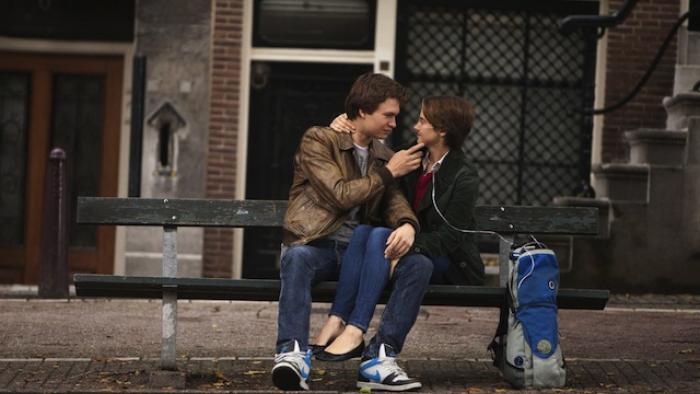
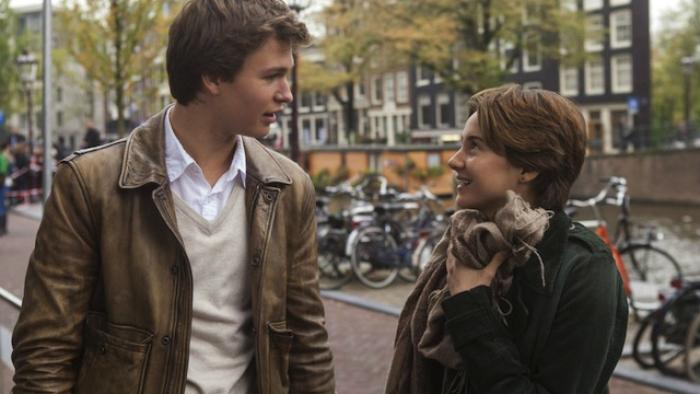
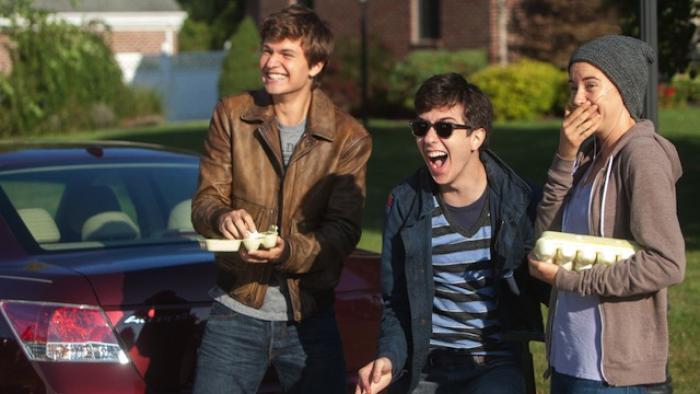
THE FAULT IN OUR STARS is about Hazel Grace Lancaster (Shailene Woodley), a 17-year-old book lover dealing with stage-four metastatic cancer that has spread to her lungs, requiring her to wear a cannula and carry around an oxygen cannister. Her worried but supportive parents (Laura Dern, Sam Trammell) encourage her to attend a local support group for teens with cancer; it's there that she meets Augustus Waters (Ansel Elgort), who can't keep his eyes off her. After group, a clearly interested Gus tells Hazel that she's beautiful and invites her to hang out with him and his best friend, Isaac (Nat Wolff). Hazel is attracted to Gus but is hesitant to start a relationship when she knows she's dying. Ever persistent, Gus sweeps Hazel off her feet when he gives up his one "cancer wish" to make her dream come true: traveling to Amsterdam to meet her favorite author.
Is It Any Good?
While The Fault in Our Stars isn't a word-for-word translation (nor should it be), it's an adaptation that does Green, Hazel, and Augustus justice. Anyone who's ever loved a book knows the hesitance and wariness that mingle with excitement when a beloved novel is turned into a big-screen production. There's a sense of panic that the director, screenwriter, and cast won't capture everything you love about the words and characters the author created. But fans of the book needn't worry. Woodley, a Golden Globe nominee and veteran of YA adaptations (Divergent, The Spectacular Now), delivers a gentle, wickedly smart Hazel, who feels like a grenade about to go off but eventually realizes that she does deserve to be loved by Gus, even if their future is uncertain.
But as lovely as Woodley is as Hazel, the movie belongs to newcomer Elgort (who co-starred as Woodley's brother in Divergent), who has the tough job of being solicitous, sexy, smart, and sensitive all at the same time. He manages to pull it off beautifully, never letting the character spin out of control or seem false. The supporting characters also deliver laudable performances: Wolff as Gus' blind best friend, and Dern and Trammell as one of the most loving set of parents ever depicted on page or screen. Viewers will experience the wonder of falling in love but also the pain of knowing that someone you adore is dying. Still, to quote Hazel's favorite book, "pain demands to be felt." And feel it you will, which is more than okay.
Talk to Your Kids About ...
Families can talk about whether The Fault in Our Stars is a successful adaptation. What changes did the filmmakers make, and you do you understand why they made them? What parts of the movie captured the book best, and what parts of the book did you miss not seeing in the movie?
Do you prefer adaptations based on realistic fiction or based on genre fiction, like dystopian/paranormal stories? Why do you think there are so many YA adaptations in the works?
What do you think the author and filmmaker are trying to say about literature and our relationship to books? Do books and movies need a happy ending to make them good or worthwhile? What are some other tales that don't end as you expected but are still among your favorite movies or books?
How does the movie depict sex? How is it different here from how it's often portrayed in other teen movies/books? Parents, talk to your teens about your own values regarding sex and relationships.
Movie Details
- In theaters : June 6, 2014
- On DVD or streaming : September 16, 2014
- Cast : Shailene Woodley , Ansel Elgort , Willem Dafoe
- Director : Josh Boone
- Studio : Twentieth Century Fox Film Corporation
- Genre : Romance
- Topics : Book Characters , School ( High School )
- Run time : 125 minutes
- MPAA rating :
- MPAA explanation : thematic elements, some sexuality and brief strong language
- Last updated : September 29, 2025
Did we miss something on diversity?
Research shows a connection between kids' healthy self-esteem and positive portrayals in media. That's why we've added a new "Diverse Representations" section to our reviews that will be rolling out on an ongoing basis. You can help us help kids by
Suggest an Update
Common Sense Media's unbiased ratings are created by expert reviewers and aren't influenced by the product's creators or by any of our funders, affiliates, or partners.
See how we rate