







Common Sense Media Review
 By Jeffrey Anderson
,
based on child development research. How do we rate?
By Jeffrey Anderson
,
based on child development research. How do we rate?
Violent, visually rich Western tackles prejudice, hypocrisy.
Parents Need to Know
Why Age 15+?
Any Positive Content?
Where to Watch
Videos and Photos


The Last Manhunt
Parent and Kid Reviews
What's the Story?
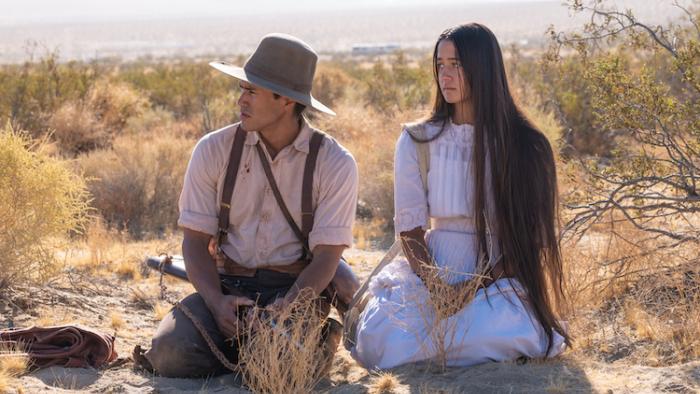
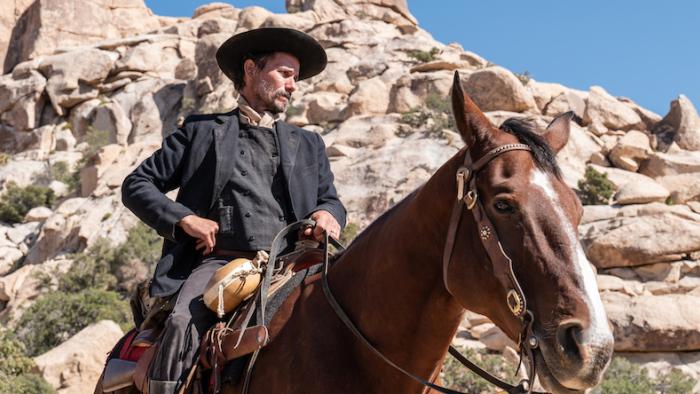
In THE LAST MANHUNT, it's 1909 in California -- the waning days of the Wild West. Desert runner Willie Boy (Martin Sensmeier) falls in love with Carlota (Mainei Kinimaka) of the Chemehuevi tribe, although the romance is strictly forbidden by her father, the chief (Zahn McClarnon). After a horrible accident resulting in a death, Willie Boy and Carlota escape into the desert, where Willie Boy's skills can keep them alive. Since the killing occurred outside Chemehuevi territory, Sheriff Wilson (Christian Camargo) assembles a posse to find Willie Boy and bring him to justice. Unfortunately, the Chemehuevi people go out on their own with the intention of killing Willie Boy. And the sheriff's scheming right-hand man, Ben (Jamie Sives), and an unethical newspaperman (Mojean Aria) conspire to do Willie Boy even more harm. Can Willie Boy survive?
Is It Any Good?
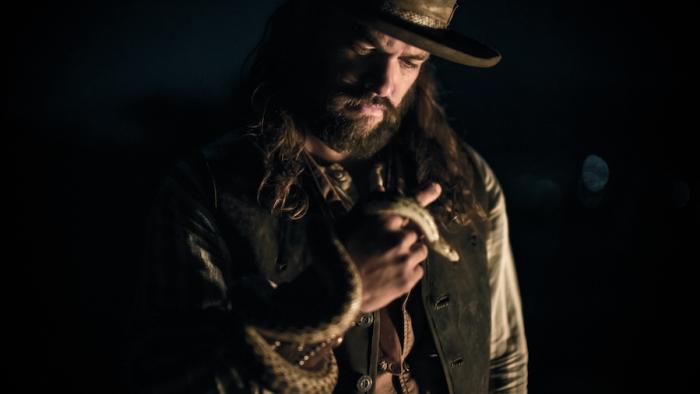
Even if its languid, loping storytelling lacks urgency, this small-scale, well-acted Western uses its rich, pictorial visual scheme to update the Willie Boy story in interesting, relevant ways. Jason Momoa spearheaded this project, a true story that was previously filmed as Tell Them Willie Boy Is Here in 1969. Momoa serves as executive producer and co-writer, as well as appearing in a few scenes. He also recruited his co-stars from the Apple TV+ series See, casting Mainei Kinimaka as Carlota and Christian Camargo as the sheriff. Camargo also directs, bringing a strong sense of style to The Last Manhunt. It almost feels like a mini-Terrence Malick effort, shot in a narrow aspect ratio and decorated with striking tracking shots and gorgeous "magic hour" images. (The movie's biggest flaw is easily its all-too-generic title.)
Willie Boy, who is a victim of circumstance and wrongly accused of murder, and Carlota are less fully fleshed out characters than they are symbolic. They seem to mostly serve the purpose of demonstrating the evils of prejudice. The White characters, meanwhile, are fatally flawed, rather than being heroes. Every character is clouded by something here, whether it be regret, grief, revenge, prejudice, or merely a dark twist of fate. The biggest change to the story from previous iterations is the addition of the newspaperman, who knows that fear sells papers and is not only willing but eager to flat-out lie about Willie Boy in his stories. He's an obvious forerunner to today's barrage of angry, politically slanted commentary disguising itself as news, and the movie's use of racism to flip Willie Boy into a creature to be feared and hated hits home. The Last Manhunt leaves off with a striking image, a shocking hypocrisy that's sure to remain seared in your memory.
Talk to Your Kids About ...
Families can talk about The Last Manhunt's violence. How did it make you feel? Was it exciting? Shocking? What did the movie show or not show to achieve this effect? Why is that important?
How does the movie depict drinking and smoking? Why does the sheriff drink so much? Are there consequences for drinking or smoking? Why does that matter?
How is the newspaperman character relevant to today, if at all? Why does fear, as the character asserts, sell newspapers?
In what ways does the movie depict prejudice?
Does the movie offer positive diverse representation? Why is that important?
Movie Details
- In theaters : November 18, 2022
- On DVD or streaming : November 18, 2022
- Cast : Martin Sensmeier , Mainei Kinimaka , Jason Momoa
- Director : Christian Camargo
- Studio : Saban Films
- Genre : Western
- Run time : 104 minutes
- MPAA rating :
- MPAA explanation : some violence and language
- Last updated : October 8, 2026
Did we miss something on diversity?
Research shows a connection between kids' healthy self-esteem and positive portrayals in media. That's why we've added a new "Diverse Representations" section to our reviews that will be rolling out on an ongoing basis. You can help us help kids by
Suggest an Update
Common Sense Media's unbiased ratings are created by expert reviewers and aren't influenced by the product's creators or by any of our funders, affiliates, or partners.
See how we rate