







Common Sense Media Review
 By Brian Costello
,
based on child development research. How do we rate?
By Brian Costello
,
based on child development research. How do we rate?
Disturbing violence and gore in brutal horror movie.
Parents Need to Know
Why Age 17+?
Any Positive Content?
Where to Watch
Videos and Photos


The Platform
Parent and Kid Reviews
Based on 6 parent reviews
Based on 33 kid reviews
Kids say the movie is an intense and graphic experience, filled with disturbing themes such as cannibalism, violence, and nudity, making it unsuitable for younger audiences. While many viewers praised its intriguing social commentary on class disparity and human nature, the overwhelming gore and unsettling content left some feeling uncomfortable, and opinions on the final message were mixed.
- gory violence
- unsuitable for minors
- social commentary
- mixed responses
- uncomfortable themes
 Summarized with AI
What's the Story?
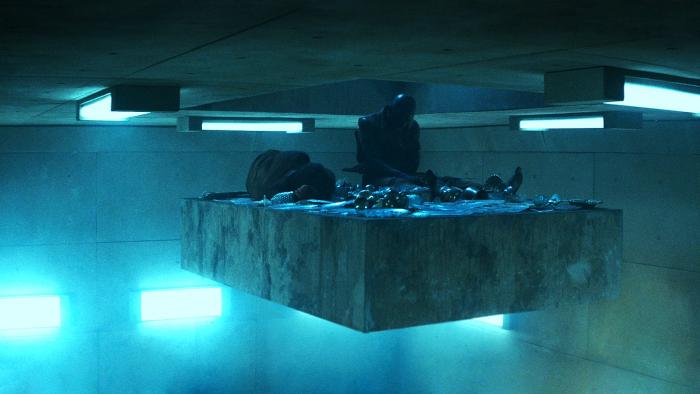
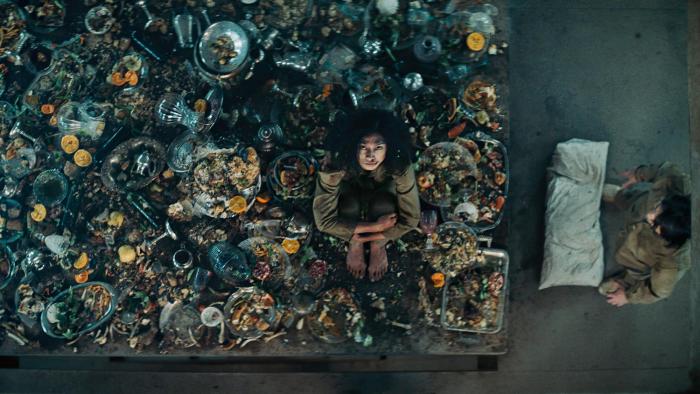
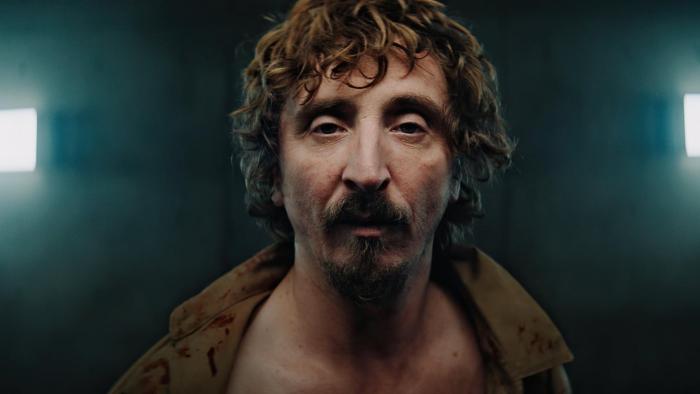
In THE PLATFORM, Goreng (Ivan Massague) agrees to serve a six-month sentence inside a "Vertical Self-Management Center" in exchange for a diploma. From his first floormate, Trimigasi, Goreng learns that the food in this institution is served via a large concrete platform that floats down one floor at a time for a short period of time. The prisoners can only eat what's left on the platform while the platform is there; if they try to keep food after the platform leaves, the temperature of the prisoner's floor becomes painfully hot or cold. Each prisoner is allowed to bring in one item from the outside; Goreng has brought in a copy of Don Quixote, and Trimigasi has brought in a self-sharpening knife he saw on an infomercial. Each month, the prisoners are randomly reassigned to a new floor, and while Goreng is able to eat while on the 48th floor, he finds himself tied up when reassigned to the 171st floor, as Trimigasi intends to use his knife to eat flesh from Goreng's body. After escaping this traumatic experience, Goreng is reassigned to new floormates -- first to a woman who seeks to begin a revolution from within by finding ways to more equitably share the food, and then a man who encourages Goreng to send a message to where the food is prepared on the highest floor by forcing a rationing of the food to those below them. As the floor numbers below continue to reach higher numbers -- higher than the number of levels Goreng had estimated -- Goreng, with the assistance of visions from his previous floormates, thinks he has found a way to send a message to those on the top floor with the power to change this barbaric system.
Is It Any Good?
This movie is the textbook definition of the term "Kafkaesque." Through a nightmarish reality and a system controlled by an unseen "Administration" whose members don't seem to fully comprehend the horrors of the system they've created, The Platform is an allegory about the economic disparities and unequal access to food in our own world, and the filmmakers aren't hesitant in applying shocking imagery to drive these points home. Scenes of characters fighting other characters by defecating on their faces, cannibalism and attempted cannibalism, and disemboweled and partially-eaten pet dogs are right up there with brutally-memorable scenes from Hostel, the second season of Fortitude, Salo, and The 120 Days of Sodom.
While the execution and presentation are undeniably innovative, what's debatable is whether or not the filmmakers needed to go to these extremes to make such a simple point. Some of the shocking moments start to feel belabored as the movie goes on. Like the classic Sinclair Lewis novel The Jungle, it's easy to envision the larger message of economic inequality and revolt getting lost in the shocking individual moments of the story. None of these moments necessarily ruin the overall quality of the film, but it's hard to determine if the message will carry through because of or in spite of The Platform's memorably horrific moments.
Talk to Your Kids About ...
Families can talk about allegories. How is The Platform an example of an allegorical story -- one that uses story to communicate an idea or insight into our world and society?
Were the shocking moments of violence and degradation necessary to tell the story and communicate the overall idea, or did these moments come across as unnecessarily extreme?
What idea, ideals, or belief systems do you think the different characters represented? How do these characters help to communicate the movie's overall message?
Movie Details
- On DVD or streaming : March 20, 2020
- Cast : Ivan Massague , Antonia San Juan , Zorion Eguileor
- Director : Galder Gaztelu-Urrutia
- Studio : Netflix
- Genre : Science Fiction
- Run time : 94 minutes
- MPAA rating :
- Last updated : October 8, 2026
Did we miss something on diversity?
Research shows a connection between kids' healthy self-esteem and positive portrayals in media. That's why we've added a new "Diverse Representations" section to our reviews that will be rolling out on an ongoing basis. You can help us help kids by
Suggest an Update
Common Sense Media's unbiased ratings are created by expert reviewers and aren't influenced by the product's creators or by any of our funders, affiliates, or partners.
See how we rate