






Common Sense Media Review
 By Jennifer Green
,
based on child development research. How do we rate?
By Jennifer Green
,
based on child development research. How do we rate?
Violence, language, suspense in Hitchcock-inspired mystery.
Parents Need to Know
Why Age 16+?
Any Positive Content?
Where to Watch
Videos and Photos


The Woman in the Window
Parent and Kid Reviews
Based on 3 parent reviews
Based on 12 kid reviews
Kids say the film presents a complex narrative with an untrustworthy narrator that keeps viewers engaged, though many describe it as mediocre and somewhat tedious. While it features strong cinematography and suspense, it includes heavy themes of substance abuse and graphic violence, making it less suitable for sensitive audiences.
- untrustworthy narrator
- heavy substance abuse
- strong cinematography
- graphic violence
- mediocre overall
 Summarized with AI
What's the Story?
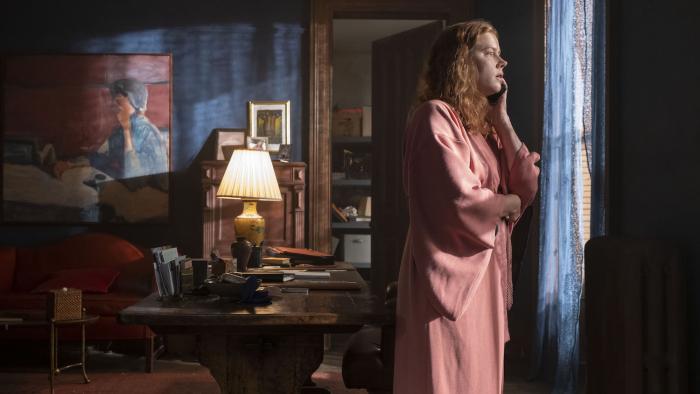
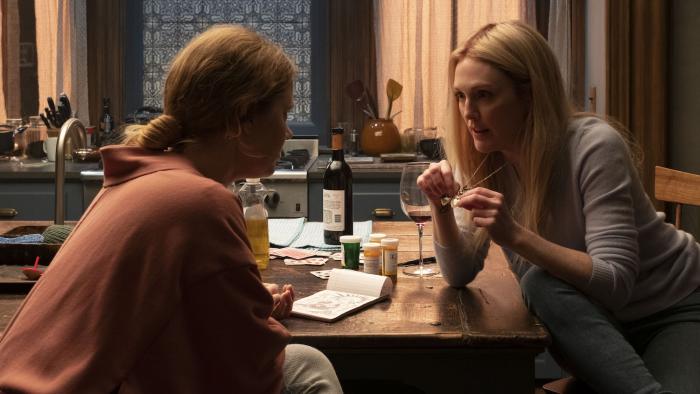
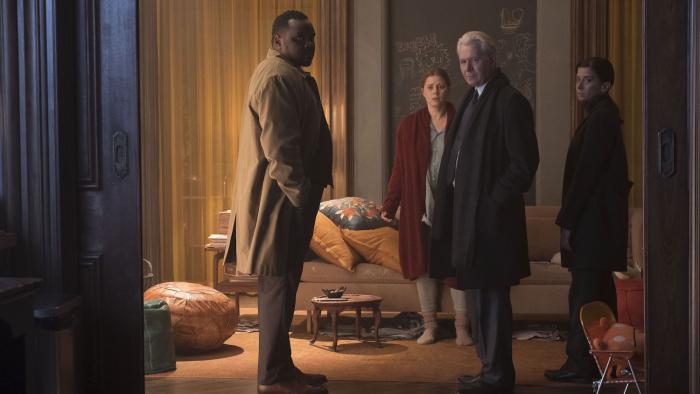
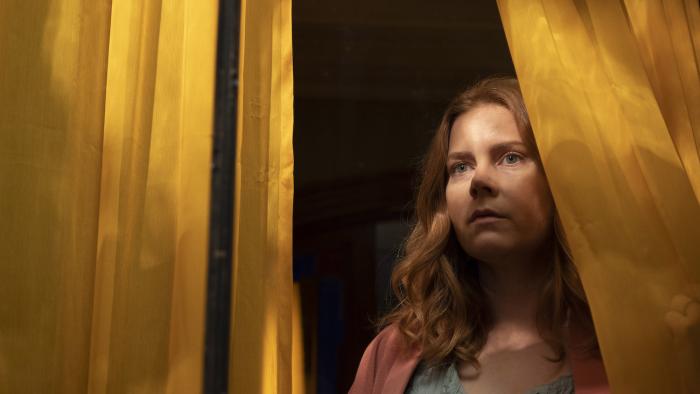
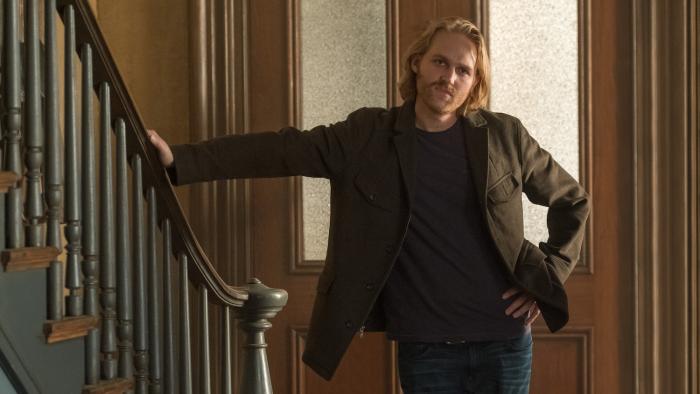
Dr. Anna Fox (Amy Adams) is a troubled child psychologist in THE WOMAN IN THE WINDOW. She is a person with agoraphobia, which is an anxiety disorder that makes her unable to leave her house, and she is mixing alcohol and medications in a self harming way. She lives alone except for a tenant (Wyatt Russell) who dwells in her basement and sometimes helps out with household tasks. She has phone conversations with her husband (Anthony Mackie), from whom she says she's separated, and young daughter (Mariah Bozeman). When a new family moves in across the street (Gary Oldham and Jennifer Jason Leigh), Anna begins spying on them out her window. She befriends their apparently-troubled teen son (Fred Hechinger) and his mother (Julianne Moore). One night, she thinks she sees the mother being murdered, but she has no proof. Complicating matters, her substance abuse and psychological problems make her an unreliable witness and she becomes unsure herself of what she saw.
Is It Any Good?
With obvious nods to Hitchcock, this film creates suspense through a blend of unpredictable characters, plot twists, ominous music (by Danny Elfman), and gloomy settings seen from odd angles. Like so many psychological thrillers before it, The Woman in the Window wants to make us question who and what is real. The actual violence is less important (or interesting) -- and comes later in the story -- than the palpable sense of menace and the uncertainty of who presents what threat. The tale turns on Anna, an unreliable witness with psychological problems whose abuse of alcohol and medications fuzzes her perceptions. The always-versatile Adams offers a solid performance that fuels the film and compensates for other, less-developed characters. Her Anna is at once heartbreaking and infuriating, a believable everywoman who has lost her will to live, but the essential details of what drove her to the life of a recluse are kept from us for more than half the movie.
There are also themes concerning motherhood and a mother's role in the film, adding to the emotion and contributing to our uncertainty about Anna's state of mind. The men are mostly there to menace, except for two (perhaps coincidentally both Black): her apparently-estranged husband, and the kind detective assigned to her case. The story is structured by days over the course of one autumn week, with Anna repeating rituals (including passing out each night and awaking startled each morning) and only halfheartedly seeking help. There's mention of a previous suicide attempt. The film's production design is all about the mood: Anna lives in a cavernous, jewel-toned brownstone where she keeps the lights constantly dimmed. She's often glimpsed from peculiar angles and reflected in mirrors as she wanders the dark house in her pink bathrobe. The structure and setting are effective enough in putting you on edge, uncertain how events will unfold but sure something bad will happen. When it does, it feels almost anti-climactic; proof again that the waiting is the hardest, but maybe also the best, part.
Talk to Your Kids About ...
Families can talk about how The Woman in the Window creates suspense. Which moments stand out to you as the tensest, and why?
Lots of other films are referenced or seen in passing in this movie. Did you recognize any? If so, which ones?
What is agoraphobia? How does it affect Anna's life? Where could you go to find out more information about this condition?
Was the ending of the film a surprise for you? Why or why not?
Movie Details
- On DVD or streaming : May 14, 2021
- Cast : Amy Adams , Gary Oldman , Anthony Mackie
- Director : Joe Wright
- Studio : Netflix
- Genre : Thriller
- Topics : Book Characters
- Run time : 101 minutes
- MPAA rating :
- MPAA explanation : Violence and language
- Last updated : October 8, 2026
Did we miss something on diversity?
Research shows a connection between kids' healthy self-esteem and positive portrayals in media. That's why we've added a new "Diverse Representations" section to our reviews that will be rolling out on an ongoing basis. You can help us help kids by
Suggest an Update
Common Sense Media's unbiased ratings are created by expert reviewers and aren't influenced by the product's creators or by any of our funders, affiliates, or partners.
See how we rate