







Common Sense Media Review
 By Jeffrey Anderson
,
based on child development research. How do we rate?
By Jeffrey Anderson
,
based on child development research. How do we rate?
Ambitious drama/romance takes on too much but still works.
Parents Need to Know
Why Age 15+?
Any Positive Content?
Where to Watch
Videos and Photos


Tuscaloosa

What's the Story?
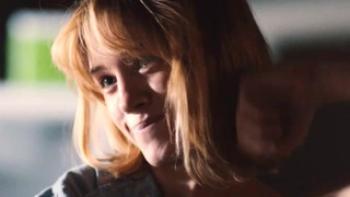
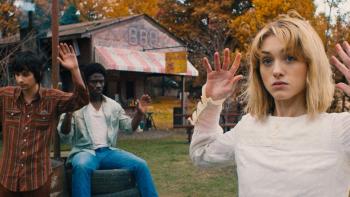
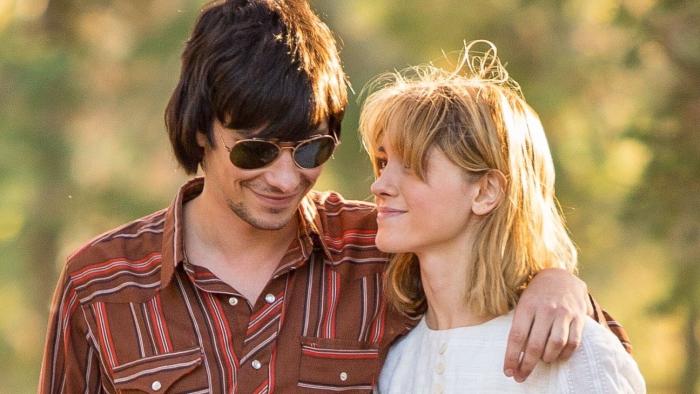
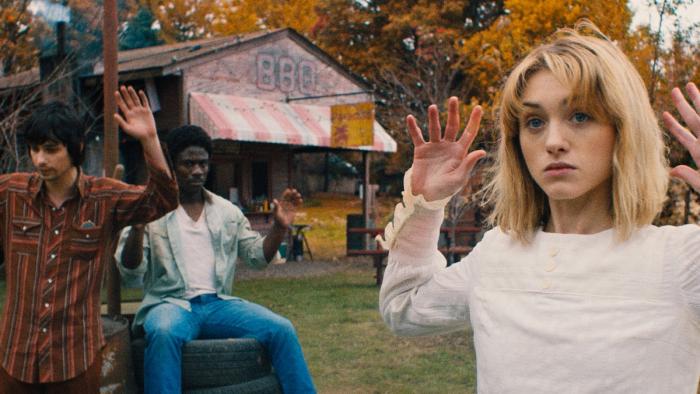
In TUSCALOOSA, it's 1972, and college grad Billy (Devon Bostick) works taking care of the grounds at an Alabama mental institution where his father (Tate Donovan) is a psychiatrist. Billy, who's White, occasionally visits his best friend, Nigel (Marchant Davis), a Black man who runs a BBQ stand. They share a bond in that their mothers tried to run away together when they were younger but died in a car crash. At the institution, Billy meets and falls for Virginia (Natalia Dyer of Stranger Things), who's been committed but seems to be nothing more than a free spirit. As Billy and Virginia spend more and more time together, Billy's father threateningly disapproves. Meanwhile, Nigel is becoming progressively angrier and has started staging violent acts of protest against the White establishment. Everything comes to a head the night Billy decides to run away with Virginia.
Is It Any Good?
Based on a 1994 novel by W. Glasgow Phillips, this drama tries to achieve a novel's depth and breadth, and while many facets feel short-changed, much of it is still powerfully engaging. Music video maker Philip Harder makes his feature writing and directing debut with Tuscaloosa, and it's an ambitious attempt, not only in the tapestry of characters and history, but in the period setting and mood. (The song "O-o-h Child" by the Five Stairsteps has been used in many movies, but it sounds just right here.)
Both Bostick and Dyer are wonderful in their roles. Bostick's Billy is both kind and an outsider, moving to a slightly different rhythm than those around him. And Dyer captures a wonderful pluckiness, playing around with the line between what it means to be "sane" and "crazy." But Davis, while effective as Nigel, gets short-changed. His character is almost exclusively seen during exchanges with Billy, and both his relationship with Billy and his transformation into a militant are frustratingly opaque. Likewise, the flashbacks to the two young mothers, which should have tied so many things together, are both scant and repetitive. But Billy and Virginia keep Tuscaloosa flowing in a touching way as they navigate the extremes of the world and all the anger that goes with them, trying to make their own place.
Talk to Your Kids About ...
Families can talk about Tuscaloosa's violence. How did it make you feel? How much of it is rooted in the time period? What's the impact of media violence on kids?
Do you understand why the Black characters make the decisions they do? Why do you think the White conservatives are so hateful toward them?
What things were different in 1972? What things are similar?
How does the movie depict the sexual relationship between the two main characters? What values are imparted?
Why is Virginia locked away in an asylum? What's the difference between her behavior and the attitudes toward such behavior?
Movie Details
- In theaters : March 13, 2020
- On DVD or streaming : April 28, 2020
- Cast : Devon Bostick , Natalia Dyer , Marchant Davis
- Director : Philip Harder
- Studio : Cinedigm
- Genre : Drama
- Run time : 101 minutes
- MPAA rating :
- Last updated : May 13, 2020
Did we miss something on diversity?
Research shows a connection between kids' healthy self-esteem and positive portrayals in media. That's why we've added a new "Diverse Representations" section to our reviews that will be rolling out on an ongoing basis. You can help us help kids by
Suggest an Update
Common Sense Media's unbiased ratings are created by expert reviewers and aren't influenced by the product's creators or by any of our funders, affiliates, or partners.
See how we rate