







Common Sense Media Review
 By John Sooja
,
based on child development research. How do we rate?
By John Sooja
,
based on child development research. How do we rate?
Family drama address mental illness; language, violence.
Parents Need to Know
Why Age 15+?
Any Positive Content?
Where to Watch
Videos and Photos


Two Ways Home
Parent and Kid Reviews
What's the Story?
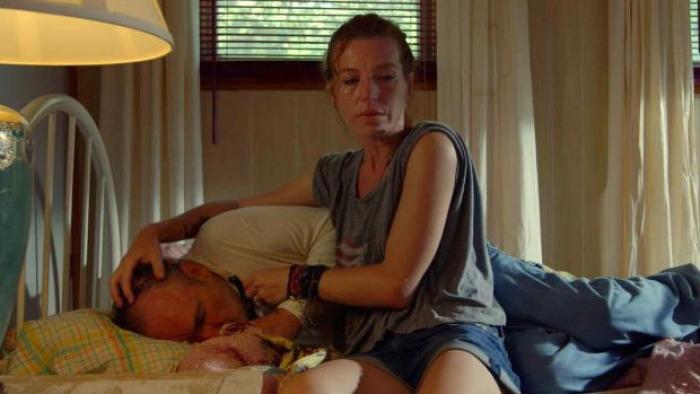
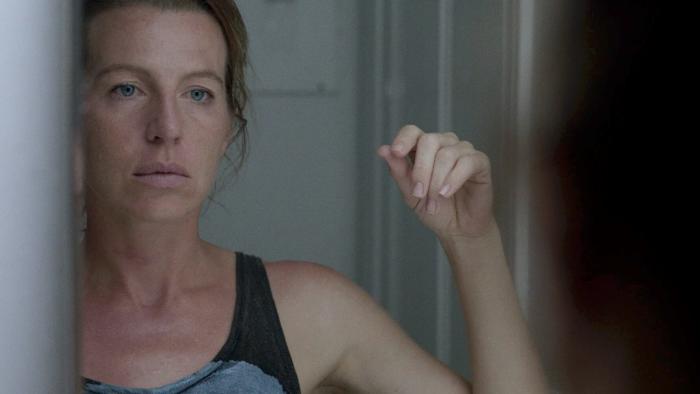
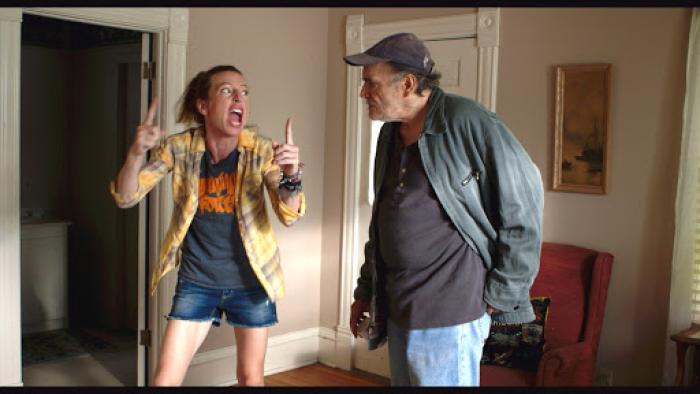
In TWO WAYS HOME, Kathy (Tanna Frederick) returns home to her family's hog farm. She has been away for a few years because she was caught holding up and robbing a corner store and put in prison. But while there a social worker helped to get Kathy diagnosed with bipolar type II disorder and receive proper medication. Back home, Kathy's now 12-year-old daughter, Cori (Rylie Behr), wants nothing to do with her mother. But Kathy gets a job and sets about repairing her life. Mainly she wants to get back to being a mom and officially take care of her grandfather, Walter (Tom Bower), while the rest of the family want to put him in a home. But he currently suffers from PTSD, undiagnosed and untreated. Can Kathy manage all of this without falling apart and going back to behavior that messed everything up in the first place?
Is It Any Good?
This simply-crafted indie drama is grounded and well-acted but makes some mistakes that hinder its emotional punch. Even though the performances are solid and the cinematography subtly beautiful, writing decisions in Two Ways Home leave the experience wanting. But it's commendable for its honest presentation of a woman with bipolar type II disorder and an older man suffering from post-traumatic stress disorder. It's also refreshing to see a relatively unknown and mostly Iowan cast. There are no famous actors "styling down" to look "rural," "Midwestern," or "middle-American." Sensitively shot, all the drama plays out amidst the muted beauty of Iowan farmland, next to sawmills and grain elevators, and in local bars, public pools, and family barns.
Mostly, the failures in Two Ways Home have to do with plot and writing. In a film that has the blessing of the National Alliance on Mental Illness and that encourages everyone suffering from any mental illness to talk more openly, comfortably, and without social consequence or stigma, the film doesn't actually feature a lot of talk about mental health. There are representations of the noted symptoms of these conditions, but no talk around these scenes or events and/or what causes them. When Kathy's ex-partner discovers her medications and in ignorance reacts poorly, not knowing much about mental health and psychiatric help, Kathy responds, "see, it explains all my episodes and seeking out those highs." But that isn't what most people would do when confronting someone who doesn't know anything about mental health disorders, depression, personality disorders, or the business of psychiatry. But to those who already know about the common symptoms of bipolar type II disorder, Kathy's words make sense. Further, two scenes later, Kathy's ex-partner returns completely understanding of his own ignorance and now seems to "get it." What happened? Did he read something? Talk to an expert? A friend who knows about this kind of thing? How does he 180 so quickly? Also, there are no discussions about grandpa Walter's severe PTSD symptoms and need for help. Magically he's deemed fine by everyone at the end, including Kathy, with no further discussion of his likely still-present need for professional care and help regarding his PTSD. Lastly, some people may disagree with some of the representations of bipolar type II disorder. For example, some scenes may suggest that if Kathy doesn't take her medication, she'll threaten people's lives with guns, become dangerous, and not be able to care for her daughter. While this may be true for some people who have bipolar type II disorder, it certainly isn't true for everyone.
Talk to Your Kids About ...
Families can talk about how Two Ways Home portrays mental health conditions like bipolar type II disorder and PTSD. Do you think this film handles these conditions respectfully? Why or why not? What could the film have done better?
Do you feel the film adequately explains what's going on with some of the symptoms of bipolar type II disorder as they appear on screen? What about post-traumatic stress disorder? Did the film explain enough about what was going on during these scenes? Should it have?
How do you feel about the depiction of the fainting game? Do you think its inclusion might be dangerous? How else might the film have depicted this game or the teens playing it?
How do you feel about the end of the film? Would you have acted differently? How so?
Do you have any experience with mental illness in your life? What have you learned from this experience?
Movie Details
- On DVD or streaming : December 29, 2020
- Cast : Tanna Frederick , Tom Bower , Rylie Behr , Joel West
- Director : Ron Vignone
- Studio : Gravitas Ventures
- Genre : Drama
- Run time : 92 minutes
- MPAA rating :
- Last updated : January 12, 2021
Did we miss something on diversity?
Research shows a connection between kids' healthy self-esteem and positive portrayals in media. That's why we've added a new "Diverse Representations" section to our reviews that will be rolling out on an ongoing basis. You can help us help kids by
Suggest an Update
Common Sense Media's unbiased ratings are created by expert reviewers and aren't influenced by the product's creators or by any of our funders, affiliates, or partners.
See how we rate