







Common Sense Media Review
 By Joyce Slaton
,
based on child development research. How do we rate?
By Joyce Slaton
,
based on child development research. How do we rate?
Sweet visuals and songs are complicated by mixed messages.
Parents Need to Know
Why Age 7+?
Any Positive Content?
Where to Watch
Videos and Photos


UglyDolls
Parent and Kid Reviews
Based on 27 parent reviews
Parents say the film presents a mixed bag of perspectives, with some appreciating its positive messages about friendship and individuality, while others criticize its treatment of bullying and superficial beauty standards. Many reviewers express concern that younger children may misinterpret the film’s themes, emphasizing that it often glosses over darker messages that could be confusing or troubling for them.
- not suitable for young children
- mixed reviews
- positive messages
- superficial beauty standards
- bullying themes
 Summarized with AI
Based on 34 kid reviews
Kids say this movie lacks depth and sends mixed messages about self-acceptance, often downplaying the severity of insecurities and ridicule. While some found it entertaining and heartwarming, others criticized its portrayal of beauty and emotional scenes that could be discouraging for kids, leading to a divided reception overall.
- mixed messages
- entertaining elements
- emotional impact
- self-acceptance themes
- overall divisiveness
- партии
Summarized with AI
What's the Story?
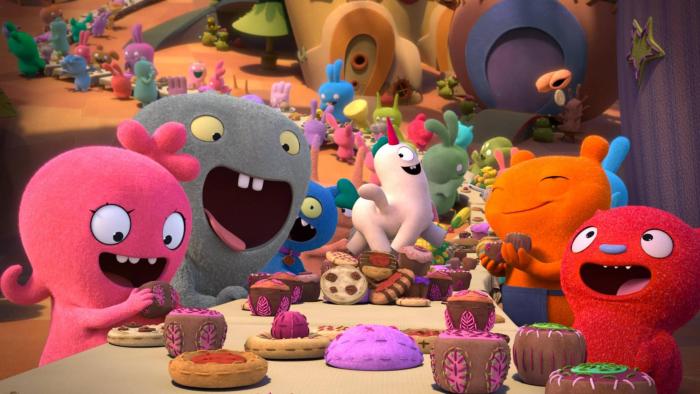
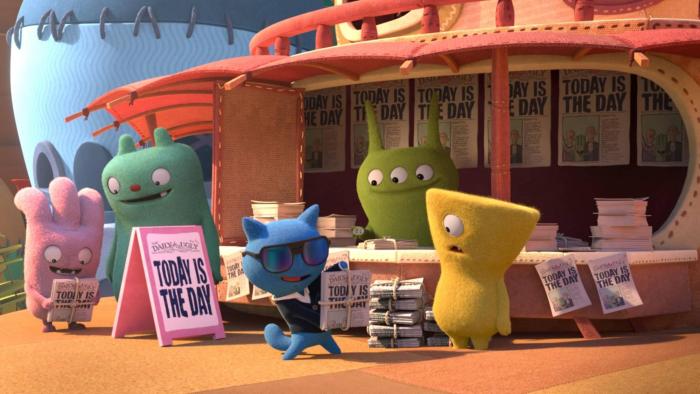
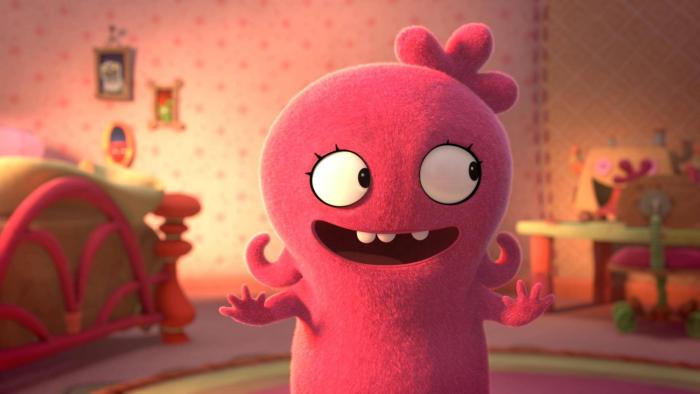
In a quirky little town called Uglyville, Moxy (voiced by Kelly Clarkson) lives among the UGLYDOLLS and hopes every day that today will be the day when she finds a child to love her. But she's gotten impatient for the outside world to find her -- and now she's decided to go in search of the world. She brings a cadre of loyal friends with her: lovable big lug Babo (Gabriel Iglesias), slick Ugly Dog (Pitbull), shy Lucky Bat (Leehom Wang), and cranky Wage (Wanda Sykes). What they find is the Institute of Perfection, which is under the total control of gorgeous uber-doll Lou (Nick Jonas) and is where dolls go to grow "from pretty to perfect." Is it really necessary to be perfect to be loved? Or will the UglyDolls learn to embrace their imperfections?
Is It Any Good?
The visuals are bright and appealing, the songs are catchy, and the toy-looking-for-love setup is sweet enough to appeal to kids and adults alike. But there are more mixed messages about looks and self-worth in UglyDolls than many parents will be comfortable with. True, the movie's overarching themes are "love yourself" and "your differences make you special," but we get to these ideas relatively late in the movie, after we've watched the main characters get shamed at length for being themselves. Adding weight to the iffy messages are two prominently featured (and quite catchy) songs, "The Ugly Truth" and "All Dolled Up." The first one, sung by the movie's villain, is a little easier to dismiss, though its message -- "ugly = worthless" -- is pretty harsh, and there's a moment when Lou moves down a line of dolls explaining why each is unacceptably imperfect ("You're way too short! You're too thin! Is that a blemish on your double chin?") that's cringeworthy.
"All Dolled Up," sung by the sympathetic Mandy (Janelle Monáe), is more problematic. To adults, it's obvious that Mandy's heart isn't in statements like "When you're all dolled up, people only see what you want them to see." But to kids, the message the song sends is more uncomfortable -- as if the "solution" to being different is to pretend not to be. It's not until the movie gets to the song "Unbreakable" that parents will sit up and really enjoy the vibe being pumped out: Be yourself, and show them you can't be broken. Once UglyDolls turns that corner, it's all sweetness and smiles: Perfection and Uglyville merge, everyone learns to love and accept themselves, and Moxy finds her place in a child's arms. Spoiler alert? Nah, you knew it was coming. It's just a shame that this happy ending doesn't feel more earned.
Talk to Your Kids About ...
Families can talk about UglyDolls' messages about appearance. Does everyone agree about what's beautiful and what's not? What do Moxy and her friends learn about finding happiness and accepting themselves?
What does Moxy's storyline tell us about self-image? Why didn't she think a child would love her as she is? How did her adventures at the Institute of Perfection ultimately give her the confidence to believe in herself?
Which parts of the movie were scary? Why? How much scary stuff can young kids handle?
What does it mean to persevere? How did the characters in UglyDolls show perseverance? How did teamwork figure into their quest? Why are teamwork and perseverance important character strengths?
How does Mandy compare to the other "mean girl" doll characters? Do you think she was the only one of the four who had more depth to her?
Movie Details
- In theaters : May 3, 2019
- On DVD or streaming : July 30, 2019
- Cast : Kelly Clarkson , Nick Jonas , Janelle Monáe
- Director : Kelly Asbury
- Studio : STX Entertainment
- Genre : Family and Kids
- Topics : Friendship
- Character Strengths : Perseverance , Teamwork
- Run time : 88 minutes
- MPAA rating :
- MPAA explanation : thematic elements and brief action
- Last updated : December 22, 2025
Did we miss something on diversity?
Research shows a connection between kids' healthy self-esteem and positive portrayals in media. That's why we've added a new "Diverse Representations" section to our reviews that will be rolling out on an ongoing basis. You can help us help kids by
Suggest an Update
Common Sense Media's unbiased ratings are created by expert reviewers and aren't influenced by the product's creators or by any of our funders, affiliates, or partners.
See how we rate